
Professor Cynthia Andoniadou
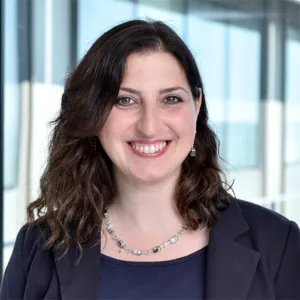
Professor of Stem Cell Biology
Centre: Endocrinology
Email: c.l.andoniadou@qmul.ac.uk
Profile
- ORCID iD: 0000-0003-4311-5855
- Epitome atlas: https://epitome-atlas.com
- GitHub: Andoniadou-Lab
- Bluesky: @pituitarylab.bsky.social
Cynthia Andoniadou is Professor of Stem Cell Biology in the Centre for Endocrinology at the William Harvey Research Institute, Queen Mary University of London. She joined QMUL in August 2026, having established her independent research group at King’s College London in 2013 and subsequently served as Dean for Research in the Faculty of Dentistry, Oral & Craniofacial Sciences.
She studied Genetics and Microbiology at QMUL, completed her PhD in Anatomy and Developmental Biology at UCL, undertaking her doctoral research on neural stem cells at the MRC National Institute for Medical Research. She carried out postdoctoral research at the UCL Institute of Child Health on the development of the forebrain and subsequently the pituitary gland. Her research investigates how stem cells regulate endocrine organ development, maintenance and disease, with a focus on the pituitary gland and adrenal medulla.
Professor Andoniadou has contributed to the endocrine and developmental biology communities through scientific leadership and society governance. She served on the Executive Committee of the European Society for Endocrinology and as Chair of its Congress Committee (2022-2026), and as Treasurer of the British Society for Developmental Biology (2019-2024) She is a co-founder of the European Women in Endocrinology (EUWIN) initiative and her wider service includes membership of the EndoCompass Steering Group. Her research has been recognised with a Lister Institute Research Prize (2016), the Society for Endocrinology Starling Medal (2022) and the British Society for Developmental Biology Cheryll Tickle Medal (2026).
Research
Group members
- Yasmine Kemkem
- Olivia Sherwin
- Miriam Vazquez Segoviano
- James Kaufman-Cook
- Bence Kövér
- Alp Dogan
Summary
Our group investigates how stem cells regulate the development, function and regeneration of the pituitary and adrenal glands, and how these mechanisms become disrupted in disease. We study both differentiation into new endocrine cells and the signals that stem cells release to influence neighbouring cells.
Our work has demonstrated functional roles SOX2-positive stem cells in the anterior pituitary gland and adrenal medulla and established how paracrine WNT signalling and the YAP/TAZ pathway regulate endocrine tissue growth and stem cell behaviour. Current research examines how stem cells respond to physiological challenges, the mechanisms underlying endocrine regeneration, and how altered cell signalling and senescence contribute to pituitary tumour initiation and behaviour.
We combine genetic models, lineage tracing, primary cell and tissue cultures, imaging, and single-cell and spatial multiomics with studies of human tissues. Working with clinical and computational researchers, we develop disease models and accessible data resources, including the Epitome atlas (epitome-atlas.com), to identify disease mechanisms and potential therapeutic targets.
Publications
-
Kemkem Y, Quinn M, Kövér B et al. (2026). Phaeochromocytomas and paragangliomas harbour tumour-initiating SOX2+ stem cells. nameOfConference
DOI: 10.1530/erc-25-0242
QMRO: qmroHref
Sponsors
- Medical Research Council (UKRI)
- Deutsche Forschungsgemeinschaft (DFG)
Collaborators
Internal: Federica Begalli (QMUL), Márta Korbonits (QMUL), Paul Chapple (QMUL), Li Chan (QMUL)
External: Jesús Gil (Imperial College London, UK), Juan Pedro Martínez-Barberá (UCL, UK), Pierre Val (Clermont-Ferrand, France), Rebecca Oakey (KCL, UK), Hani Marcus (UCL, UK), Stefan Bornstein (TUD, Germany), Stuart Sealfon (Mount Sinai, USA), Frédérique Ruf-Zamojski (Cedars Sinai, USA), Dan Bernard (McGill University, Canada), Evi Xekouki (UoC, Greece), Patrice Mollard (IGF, Montpellier, France), Robert Fowkes-Gajan (Michigan State University).
News
Teaching
Professor Andoniadou teaches developmental biology, stem cell biology and molecular endocrinology at undergraduate and postgraduate levels. She supervises doctoral and Master’s research projects and mentors early career researchers.