
Professor Karim Brohi, FRCS FRCA
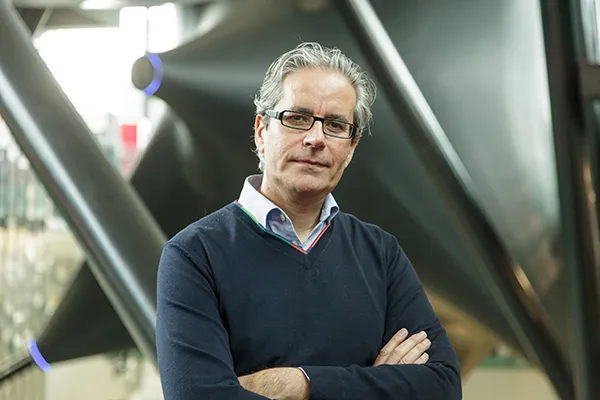
Professor of Trauma Sciences
Centre: Neuroscience and Trauma
Email: k.brohi@qmul.ac.ukTelephone: 020 7377 7044Website: https://www.c4ts.qmul.ac.uk/
Profile
Karim Brohi is Professor of Trauma Sciences and founding Director of the Centre for Trauma Sciences at Queen Mary University of London, and Consultant Trauma and Vascular Surgeon at The Royal London Hospital. His research and clinical leadership have contributed to major reductions in mortality after severe injury, through advances in resuscitation and the redesign of trauma care.
His discovery of acute traumatic coagulopathy—the immediate failure of blood clotting after major injury—changed understanding of why patients bleed to death after trauma. Working with clinical and scientific collaborators, he translated this discovery into new approaches to diagnosis, transfusion and resuscitation that have become standards of care internationally. At The Royal London Hospital, research-led changes in treatment contributed to a 40% reduction in mortality among patients with major traumatic bleeding between 2008 and 2017. He has led major international trials, including ITACTIC and CRYOSTAT-2, and published more than 200 scientific papers. He was the first researcher based outside the United States to receive the American Heart Association’s Lifetime Achievement Award in Resuscitation Science.
He played a central role in the design and development of London’s major trauma system, serving more than ten million people. The system more than halved mortality among severely injured patients and helped establish the model for trauma networks across England. As Clinical Director from 2014 to 2025, he connected research, clinical innovation and service improvement across the pathway from injury to rehabilitation, including the response to major incidents.
His wider influence on policy and practice includes chairing the NICE guideline development group for major trauma and co-chairing the European Society for Vascular Surgery’s 2025 vascular trauma guidelines. He is a Non-Executive Director of the London Ambulance Service NHS Trust and an Honorary Fellow of the Faculty of Pre-Hospital Care at the Royal College of Surgeons of Edinburgh.
An early pioneer of online medical education, he founded trauma.org in 1995, making specialist knowledge and international expert discussion freely available to clinicians worldwide. He subsequently established Queen Mary’s international MSc programmes in Trauma Sciences and Trauma Sciences (Military and Austere), and has supervised doctoral research across trauma biology, clinical care and health systems. He also founded AfterTrauma to provide information and support for patients and families recovering from serious injury.
His current research asks how the biological response in the first minutes after injury determines whether a patient survives and recovers. Combining molecular profiling, experimental medicine and computational modelling, he is developing approaches to precision trauma care: identifying which patients need which treatments, and finding ways to interrupt the processes that lead from haemorrhagic shock to organ failure and death. His broader aim is to extend the limits of survival after severe injury, connecting scientific discovery with the clinical care and health systems needed to turn survival into lasting recovery.
Summary
Karim Brohi is Head of the LondonTIER, Professor of Trauma Sciences in the Blizard Institute, Barts and the London School of Medicine & Dentistry, and Consultant Trauma & Vascular Surgeon at Barts Health NHS Trust. He is also director of the North East London & Essex Trauma Network.
Teaching
Undergraduate
MBBS
Postgraduate
MSc Trauma Science
MSc Trauma Sciences (Military & Austere)
In 2011 Barts and the London School of Medicine, Queen Mary University of London; TRAUMA.ORG and the Royal College of Surgeons of England launched two innovative MSc programmes - A Masters in Trauma Science and a Masters in Trauma Sciences (Military & Austere).
These international Masters programmes are delivered in a modern e-learning environment as part-time distance-learning courses over two years. The course is tailored to the needs of international graduates from all healthcare and health sciences backgrounds, to provide high-quality learning no matter where you are in the world, and to develop the leaders of the future in the science and practice of trauma.
Topics for PhD supervision:
Trauma-associated: Coagulopathy; Massive Transfusion; Inflammation; Systems biology and complexity analysis; Patient Outcomes; Health services research.
Research
Research Interests:
Themes: Experimental Medicine (lead)
Karim Brohi is Professor of Trauma Sciences at Queen Mary, University of London and Consultant Vascular & Trauma Surgeon at Barts Health NHS Trust. The Royal London Hospital is the United Kingdom's flagship Major Trauma Centre and home to both civilian and military partners, all committed to maximising the impact of research and education in Trauma Sciences. Prof Brohi’s research interests cover the breadth of trauma sciences - from the acute damage response of the body to trauma, through all phases of trauma care from pre-hospital to rehabilitation and health services research. Fundamental research activity focuses upon trauma-associated coagulopathy (i.e. clotting abnormalities) & massive transfusion, trauma patient outcomes, systems biology and complexity analysis of trauma critical care.
Recent and ongoing research projects
Activation of Coagulation and Inflammation in Trauma (ACIT)
Founded upon his initial observation that an Acute Traumatic Coagulopathy can present within minutes of injury, ACIT is designed to identify the clinically significant mechanisms and pathways by which inflammation and coagulation are activated immediately following major trauma, and the observed clinical consequences of this in terms of bleeding, transfusion requirements, organ injury, multiple organ failure and death. The study continues to be supported by commercial partnership and has been now recruits in several major trauma centres across Europe and the USA.
Traumatic Coagulopathy and Massive Transfusion; Improving Outcomes and Saving Blood.
This 5-year NIHR-sponsored program of study has the overall objectives to enable the early identification of trauma-induced coagulopathy, the definition of the United Kingdom’s national instance of trauma hemorrhage and current patterns of transfusion therapy, and their associated outcomes and health economic impact. As well as gathering prospective data from a network of 22 hospitals over a period of 2-years, the study ultimately aims to identify the optimum methods to guide therapy and rationalise blood product administration during trauma haemorrhage and mass casualty events.
Trauma Outcomes Core Facility.
Sponsored by Barts and The London Charity, the principal aim of this 3-year project is to develop the world’s first dedicated Trauma Outcomes facility to explore and validate measures of trauma outcomes and to facilitate clinical and translational research across within the hospital and with other healthcare and academic institutes. The group is collecting long-term outcome data on trauma patients and conducting two pilot studies to demonstrate the power and potential of a fully-functioning facility. These two studies aim to 1) investigate cardiac outcomes following severe Trauma and 2) develop validated process of care benchmarks that are associated with improved outcomes to ensure quality and performance improvement of a regional trauma system.
Publications
Functional definition and characterization of acute traumatic coagulopathy.
Davenport R, Manson J, De’Ath H, Platton S, Coates A, Allard S, Hart D, Pearse R, Pasi KJ, Maccallum P, Stanworth S, Brohi K.
Crit. Care. Med. 2011 Jul 10.
Definition and drivers of acute traumatic coagulopathy: clinical and experimental investigations.
Frith D, Goslings JC, Gaarder C, Maegele M, Cohen MJ, Johansson PI, Stanworth S, Thiemermann C, Brohi K.
J Thromb Haemost. 2010 Jun 10.
A major trauma centre is a specialty hospital not a hospital of specialties.
Davenport RA, Tai N, West A, Bouamra O, Aylwin C, Woodford M, McGinley A, Lecky F, Walsh MS, Brohi K.
Br J Surg. 2010;97:109-17.
Circulating mitochondrial DAMPs cause inflammatory responses to injury.
Zhang Q, Raoof M, Chen Y, Sumi Y, Sursal T, Junger W, Brohi K, Itagaki K, Hauser CJ.
Nature. 2010;464:104-7.
View all Karim Brohi's Research Publications at: http://www.researchpublications.qmul.ac.uk