
Barts Metabolism Network seminar: Systemic effects of tumours on host metabolism and their relevance for anti-tumour immunity
When: Tuesday, May 20, 2025, 12:00 PM - 1:00 PM
Where: Milton Lecture Theatre, Garrod Building, Whitechapel
Speaker: Dr Dimitrios Anastasiou, The Francis Crick Institute, London, UK
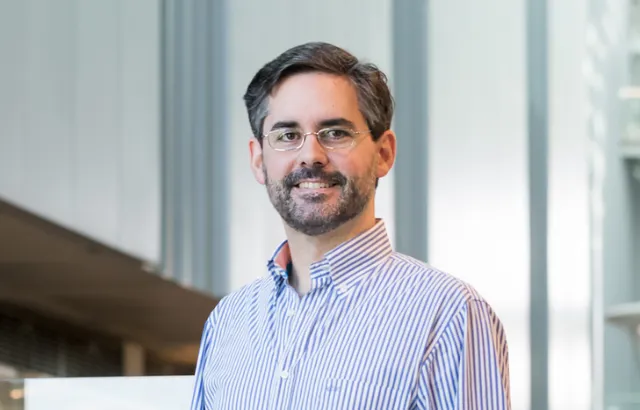
We are delighted to welcome Dr Dimitrios Anastasiou for a seminar on Tuesday 20 May from 12.00pm–1.00pm at the Milton Lecture Theatre, Garrod Building.
Talk title: Systemic effects of tumours on host metabolism and their relevance for anti-tumour immunity.
Speaker: Dr Dimitrios Anastasiou, Senior Group Leader, Cancer Metabolism Laboratory, The Francis Crick Institute, London, UK
Biography: Dimitrios’ research focuses on fundamental mechanisms that regulate metabolism at the molecular, cellular and organismal levels, and how their perturbation contributes to cancer and liver disease.
He obtained a BSc in Molecular Biology from University College London (UK) and a PhD in Biochemistry from the University of Basel (Switzerland), in the lab of Wilhelm Krek, where he studied mammalian sirtuins, a class of deacetylases with roles in metabolic regulation and ageing. He then joined the lab of Lewis Cantley, at Harvard Medical School (Boston, USA), to work on metabolic reprogramming in cancer cells and the development of first-in-class small molecule modulators of tumour glycolysis.
In 2012, Dimitrios established the Cancer Metabolism Laboratory at the MRC-NIMR (London, UK), which became part of The Francis Crick Institute in 2015. His group has been combining protein biochemistry, stable isotope tracers and chemical biology to elucidate how acute metabolic adaptations help cancer cells proliferate and survive under stress, particularly in hypoxia. In more recent work, the Cancer Metabolism Laboratory, has been using stable isotope tracers and metabolomics in mouse models of liver disease and cancer to study how diet and tumours influence host metabolism and, in turn, how host metabolism affects tumour initiation, development and response to therapy.
We look forward to seeing many of you there.
Best wishes,
Prof. Alazawi, Prof. Henson, Prof. Chan, Prof. Aksentijevic, and Dr Bianchi (Co-leads of the Barts Metabolism Network)