
Alumni Remembered - Professor Tim Oliver (1942 - 2026)
An appreciation for the late Professor Tim Oliver MD FRCP (MBBChir Medicine, 1966), Professor Emeritus in Genital and Urological Cancer Immunology at Barts Cancer Institute and a pioneer of treatment for male cancers, who co-founded The Orchid Cancer Appeal and devoted his career to curing men while sparing them unnecessary harm.
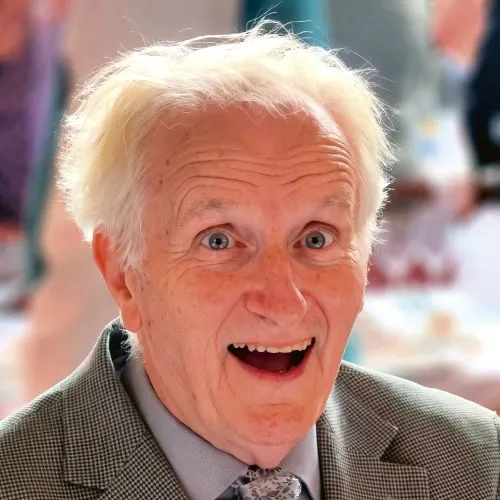
Professor Tim Oliver, who has died aged 84, was a consultant oncologist and professor of medical oncology whose work on testicular, prostate, penile, bladder and kidney cancers helped to change how male cancers are treated in Britain and abroad. He combined clinical courage with a lifelong insistence that men should receive enough treatment to cure them, and no more than was needed to protect their quality of life and fertility.
Born the 4th of August 1942 Thetford, Norfolk, Tim Oliver studied at St John's College, Cambridge, and at the Royal London Hospital. After training in immunology at St Bartholomew's Hospital, he moved to the Institute of Urology, where he pioneered drug treatments for male cancers. He later returned to St Bartholomew's and the Royal London Hospital School of Medicine and Dentistry as Consultant Oncologist and Professor of Medical Oncology, becoming an internationally recognised authority in his field.
A consistent theme of his research was risk-adapted care. In testicular cancer he helped to establish systemic chemotherapy for advanced disease and explored less toxic carboplatin adjuvant treatment for early stages, seeking to prevent distant recurrence while reducing reliance on surgery and radiotherapy to the para-aortic lymph nodes.
He studied prognostic factors and serum markers, including beta human chorionic gonadotrophin and alpha fetoprotein, so that treatment intensity could be matched to risk. He was a strong advocate of fertility preservation through semen cryopreservation and later supported partial orchidectomy for carefully selected small, screen-detected tumours.
In prostate cancer, he investigated hormone therapy and helped to introduce depot injectable gonadotrophin receptor analogues, allowing medical rather than surgical castration for androgen deprivation, used with androgen blockers and monitored by prostate specific antigen.
His interest in immunotherapy ran through superficial bladder cancer treated with intravesical BCG, through searches for better chemotherapy for invasive bladder, ureteric and penile disease, and through work on renal cancer with interferon and interleukin-2. He also supported partial nephrectomy for early kidney cancers.
Colleagues who worked with him at the Royal London from the 1980s remembered him as an integral member of the urological department with Professor John Blandy, David Badenoch and Chris Fowler, and with pathologists including Jo Martin and later Dan Berney, long before formal multidisciplinary meetings became standard practice. He helped to create a clinical trials network linking hospitals across East Anglia and Essex, so that new treatments could be studied on a scale no single centre could achieve alone.
Through the European Organisation for Research and Treatment of Cancer, he contributed to major international studies in testicular and prostate cancer. He authored or co-authored more than 500 medical papers, which has been cited over 19,000 times. Yet he measured success less in bibliography than in patients who lived, recovered fertility and returned to ordinary family life. Tim stimulated and trained many young aspiring physicians in urological oncology many who themselves became internationally renowned, Jonathan Waxman, Jonathan Shamash and Tom Powles.
In 1996, he co-founded The Orchid Cancer Appeal with his former testicular patient Colin Osborne, to fund research, promote awareness and support the introduction of better treatment for all three male cancers: testicular, prostate and penile. Oliver served the charity for 30 years as a trustee and later as Honorary President and continued to advise on research after stepping down from the board. His vision also helped to establish, in 2006, a clinical trials unit within the Experimental Cancer Medicine Centre at the Faculty of Medicine and Dentistry at Queen Mary University of London.
He was an enthusiastic advocate for the Royal London Hospital and for the health needs of the East End of London, frequently pointing out discrepancies in cancer care and survival compared with West London. He was a principal organiser of several street fairs in support of hospital services, gatherings that drew wide support from staff and patients and, on one occasion, a mini fairground on the pavement outside the hospital, to almost everyone's delight except the local council.
He promoted community recycling of drinks containers with a repurposed electric milk float, and taught schoolchildren in Tower Hamlets about the benefits of exercise and sunlight for vitamin D. Most of all, colleagues recalled, he believed in providing hope and support for his patients by every possible means, often challenging orthodox ideas and seeking better ways to understand and treat their disease.
Oliver's intellectual curiosity was restless and sometimes unconventional. He asked questions others had not thought to ask, and time repeatedly justified instincts that had first looked unorthodox. Away from the wards, he loved golf with more passion than accuracy. He taught himself to play the piano at university, then sang as a base in the Oriana choir and then the Barts choir for over 40 years.
His wife, Jessica, died in 2021. Thereafter he continued to generate research ideas for Orchid with undiminished energy. He is survived by his children, Cleo and Orlando and grandchildren, Mara, Ollie, Valentine and Ruby.
Former patients, colleagues and the charity he helped to found, remember a clinician who gave hope without empty reassurance, and who believed that saving a life also meant protecting the years that followed.
Professor Tim Oliver, MD, FRCP, oncologist, was born on 4 August 1942. He died from a brain tumour on 23 August 2026, aged 84.