
Alumni profile - Ryan McKiernan
(BSc Biology, 2015)
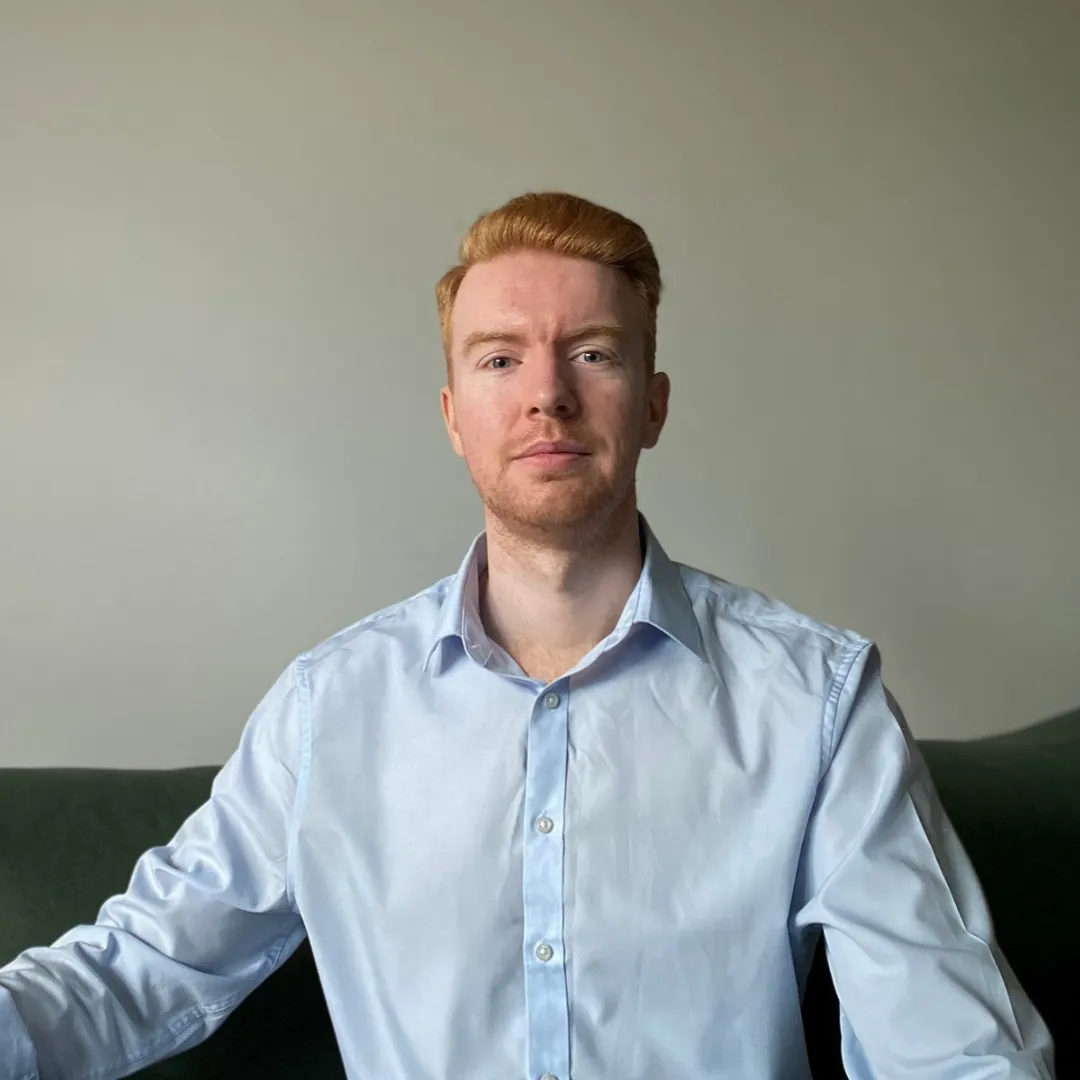
Ryan graduated from Queen Mary with a BSc in Biology in 2015. Since then, he has built a career in the non-profit sector across Ireland and the UK, with experience at organisations including CCS Fundraising, St Paul's Cathedral, SCI (Society of Chemical Industry) and The House of St Barnabas. He is currently Managing Director of Fat Macy’s Foundation, a charity and social enterprise that uses hospitality training and employment to help break the cycle of homelessness.
Why did you choose to study Biology at Queen Mary, and what attracted you to the University?
At the time, I was interested in pursuing a career in biomedical research or medicine, and biology seemed like a good fit for those ambitions while also fulfilling my personal interest in science. Aside from Queen Mary's strengths in these academic fields, I was particularly drawn to the University's campus and the opportunity to blend a more traditional university experience with being in the heart of London.
What aspects of your degree and wider university experience did you find most enjoyable, and was there anything about studying at Queen Mary that surprised you?
The sheer breadth of the curriculum on my course was fantastic. I was able to take modules on such a wide range of subjects, including some from other schools within the University, and so I never felt pigeon-holed into any one particular area of biology. It felt like Queen Mary really encouraged scholarly curiosity, and for someone who wasn't entirely set on their next steps post-university, this was greatly appreciated.
One of the most enjoyable aspects of my university experience was without a doubt the social life. Between all the on-campus activities and everything else happening off-campus across London, there was never a shortage of things to do and people to meet. These are the memories and experiences that I still carry with me today and really cherish.
Looking back at your journey from studying Biology at Queen Mary to leading a homelessness charity in East London, was there a particular experience, decision or turning point that changed the direction of your career?
I wish I could say there was some grand, well-thought-out plan to my current career path, but, like all great things in life, it was largely a series of fortunate opportunities and events. As much as I enjoyed my degree course academically, I realised fairly early on that lab-based research was not my calling and I had much more interest in doing something which was people-centred. When I first graduated from Queen Mary, I completely stumbled into an entry-level role in the charity sector with vague aspirations of wanting to help people in some way. Fast-forward over a decade and I'm still here, working in a sector that I absolutely love, with that inner fire of wanting to help people still burning just as bright if not even more now.
You have spent more than a decade working across the charity and non-profit sector. What have those different experiences taught you about the sector, and how have they shaped your approach to leadership?
Anyone who works in the charity sector will tell you that it's tough going and that's certainly true. There are so many incredible organisations out there doing much-needed work in their local communities and beyond, but this is against a backdrop of increasingly fragmented funding and ever-increasing demand for our services. Despite these headwinds, the sector continues to be both robust and impactful, which is a testament to the dedicated and talented people working within the sector.
With many years of working in charities of all sizes and causes across Ireland and the UK, I have an acute, first-hand appreciation for what does and doesn't work. The culmination of all my experience to date has embedded a fundamental belief in my leadership outlook which is that good people power good organisations. You cannot have the latter without the former. This is what guides a lot of my strategic decision-making from day to day.
What drew you to Fat Macy’s, and what interested you about its approach to tackling homelessness?
It's no exaggeration to say that the UK is facing a homelessness crisis, and this has been the case for many years now. The rates of people rough sleeping or living in temporary accommodation are at record highs, but so too is the amount of money and resources we are committing to the problem. I don't believe the solution to any issue lies in re-trying the same things over and over again expecting different results.
How Fat Macy's tackles homelessness is different, blending hospitality-based training and employment with long-term, tailored assistance and access to financial support. We aim for our intervention to be transformative for the people we work with rather than attempting to resolve the inter-linking hurdles of employment, resettlement and personal wellbeing in isolation. Fat Macy's is not a charity looking to tinker around the edges, it is striving for significant and lasting positive change.
Could you tell us more about Fat Macy’s Milestone Programme and how it supports people to move from temporary accommodation towards secure employment, stable housing and better personal wellbeing? Through your work with the programme, what have you learned about the different barriers people can face along the way?
In simple terms, the Milestone Programme offers people experiencing homelessness a sustainable and realistic pathway from hostel to home.
This journey starts with service users joining our six-week Training Academy, which focuses on embedding core hospitality and employability skills. For example, our structured, professional-led training sessions encompass things like knife skills and barista training but also CV writing and professional communication in the workplace, among many other skills. Once our trainees complete the Training Academy, they unlock long-term, tailored one-to-one support with finding a job and a home in the private rental sector. Crucially, we underpin this support with access to housing deposit grants worth up to £1,500 which help remove a very real structural barrier preventing many people experiencing homelessness from moving forward with their lives.
At Fat Macy's, we talk about our work as falling into three strands - employment, resettlement and personal wellbeing. In my experience, it's this last area of personal wellbeing which is often the most vital to the long-term success of our beneficiaries. The people we work with are typically experiencing several overlapping barriers such as adverse childhood experiences, poverty, housing insecurity, and health conditions. Unless you also address these things, which Fat Macy's does through life coaching and counselling, your employment and resettlement work becomes futile.
You’ve spoken publicly about the links between homelessness, employment and the growing number of young people who are not in education, employment or training (NEETs). What role do you think charities and social enterprises can play in helping young people overcome these barriers, and what gives you optimism about the future?
All young people considered NEET are disenfranchised from society and isolated from their peers to some extent. Charities and social enterprises can play a role in bringing them back into the fold by meeting them where they are, in the community and on their door steps, and offering genuine routes into education, employment or training through their programmes of work. At Fat Macy's, we leverage the power of food and hospitality to achieve this aim, but this could just as easily be sport, art or something entirely different. The key is finding something which sparks interest and engagement from young people and using that as the vehicle to effect change.
The good news is that the NEETs crisis is firmly on the political agenda at the moment and the government is taking tangible steps to not only support more young people into education, employment or training, but to also address the underlying mental health challenges which are fuelling the problem. This activity is being further bolstered by so many inspiring community groups and charities doing great work across the country to help young people.
You became Managing Director of Fat Macy’s at the age of 30, after more than a decade in the charity sector. What has surprised you most about moving into senior leadership, and what have you learned about leading an organisation with such a direct social-impact mission?
I don't think anyone is ever truly ready or fully prepared to make the jump from working for an organisation to leading that organisation, it marks a total shift in your professional life. On the other hand, you have to have confidence in your abilities and skills, and draw on your past experience to ease that learning curve and transition as well as relying on the great team around you. When you take on the most senior role, you quickly realise all of the competing priorities that exist in a much more visceral way than ever before. The stakes are certainly higher and you feel that responsibility.
The best tool in your arsenal is being able to take a step back and see the bigger picture at all times, making decisions that are ultimately best for the longevity of the organisation and the people it serves. In the case of a charity where your work is making a significant difference to people in need, the weight of that decision-making is heavier but also much more rewarding and fulfilling.
What advice would you give to a Queen Mary student or recent graduate who is interested in building a career in the charity or social impact sector but isn’t sure where their degree might take them?
Don't become too hung up on the subject you've studied but rather the broader skills and abilities you've developed or want to develop. In most instances, a degree is a passport to a variety of careers, it's not prescriptive when it comes to your future.
I would highly recommend the non-profit sector to anyone who is interested, we always need more talented people who want to make a difference. There's also such a spread of different career paths available within charities, whether that's front-line fundraising or working in IT, there's something for everyone. If it is something you may be interested in, reach out to a charity that catches your eye and ask for ways to be involved or gain some first-hand experience. Many charities rely on volunteers, so they'll be grateful for the help, and you'll get to experience what it's really like to work in the sector before taking the plunge.