
Alumni Angles: Malik Aneeq Ali Khatana
LLM International Dispute Resolution, 2020
"Queen Mary was about much more than the classroom. The relationships, experiences and confidence I developed have remained important throughout my career."
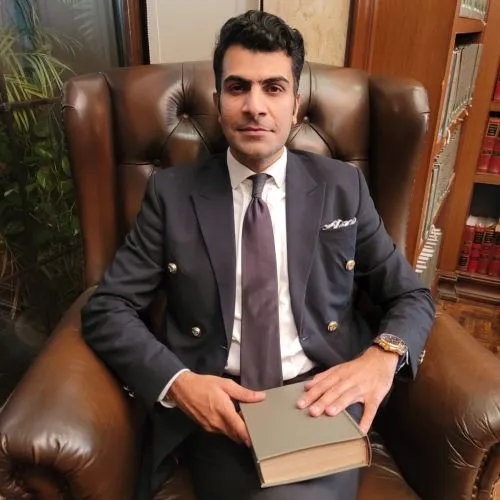
For Malik Aneeq Ali Khatana, Queen Mary was more than a place to study. It was where he found a community, built lifelong friendships and gained the confidence to pursue an ambitious legal career.
Today, as an Advocate of the High Court of Pakistan, Managing Partner of Khatanas’ Law Chamber and a leading voice in legal education reform, Malik Aneeq is helping to shape the future of the legal profession in Pakistan. He reflects on his Queen Mary journey and the experiences that continue to inspire his work supporting the next generation of lawyers.
Your journey at Queen Mary began with a Foundation Certificate in Social Sciences and Humanities. How did this prepare you for your undergraduate studies and subsequent career?
When I first arrived at Queen Mary in 2010, moving from Pakistan to a completely different academic and cultural environment was challenging. Although I had studied in English, I initially struggled with academic writing and formal English and found the transition overwhelming. At one stage, I even considered returning home. What changed things for me was becoming involved in university life; I joined the Pakistan Society, the Bhangra Club and the University of London Polo Club, and developed friendships with students from different countries and backgrounds. The Pakistan Society was particularly important because it gave me a sense of community and the confidence to stay and make the most of the experience.
The Foundation programme taught me much more than academic skills. It taught me how to adapt, persevere and become comfortable in an unfamiliar environment. Those lessons have stayed with me throughout my career. It also gave me the foundation to progress to my undergraduate legal studies, and ultimately to qualify as a lawyer and build my professional career in Pakistan.
You later returned to Queen Mary to study an LLM in International Dispute Resolution. What drew you to this area of law, and what did you enjoy most about your Master's?
Returning to Queen Mary for my LLM was something I had promised myself I would do. When the opportunity arose to study International Dispute Resolution in 2018, I saw it as the perfect opportunity to return to an institution that had played such an important role in my development.
I was particularly attracted to dispute resolution because of its international nature and its combination of legal analysis, strategy and practical problem-solving. The programme brought together experienced professionals from different jurisdictions, and our discussions were often grounded in real professional experience rather than theory alone. That environment changed the way I thought about legal education. I realised that studying law should not simply be about obtaining another qualification; it should be about understanding how knowledge can be applied to solve real problems.
I completed the LLM with a 2:1. My dissertation focused on the implementation of the New York Convention in Pakistan. I analysed decisions of the High Courts and Supreme Court between 2011 and 2020, examining the development of the enforcement of foreign arbitral awards in Pakistan. The research later developed into my book, The New York Convention in Action – Pakistan’s Arbitration Revolution, which examines the development of arbitration and the enforcement of foreign arbitral awards in Pakistan. The LLM ultimately strengthened my commitment to developing international dispute resolution and arbitration as a significant part of my legal practice in Pakistan.
What are some of your favourite memories from your time at Queen Mary?
Some of my favourite memories are actually very simple: sitting by the canal with friends, spending long hours in the library before exams and living in student accommodation. I also have very fond memories of the Pakistan Society, the Bhangra Club, playing polo and being part of the wider Queen Mary community. What made the experience particularly special was the diversity of the people I met. Queen Mary brought together students from different countries, cultures and backgrounds, and those friendships made London feel like home.
Looking back, I realise that the university experience was about much more than the classroom. The relationships, experiences and confidence I developed there have remained important throughout my career.
You are now an Advocate of the High Court of Pakistan and Managing Partner of Khatanas’ Law Chamber. Can you tell us about your work and what you find most interesting or rewarding?
My legal career in Pakistan developed through a combination of private practice, institutional work and litigation. After returning to Pakistan, I worked with a number of organisations, including the Federation of Pakistan Chambers of Commerce and Industry, and the Advocate General Office Islamabad, where I worked as State Counsel. I also worked with a law firm specialising in international arbitration and bilateral investment treaties. In 2018, I established my own law firm, Khatanas’ Law Chamber, where I am now Managing Partner. My practice includes dispute resolution and arbitration, corporate advisory, constitutional litigation and public-interest litigation.
A significant part of my work has involved cases where the objective goes beyond resolving an individual dispute and addresses issues affecting wider sections of society. I began working on public-interest matters involving prisoners, juveniles and specially abled people, and gradually became involved in broader questions of legal education, professional regulation and access to justice.
Two of the cases I am particularly known for have involved legal education and the compulsory teaching of the Quran with translation. Both have involved significant public-interest questions and have required sustained legal work across different jurisdictions and institutions. The Quran case arose from a simple observation: the majority of students were studying the Quran, or the religion of Islam, but were not understanding the Quran itself, because it is in Arabic while we speak Urdu in Pakistan. Under the law, I pleaded these cases across Pakistan to make it compulsory for students to understand the Quran, not just read it, so that they can apply the teachings in their everyday lives.
What I find most rewarding is being able to use the law not only to represent individual clients, but also to address systemic problems and contribute to changes that can have a wider and lasting impact.
Alongside your legal career, you have also been involved in teaching and legal education. What do you enjoy about working with aspiring lawyers, and has teaching influenced the way you approach your own career?
My personal experience as a young lawyer had a major influence on my decision to become involved in legal training. I experienced first-hand the gap between academic legal education and the practical skills required to succeed in the profession. I also saw many talented young lawyers struggle simply because they did not have access to proper training, mentorship or practical guidance.
In 2018, I started a practical legal training programme through my law firm, focusing on skills such as communication, CV writing, interviews, legal drafting and appearing in court. Since then, I have trained almost 6,000 aspiring and young lawyers across Pakistan. Teaching has reinforced my belief that legal education must connect academic knowledge with practical training: a lawyer needs to understand not only what the law says, but also how to research it, analyse it, communicate it and apply it effectively. That philosophy has also influenced my own practice. It has made me more conscious of the responsibility lawyers have to pass knowledge on to the next generation and to help create a profession that is better prepared for the challenges of modern legal practice.
You have been involved in efforts to reform legal education and training in Pakistan. Why is this issue important to you, and what changes would you most like to see in the profession?
It's personal for me because I experienced many of the challenges within the system first-hand. I saw talented young people enter the legal profession without sufficient practical training or financial support, while legal education did not always prepare students for the realities of professional practice.
My involvement in legal education reform developed through litigation concerning the regulation of legal education and entry into the legal profession. This included a Supreme Court case, Malik Aneeq Khatana v. Khalid Javed (2020), addressing the regulation of law colleges and professional training, which contributed to important reforms in legal education and professional entry requirements. These included the introduction of the Law Admission Test, the Law-GAT (a standardised assessment for law graduates seeking to enter the profession), the Bar Vocational Course (practical professional training for new lawyers) and the establishment of the Directorate of Legal Education (a body to oversee and regulate legal education).
For me, however, reform cannot end with legislation, regulations or judgments. Implementation is equally important. I would like to see a legal education system in which students receive strong academic foundations and meaningful practical training before entering professional practice. I also believe that professional regulation must focus on quality, standards and accountability so that the legal profession can attract and develop capable lawyers. Ultimately, the objective should be to produce lawyers who are not only academically qualified, but genuinely prepared to serve their clients, courts and society.
You recently founded the Young Lawyers Movement Pakistan. What inspired you to establish the movement, and what do you hope it will achieve?
The Young Lawyers Movement Pakistan grew out of my own experiences and conversations with young lawyers across the country. One of the most significant problems I identified was the difficulty many young lawyers face when entering the profession, particularly the lack of financial support, practical training and meaningful opportunities to develop their careers. I decided to speak publicly about these issues and to advocate for better conditions and greater professional dignity for young lawyers. The response was immediate. One of my posts reached more than 100,000 people within 24 hours, and lawyers from across Pakistan began contacting me. Within days, thousands of people had expressed their support for the movement.
The movement focuses on three broad areas: improving the financial and professional conditions of young lawyers, ensuring meaningful practical training, and modernising the justice system through digitalisation and e-courts. Importantly, I do not see the movement as being against senior lawyers. It is about addressing systemic problems and creating a more sustainable and professional legal profession. The movement is deliberately non-political. My aim is to encourage young lawyers to pursue reform through law, legal education, constitutional mechanisms and constructive institutional engagement rather than through political slogans.
Your education and career have taken you between the UK and Pakistan. What advice would you give to current Queen Mary students and recent graduates hoping to build an international career in law?
My first piece of advice would be to make the most of the people you meet at university. Stay connected with your classmates, lecturers and tutors. Get involved in societies and extracurricular activities, and build friendships with people from different countries and professional backgrounds. Those relationships can become an important part of your professional network many years later.
I would also encourage students to make full use of the Queen Mary alumni network and remain connected with the University after graduating. You never know where a conversation, friendship or professional connection may lead. Academically, I would encourage students to develop a genuine area of specialisation rather than simply collecting qualifications. Try to understand how what you learn can be applied in practice and how it can create value in your chosen jurisdiction.
Most importantly, make the most of your time at university. When you are there, it can feel as though that period will last forever. It does not. Looking back, I realise how important those experiences, relationships and opportunities were - not only to my career, but also to the person I became.
Looking back on your career so far, which achievement or contribution are you most proud of, and what would you like to achieve next?
I am particularly proud of the two major public-interest cases I have worked on. What makes them meaningful to me is that I pursued them at times when I had limited financial and institutional support, and when there were people who questioned whether the effort was worthwhile.
The legal education work contributed to important changes in how lawyers enter and train for the profession, while my work concerning the compulsory teaching of the Quran with translation has contributed to developments across several provinces and remains an ongoing matter before the Supreme Court.
I am also proud of the opportunity to have trained almost 6,000 aspiring lawyers across Pakistan. For me, creating opportunities for the next generation is one of the most meaningful ways in which a lawyer can contribute to the profession.
Looking ahead, I want to continue developing my practice in dispute resolution and arbitration while remaining involved in public-interest litigation and legal education reform. Through the Young Lawyers Movement, I also hope to contribute to lasting improvements in the professional lives of young lawyers and in the modernisation of Pakistan’s justice system. Ultimately, my ambition is not simply to raise awareness of problems, but to help establish changes in law, legal education and professional practice that can continue to benefit future generations.