
Waste Landscapes
Waste Landscapes: Material Worlds and Cultural Imaginaries
Lead Supervisor: Carlo Inverardi-Ferri • Website • Email
Degree Programme: Department of Geography and Environmental Science
Co-Supervisor:
Kasia Mika-Bresolin, Comparative Literature, School of the Arts
Project Description
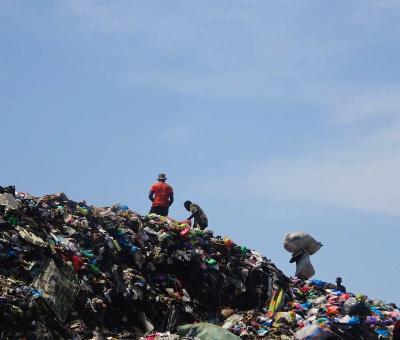
As a peculiar object that is both material and cultural, waste generates distinctive landscapes of extraction, abandonment, disposal, and recovery, while also producing powerful representations and imaginaries across literature, art, architecture, and visual culture more broadly. As such, waste can be understood simultaneously as an environmental hazard, a commodity, a livelihood strategy, and a symbol of alternative futures. This doctoral project investigates how the material production of discards relates to how waste landscapes are culturally represented and imagined. What can this relationship reveal about contemporary societal anxieties, inequalities, and imagined futures?
This PhD will examine this question through an enquiry into specific waste and toxic landscapes. These might include research in informal scrapyards and recycling hubs, abandoned urban, industrial and mining spaces, and contaminated sites, among others. The project will bring the empirical investigation of these geographies into conversation with the cultural and spatial representations that accompany them. For example, it might explore how the everyday experiences of waste scavengers in China have translated into the eco-cyberpunk landscapes imagined in Chen Qiufan’s novel The Waste Tide, how local histories of social and environmental injustice relate to cultural accounts of toxic disposal in southern Europe, or how practices of abandonment, disposal, and recycling are represented through specific spatial forms and architectural artefacts, such as the transformations of the former landfill of Fresh Kills in New York through landscape design.
The project builds therefore on a sustained dialogue between the material worlds of waste disposal and the cultural imaginaries that accompany them. Cultural materials could therefore include novels, film, photography, artworks, architectural plans and exhibitions, planning archives, as well as policy narratives and visual documents. In doing so, the project examines not only how cultural imaginaries characterise existing waste landscapes, but also how these representations make certain communities and harms more or less visible, legitimise political interventions, and imagine the afterlives of discards through specific future practices of repair and reuse.
The project is grounded in critical waste and discard studies, and is open, but not limited, to different methodological approaches including ethnography, literary and cultural analysis, oral history, discourse analysis, architectural and spatial analysis, and visual methods. The successful candidate will develop their own independent project, during the first months of the PhD, in conversation with the supervisors. While the project is open geographically, relevant language expertise in relation to the chosen research context is particularly welcome.
What we're looking for in a student
Prospective candidates should ideally hold a first-class undergraduate degree and/or a Master's degree at Merit level or above in Human Geography, Environmental Humanities, Comparative Literature, Architecture, Cultural Studies, or another cognate discipline. If you have an Upper Second Class degree, you should be able to demonstrate a record of work at 1st Class level. Familiarity with qualitative research methods, including ethnography, critical discourse analysis and visual methods, is desirable. Knowledge of a second language (beyond English) relevant to the proposed geographical context is particularly welcome. The successful candidate will benefit from interdisciplinary supervision and will be expected to participate actively in the intellectual life of the School of Society and Environment and the School of the Arts, as well as the wider academic community of research centres, laboratories and informal networks at Queen Mary and the University of London.
Key words: Waste landscapes, material words, cultural imaginaries, literature, architecture