
Coatings for Universal Waste-Compatibility
Coatings for Universal Waste-Compatibility: Integrating Materials Engineering, Life-Cycle Assessment, and Economic Policy
Lead Supervisor: Colin Crick • Website • Email
Degree Programme: PhD Materials Science
Co-Supervisors:
Marina Resmini (School of Physical and Chemical Sciences)
Caterina Gennaioli (Queen Mary Business School)
Project Description
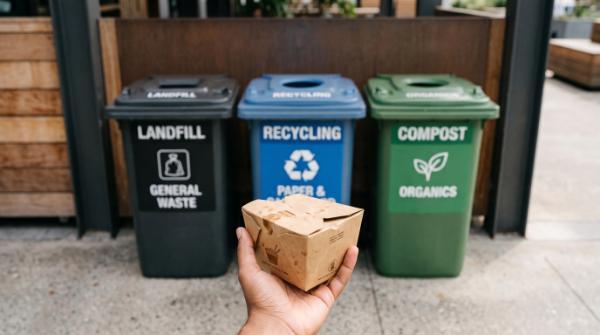
Every day, millions of tonnes of paper packaging are used worldwide. While paper itself is renewable and easily recycled, the protective coatings applied to it to repel water, grease, and gases are not. Modern packaging relies heavily on synthetic plastics and persistent chemicals. These coatings create a major environmental bottleneck, as they can clog machinery during paper recycling, resist biological breakdown during composting, and contribute to microplastic pollution when discarded in landfills. Consumers frequently struggle to navigate complex recycling rules, and packaging often ends up in the wrong bin. To create a truly sustainable packaging ecosystem, we must move away from materials that rely on perfect sorting. Instead, we need next-generation packaging engineered for universal waste compatibility. That is, materials designed from the outset to be safely recycled, composted, or processed in municipal waste facilities without harming the environment.
This doctoral project offers an exciting opportunity to bridge advanced material science, real-world infrastructure, and environmental policy to tackle this challenge head-on. The core of the research is the development of functional, bio-derived coatings for paper substrates using renewable natural materials. You will explore how novel surface chemistry can deliver high-performance barrier properties against liquids and gases, matching the durability of conventional plastics while ensuring the underlying paper can still break down safely after use. Through rigorous experimental work, you will evaluate how these bio-coated papers behave across three primary end-of-life pathways: • Paper Recycling. Assessing repulpability and fibre recovery in standard paper recycling processes. • Industrial Composting. Tracking biodegradation rates and ensuring zero persistent chemical residues in soil and aquatic environments. • Energy-from-Waste & Landfill. Evaluating environmental safety, energy recovery, and degradation dynamics under municipal waste conditions. Crucially, this project extends far beyond traditional laboratory chemistry. To ensure that these new materials can transition from the lab bench into the global supply chain, you will combine experimental testing with quantitative Life-Cycle Assessment (LCA), techno-economic modelling, and policy evaluation.
You will work directly alongside major commercial waste management operators using real-world operational data and industry insights to validate your findings. By joining this project, you will help redefine how sustainable packaging is designed, creating a blueprint for materials that align fundamental science with the practical realities of modern waste management infrastructure.
What we're looking for in a student
We are seeking a motivated candidate with an academic background in chemistry, materials science, engineering, environmental science, or a related discipline. The ideal student will possess a strong curiosity for sustainable material design and an enthusiasm for bridging laboratory science with economic and environmental policy. As a doctoral researcher on this cross-faculty project, you will receive comprehensive interdisciplinary training. You will develop practical expertise in functional surface chemistry, advanced polymer characterisation, life-cycle assessment, and economic modelling. You will gain hands-on access to state-of-the-art laboratories and specialized equipment across three Queen Mary schools: Materials Science (SEMS), Chemical Sciences (SPCS), and Business and Management (SBM). Guidance will be provided by Dr Colin Crick, Prof. Marina Resmini, and Dr Caterina Gennaioli, alongside direct industry engagement with major waste management operators.
Key words: Sustainable Waste, Functional Materials, Environmental Impact, Economic Policy, Coatings