
Our Doctoral Researchers
On this page, you'll meet the doctoral researchers of our cohorts, learn about the projects they are undertaking, and discover how their research aims to address some of the most pressing health challenges facing the communities of East London and beyond. From advancing our understanding of disease to exploring new approaches in data science, population health and patient care, their work is helping to shape the future of healthcare and medical research.
Explore their profiles to find out more about the students behind the research and the impact they hope to make.
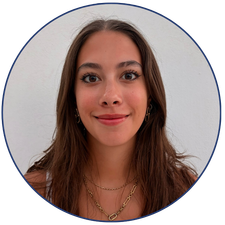 Alexandra Day
2026 Cohort
Read more...
 Comments from Dr Mohsin Badat: I’m really looking forward to Alexandra joining the lab. Every time we met it was clear that she was very inquisitive, with a keen appreciation of the research questions and how we might approach them with the techniques that we use. People with Sickle Cell Disease and Thalassaemia have been historically underrepresented in research funding and clinical trials and the East London Red Cell Network is one of the country’s largest. We’re very grateful for Barts Charity for funding this project, and I’m very hopeful Alexandra’s work will help East London lead the way in establishing new ways to treat these severe conditions.
 Eleanor Moyle
2026 Cohort
Read more...
I am really excited to be starting at the Blizard Institute as a PhD student with the Barts Charity DTP. Before joining this programme, I completed my undergraduate degree in Biology at the University of Bath. During this time, I undertook a placement year at the biotechnology company Immunocore, where I carried out analysis of human tissue samples as part of the Translational Medicine department. Since graduating from Bath, I have been studying for an MRes in Cancer Sciences at the University of Birmingham as part of the Broderick Lab, investigating the interplay between DNA damage repair pathways in the alternative lengthening of telomeres mechanism.
I applied to the Barts Charity DTP because of its unique emphasis on local community engagement, as well as the opportunity to benefit from extensive interdisciplinary training. My PhD project, under the primary supervision of Dr Adrian Biddle, will investigate how epigenetic dysregulation contributes to inflammation and modifies cell fate in oral cancer. I am particularly looking forward to utilising an advanced 3D tumour-on-chip model, which will allow us to assess cell fate and invasion dynamics within the context of a relevant tumour microenvironment.
Oral cancer is particularly prevalent in East London, where incidence rates are higher than the national average and continue to increase. Patients face wide variations in outcomes, highlighting a clear need for better diagnostic biomarkers to help inform treatment decisions. This research has the potential to uncover new biomarkers for oral cancer progression, which could help to stratify patients and prevent over- and under-treatment, ultimately benefiting the East London community and supporting the aims of Barts Charity.
 Comments from Dr Adrian Biddle: I’m thrilled to welcome Eleanor to our lab as part of the Barts Charity DTP. She has the perfect background for this project, where she will combine insights from human tissue analysis with advanced tumour-on-chip models to understand how inflammation influences the progression of oral cancer. This work could have important implications for immunotherapy, an increasingly important approach to cancer treatment. Oral cancer is a significant health burden in East London, and understanding how it develops and spreads is vital for identifying new opportunities for earlier intervention and better treatment. Ultimately, we hope this research will improve outcomes and long-term quality of life for people living with oral cancer.
 Comments from Professor Helen Rowe: I’m delighted to act as Eleanor’s second supervisor for her exciting project linking epigenetic dysregulation to cell fate and progression of oral cancer. This project will uncover how oral and squamous cell cancers, which are prevalent in East London, progress and might be treated.
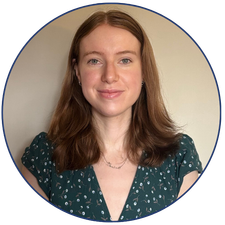 Isabel Massey
2026 Cohort
Read more...
I’m Isabel, a PhD student from Southeast London and part of the Barts Charity Doctoral Training Program. I recently graduated from Cardiff University with an Integrated Master’s degree in Biomedical Science. My research focussed on assessing the impact of cFLIP inhibition on the viability of both ‘bulk’ and stem-like cancer cell subpopulations in triple negative breast cancer. This ignited my interest in solid tumour treatment resistance and disease relapse, specifically the role of tumour heterogeneity and the microenvironment.
I am incredibly excited to continue my research journey in cancer biology at the Barts Cancer Institute under the supervision of Dr Oliver Pearce. The project I have selected is titled ‘Preclinical Models of Epigenetic Modulation to Enhance Responses to Chemoradiation in Locally Advanced Pancreatic Cancer’. Using a decellularized model of pancreatic ductal adenocarcinoma (PDAC) to recapitulate the dense fibrous extracellular matrix (ECM), I will assess the impact of a panel of epigenetic drugs and a recently approved RAS inhibitor on immune infiltration and stromal phenotype. Building on the work of previous PhD students I will aim to determine whether combination treatments can overcome the dense ECM and enhance PDAC response to immunotherapy and chemotherapy.
The focus on the tumour microenvironment will provide opportunities to investigate multiple aspects of pancreatic cancer biology, while the use of clinically approved cancer drugs presents a strong potential for translation- for me, this is unequivocally the most exciting and motivating aspect. Pancreatic cancer has the lowest 5-year survival rate of all common cancers and is the 10th most common cancer in the UK. East London, one of the most ethnically and socially diverse areas in the UK, has significant health inequalities. My research will hopefully contribute towards more robust and accessible treatments for pancreatic cancer, in turn, supporting the local community of East London.
 Comments from Dr Oliver Pearce: I am delighted that Isabel will be joining my laboratory, and in collaboration with Dr. David Propper, through the Barts Charity Doctoral Training Programme. This project builds on our continuing work with Barts Charity on epigenetic therapies for pancreas cancer, here combining with chemoradiotherapy in locally advanced pancreatic cancer, using preclinical and patient-relevant models. Isabel will gain training across matrix biology, immunology, epigenetics and translational research, within a collaborative multidisciplinary environment. Most importantly, the work addresses a major unmet clinical need. By identifying more effective treatment combinations, we hope ultimately to improve outcomes for patients with pancreatic cancer, including those in East London where deprivation and health inequalities contribute to poorer cancer outcomes.
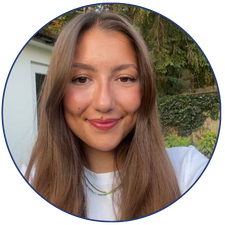 Isobel Bailey
2026 Cohort
Read more...
I'm Isobel, and I'm looking forward to starting my PhD in the TCM Lab at Barts Cancer Institute. I completed my BSc in Chemistry with Medicinal Chemistry at the University of York, where I became interested in understanding the molecular mechanisms underlying disease and how this can be translated into new therapeutic approaches. I then went on to complete an MSc in Cancer and Molecular and Cellular Biology at Barts Cancer Institute, where I investigated how the regulation of Aurora B kinase could be targeted in triple-negative breast cancer.
My PhD will investigate sterol metabolism in chronic kidney disease and clear-cell renal cell carcinoma, with a particular focus on understanding their dependence on the metabolic enzyme DHCR24. By exploring this dependency and better understanding the fundamental metabolic changes, we hope to show that this pathway can be exploited therapeutically.
What draws me to this project is its interdisciplinary and translational nature, bringing together my interests in chemistry and cancer biology. I'm looking forward to working with and learning from the talented researchers in the lab and seeing how understanding the fundamental biology of disease can inform new approaches to treatment.
Chronic kidney disease is particularly prevalent among the diverse communities in East London, an area that also faces significant health inequalities. I hope this research can help address this by identifying new therapeutic vulnerabilities, ultimately contributing to more effective treatments and improved outcomes for the communities served by Barts.
I'm also excited to be joining the Barts Charity Doctoral Training Programme, which will allow me to develop my research skills and learn from researchers across different areas of biomedical science, as well as working as part of a cohort of students to develop key research and transferable skills.
 Comments from Dr Barrie Peck: We’re very excited that Isobel is joining the TCM lab at the Barts Cancer Institute, QMUL. Isobel brings a unique mix of chemical and biochemical experience which will really help us uncover the fundamental metabolic changes that take place in chronic kidney disease and kidney cancer, diseases that are particularly prevalent in our East London community. We want to discover how we can better treat patients with these diseases, potentially with new metabolic therapies, and believe this can be achieved by studying the ways in which they fuel their disease state.
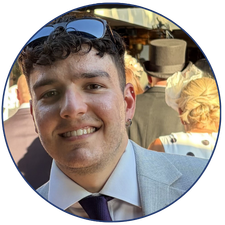 Miguel Lopes
2026 Cohort
Read more...
Hello, my name is Miguel and I am 23-years-old. I finished a Neuroscience MSci at the University of Bristol last summer. Although my undergraduate years focused on neuroscience, I changed direction in my masters’ year, opting for a physiology-related project: immune cell recruitment to bone fractures. My research relied on microscopy techniques and in vivo zebrafish work, although working in a laboratory environment with PhDs/post-docs meant I was exposed to and able to practice molecular techniques. My masters’ project piqued my interest in immunology, and the wonderful, context-dependent behaviour of immune cells. Therefore, when selecting my PhD at QMUL, I was mostly interested in immune-related projects. In particular, the role of galectin-3 (a sugar-binding protein that regulates fibrosis and immune cell activation) in the link between inflammatory arthritis and lung dysfunction.
Dr. Dianne Cooper’s lab uses a mouse model of inflammatory arthritis whereby mice develop joint inflammation alongside reduced lung function, with higher levels of white blood cells containing elevated galectin-3 levels in the lungs, alluding a potential mechanistic link which will be the subject of study in my PhD. This research directly impacts our East London community, which has some of the highest levels of chronic respiratory disease and socioeconomic deprivation that contribute to an earlier onset and more severe rheumatoid arthritis (RA). Furthermore, environmental conditions and occupational exposures exacerbate the condition and contribute to RA-associated lung disease. The investigation of galectin-3 will support earlier detection of lung disease and development of much-needed treatment strategies. Importantly, galectin-3 inhibitors are under clinical trials for other conditions, thus this research can directly meet an imminent need in our local community. On a personal development level, the PhD offers a range of opportunities from cell culture to animal work and the chance for clinical experience with Dr. Alessandra Nerviani. I am super eager to begin my studies and build relationships with my fellow students, colleagues, supervisors and the Barts DTP team!
 Comments from Dr. Dianne Cooper: We are excited to welcome Miguel Lopes to our lab where he will research the link between rheumatoid arthritis (RA) and interstitial lung disease. Why RA increases susceptibility to lung disease is not well understood, and a lack of defined therapeutic options for these patients contributes to increased mortality. This is particularly relevant for the East London community, an area with some of the highest levels of socioeconomic deprivation, multimorbidity, and chronic respiratory disease, all of which worsen outcomes for RA patients. Miguel's project will help identify new therapeutic targets and improve risk stratification for this underserved population, with direct relevance to the patients we see locally.