Why two heads are better than one
Education and business have the potential to positively transform society. Dr Philippa Lloyd, Vice-Principal, Policy and Strategic Partnerships, sets out how – and why Queen Mary University of London, is already ahead of the curve.
When I was Director General of Higher and Further Education at the Department for Education, I had very big conversations about society, culture and the economy. Those conversations continue in my current role at Queen Mary University of London where I am focused on developing opportunities around what Queen Mary offers, our talent, skills, innovation, continuous professional development and apprenticeships and how we can benefit our local, national and international community.
To be a really successful economy people need to be able to upskill or reskill throughout their lives, because the nature of work is changing.— Vice-Principal (Policy and Strategic Partnerships)
Instead of a linear work ladder, I see more of a climbing wall where education at any stage can help people move sideways to enhance their abilities and progress their career. It means higher education is no longer solely for school leavers on undergraduate courses. Now it has a role providing lifelong adult learning so that people mid-career can take a course to bridge a skills gap and transform their potential.
Meeting employer needs
Germany is further ahead of the UK in meshing academic and technical education paths into what’s needed in the workplace. Here, we have historically viewed them somewhat separately but aside from certain specialised careers, what most employers really need are people with good analytical skills, a range of cognitive abilities, who can work in a team, make decisions and communicate well.
Queen Mary’s educational pathways already deliver a lot in this aspect. Located in East London it has long been committed to and learned from its diverse community, embracing its aspirations through different, blended, remote and part-time learning learning modes, for those coming to us from school, getting back into the workplace or seeking to upskill. We offer qualifications from level two up to PhD and were the first in the Russell Group to offer apprenticeship degrees.
Debt-free and diverse
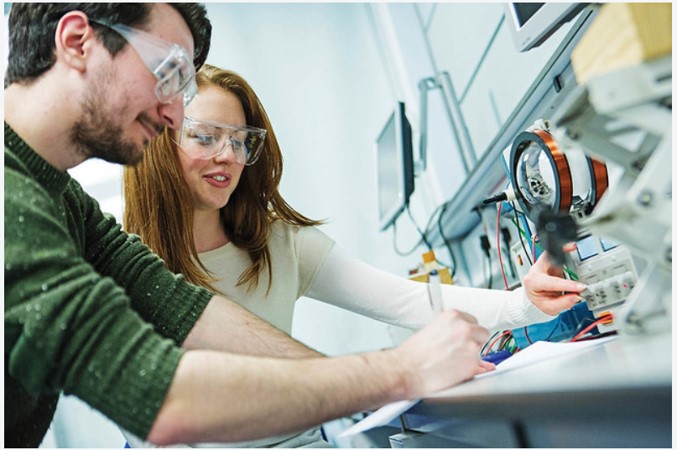
Apprenticeships are really interesting and a powerful way of how education can work with industry through the co-creation of curriculums and assessments. Our students are applying their research and learning to the business strategies and objectives of industries as diverse as the Fintech hub of Canary Wharf and the start-ups of Tech City in Shoreditch to blue chips like KPMG, BBC and Goldman Sachs. Our popular Social Change apprenticeship degree works with NGOs, helping to develop the charity leaders of tomorrow. Queen Mary alumni within organisations provide yet more organic and creative routes for this combined approach. There are other benefits: these degrees produce greater gender parity and opportunity and critically, they are sustainable, using no public money, ensuring students earn as they learn, and finish university without debt.
The Queen Mary Enterprise Zone [wholly owned by the university] offers courses for start-ups and those seeking additional business skills while our DeepMind Scholarships support under-represented groups to pursue postgraduate education in science and engineering. Even if you never went to university, it should not stop you later studying a course or participating in a project – the evaluation of impact of interventions by the local authority, for instance, or research on air pollution.
Together for good
The Government's response to the Augar Review recommendations on post-18 education and funding will be key in bringing schools, further education colleges, universities and industry to work together most effectively. COVID has highlighted issues around regional and health inequalities and unequal access to education so there’s a big opportunity here, to think about how our role needs to change and remain relevant: to better prepare students, of whatever age for their professional life and career changes. Universities owe it to society and I am very optimistic for the part Queen Mary can play.