
Team
The Advanced AI for Multi-modal Spatial Biology DFA will be delivered by an experienced team of academics, with oversight from external advisors and, most importantly for the future, significant input from our students.
Meet the team behind the DFA:
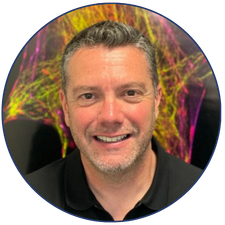 Professor Paul Chapple
Director
Read more...
Paul is Deputy Dean for Postgraduate Research in the Faculty of Medicine and Dentistry and has extensive experience supporting PhD students across disciplines. A bioscientist by training, his research integrates advanced molecular imaging and multi-omics analysis.
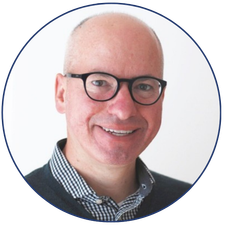 Professor Greg Slabaugh
Co-Director
Read more...
Greg is Director of QMUL Digital Environment Research Institute (DERI) and Academic Liaison to The Alan Turing Institute. He is a computer scientist, with extensive industrial experience (Huawei, Siemens, Medicsight) and academic expertise in ML and deep learning for biomedical image analysis.
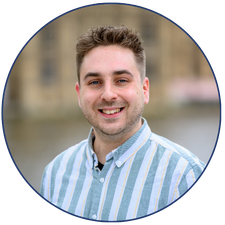 Samuel White
DFA Acting Manager
Read more...
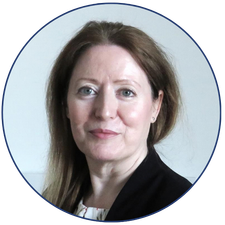 Conchi Vera-Valderrama
Programme Officer
Read more...
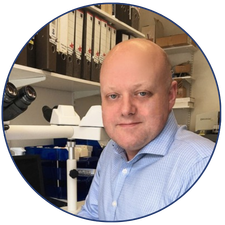 Professor Stuart McDonald
Co-Lead - Spatial Biology Training Lead
Read more...
Stuart works with multi-omic data including spatial technologies to study the development of premalignant disease into cancer.
 Dr Qianni Zhang
Co-Lead - Artificial Intelligence Training Lead
Read more...
Qianni is a Senior Lecturer based within School of Electronic Engineering and Computer Science.
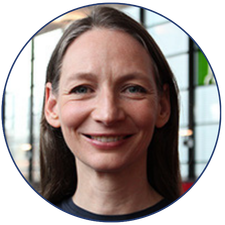 Professor Cleo Bishop
Lead - Projects Oversight Committee
Read more...
Cleo is Director of the QMUL Phenotypic Screening Facility which supports interdisciplinary high content imaging, multiplex, multiomics spatial microscopy and phenomics based research at scale. She has >20 years experience in fundamental discovery science leveraging spatial and genome-wide technologies.
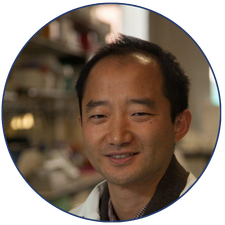 Dr Jun Wang
Lead - Equality, Diversity, and Inclusion
Read more...
Jun’s research lies in developing and applying bioinformatics and computational approaches to analyse large-scale multimodal data to uncover molecular insights in normal and disease tissue.
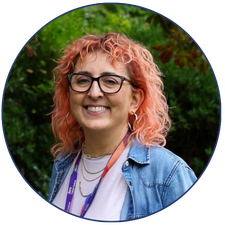 Professor Francesca Ciccarelli (QMUL & Crick)
Co-Director
Read more...
Francesca is Lead of the Centre for Cancer Evolution at Barts Cancer Institute and Co-Lead of the Spatial Biology Hub at QMUL. She has pioneered the use of spatially resolved approaches based on both high-dimensional proteomics and transcriptomics to interrogate cell-cell communications.
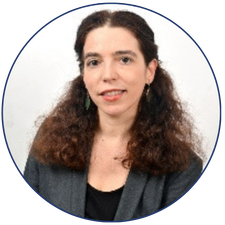 Professor Ginestra Bianconi (QMUL)
Co-Director
Read more...
Ginestra is an internationally recognised expert in network science, complex systems and AI, having made foundational contributions to the mathematical modelling of multilayer and higher-order networks, with particular relevance to spatial data integration and systems biology.
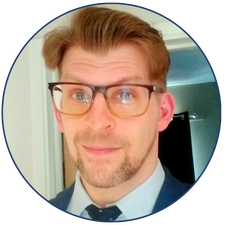 Professor David Leslie (QMUL & Turing)
Co-Lead Delivery of Transparent and Responsible AI
Read more...
David is the Director of Ethics and Responsible Innovation Research at The Alan Turing Institute and Professor of Ethics, Technology and Society at QMUL. David is the author of the UK Government’s official guidance on the responsible design and implementation of AI systems in the public sector.
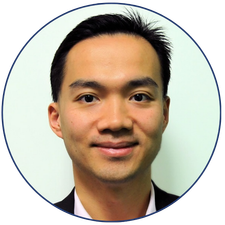 Professor Zion Tse (QMUL)
Computational Skills Training Co-Lead
Read more...
Zion is a biomedical engineer with expertise in AI-driven imaging, robotics, and medical device innovation, he leads interdisciplinary research at the interface of engineering and life sciences.
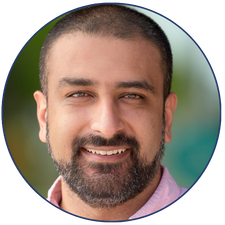 Dr Ahmed Sayed (QMUL)
Lead for Student Experience
Read more...
Ahmed’s research expertise is in distributed systems, large-scale ML, cloud computing and computer networks. He is the PI on the EPSRC KUber project.
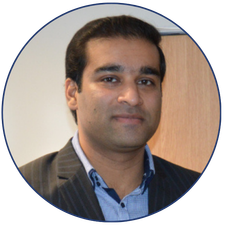 Dr Saqib Shamim (QMUL)
Co-Lead Transferable and Entrepreneurial Skills
Read more...
Saqi’s research interests include innovation management, digital transformations, dynamic capabilities and strategic alignment.
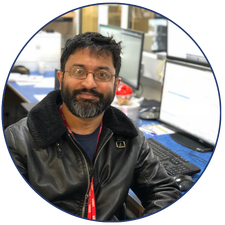 Professor Himadri Gupta
Co-Lead for Project Oversight
Read more...
Himadri is an expert in multiscale synchrotron X-ray imaging of biological tissues. He has over 20 years of experience in developing quantitative techniques to map out spatial nanostructure and nanomechanics of hierarchical biological materials.