
Our Doctoral Researchers
On this page, you'll meet the doctoral researchers of our cohorts, learn about the projects they are undertaking, and discover how their research aims to address some of the most pressing health challenges facing the communities of East London and beyond. From advancing our understanding of disease to exploring new approaches in data science, population health and patient care, their work is helping to shape the future of healthcare and medical research.
Explore their profiles to find out more about the students behind the research and the impact they hope to make.
 Bahar Sevgin
2026 Cohort
Read more...
I am Bahar Sevgin, an incoming BBSRC Doctoral Focal Award student at Queen Mary University of London, based at the Barts Cancer Institute and supervised by Dr Oscar Maiques and Dr Ziquan Liu. I recently completed an MSc in Cancer Genomics and Data Science (Distinction) at QMUL, where my thesis examined representation gaps in UK breast cancer datasets and found that prognostic assays misclassified more often in underrepresented groups. This followed a BSc in Molecular Biology, Genetics, and Bioengineering at Sabancı University. My research experience spans cancer genomics and AI. At the UCL Cancer Institute, I analysed whole-genome and RNA sequencing data from undifferentiated sarcoma. At the University of Groningen, I worked on metabarcoding of endophytic fungi to identify a universal primer, which led to two peer-reviewed publications. Most recently, at the Barts Cancer Institute, I have been building the dermoscopy image modality for different classes of skin lesions.
My PhD project, Uncertainty-Aware Multimodal Deep Learning for Morphologically Ambiguous Biological Boundaries, develops AI that combines different types of tissue images and reports how certain it is, instead of forcing a label onto tissue caught between two biological states. I am building these methods on a well-characterised transition in human skin, integrating histology, dermoscopy and spatial molecular data from the same tissue. The aim is reusable tools for any setting where cells change gradually, such as development, organoids or ageing.
What excites me most is that each modality captures a different view of the same lesion: dermoscopy shows surface architecture, while histopathology shows the cellular detail beneath. Combining them and quantifying where they disagree could make early-stage diagnosis more consistent and models more honest about their limits. I am also motivated by a pattern I have seen repeatedly: models are most overconfident where biology is ambiguous, and they perform worse for patients underrepresented in training data.
I hope this research will deliver tools that flag cases needing expert review and support earlier, provide more consistent diagnosis, and be validated across diverse patient populations. These early lesions are where an uncertain prediction matters most, because the choice between monitoring and excision depends on it.
 Comments from: Dr Oscar Maiques: I am delighted to welcome Bahar to our team. Her project asks a question that runs across biology: when cells change state, can AI tell us whether tissue is genuinely in between, or whether the model is simply out of its depth? Co-supervised with Ziquan Liu, she will work alongside biologists, pathologists and computer scientists, using rare datasets in which the same tissue is imaged and spatially profiled in several ways. This gives her the opportunity to build new methods and test them on real biological questions from day one. The impact reaches well beyond one tissue: open, uncertainty-aware tools that researchers studying development, organoids or ageing can use to trust AI where biology is hardest to read.
 Daniel Ghali
2026 Cohort
Read more...
Hi, I am a PhD student in the AI for spatial biology DFA programme at Queen Mary University of London. I love combining computation with biological data to pursue scientific discovery. I graduated from Aston University in Biological sciences, and was first introduced to programming during a placement year with GSK. I then finished my degree with an award winning research project building a computational pipeline for the structural analysis of membrane proteins.
My PhD will investigate how RNA molecules are spatially organised within neurons. I will develop machine learning approaches that combine spatial transcriptomics with imaging of cellular structures to identify patterns associated with the localisation of transcripts to different parts of the neuron. The aim is to use these patterns to predict the localisation of previously uncharacterised transcripts, while providing interpretation and uncertainty quantification that can generate new biological hypotheses, particularly with regards to neurodegeneration.
What’s particularly exciting to me about this project is the rich and comprehensive MERSCOPE spatial transcriptomics data from the Bourdenx Lab. The quality and richness of the data are fundamental to what can be learned by machine learning models, so I am excited by the opportunity to work with such detailed spatial data. Pairing this with a focus on interpretability and validation also draws on my interest in understanding the reliability of these methods, which can limit the breadth and depth of their use.
The project will deploy reusable, open-source tools for spatial biology that provide insight into how localisation of RNA occurs. Applying these tools in the context of neurodegeneration could allow us to identify patterns of transcript localisation associated with diseases such as Alzheimer’s. In the longer term, this could contribute to our understanding of the cellular mechanisms that contribute to the onset or progression of these conditions.
 Daniel Haywood
2026 Cohort
Read more...
Hi there, I'm Dan, and I'm starting a PhD this year under the UKRI BBSRC programme. I did my undergraduate degree in Mathematics at Imperial College London, where I focused specifically on mathematical computation and applied mathematics. Originally, I'm from a small town near Bournemouth, in the south of the UK, but after living in London during my time at Imperial, I've gradually gotten used to life in the city, and found that I really feel at home here, hence why studying at Queen Mary University of London appealed to me so much. During my undergraduate degree, the work I enjoyed doing the most was towards various research projects as a part of my degree, and so I'm really excited to focus on research full-time - especially research that has a real-world impact. My project focuses specifically on the development of machine learning-based analysis models for spatial lung tissue data, which will help advance treatments for respiratory conditions such as COPD. I've always enjoyed the intersection between mathematics and other applied fields - previously I've done projects involving lots of physics, and so I'm really excited to explore the field of bioinformatics, as well as to produce research that has a real-world impact in the medical industry. I'm also incredibly excited to be working with AstraZeneca for this project, as being able to work alongside pioneers in the field is a truly amazing opportunity. Having come from a mathematics and computer science background, I haven't been afforded many opportunities to produce work that makes a real difference, and so being able to work on something that could lead to more treatments for patients with idiopathic respiratory conditions makes me very happy and grateful that I am able to participate in this programme.
 Comments from Dr Venet Osmani: It's great to welcome Dan to Queen Mary University of London and AstraZeneca to advance research bridging clinical AI and quantitative bioscience. This work will pioneer spatial AI progression models at the intersection of machine learning and spatial biology. Integrating immunohistochemistry with spatial transcriptomics of human lung explants, the project replaces discrete classification with continuous disease modelling. This approach will deepen our biological understanding of respiratory conditions like COPD and IPF, accelerate drug and biomarker discovery, and ultimately improve care for patients suffering from these diseases.
 Dragos-Alexandru Gegea
2026 Cohort
Read more...
I'm Dragoș Gegea, an AI researcher starting a PhD at Queen Mary University of London. My research interests focus on understanding how machine learning systems work and applying them to scientific problems.
I studied Informatics at Coventry University and completed an MSc in Artificial Intelligence with Distinction at the University of Southampton. My master's dissertation used mechanistic interpretability methods to investigate how GPT-2 memorises and reproduces text.
Before beginning my MSc, I spent nearly five years at ieso, first as a Research Software Engineer and later as an AI Scientist. During that time, I developed AI systems for mental healthcare, including a chatbot tested in clinical trials and a platform for collecting data from wearable devices. I also worked closely with clinicians and neuroscientists.
My PhD project, "Generative 3D Reconstruction of Cellular Architecture from Multimodal Spatial Omics Data," focuses on developing generative AI methods to reconstruct the three-dimensional shape and internal structure of cells from two-dimensional microscope images and spatial gene-expression data. The initial focus is on human bone marrow, where we aim to explore how cell structure relates to gene activity, development, and disease.
What interests me most is the challenge of producing reconstructions that can be tested against biological evidence. A convincing 3D image is not necessarily an accurate representation of a cell. Understanding where models are reliable, and what they can genuinely tell us about biology, is therefore a key part of the research.
I hope this project will lead to improved methods for assigning gene-expression measurements to individual cells and comparing cellular.
 Emil Gasimov
2026 Cohort
Read more...
My route into spatial biology has been through AI. I have a bachelor’s degree in computer science and a master’s in artificial intelligence, and have recently been working as a Research Assistant at the Digital Environment Research Institute. My work there has focused on ECG image and signal analysis, which has given me experience of using AI methods with medical data.
My PhD gives me a way to explore AI methods through questions about fibrotic lung tissue. I’ll use microscope images and data on gene activity to study how cells are organised and interact. Different regions of tissue can look and function quite differently, and the work will focus on the boundaries between them, where both cell organisation and gene activity can change. These data contain a lot of detail about individual cells but understanding how they relate to their surroundings is more challenging.
What appeals to me is the possibility of finding something unexpected in the data. I’d like to see whether analysing these multimodal data reveals patterns that are difficult to see in either source alone, and whether those patterns suggest something worth investigating further. I also like the challenge of working out how to model these data, with room to try different approaches.
I hope the work will help researchers study how cells behave across tissue boundaries and better understand the changes associated with fibrosis. The methods developed may also be useful for examining cell organisation in other tissues.
 Comments from Greg Slabaugh: I’m delighted that Emil is starting this PhD in collaboration at QMUL with AstraZeneca, developing new AI methods to explore how cells are organised and interact within fibrotic lung tissue. The project has considerable potential to deepen our understanding of conditions such as idiopathic pulmonary fibrosis, where important biological questions remain unanswered. Emil has already made excellent contributions to ECG image and signal analysis here at DERI, and brings strong technical skills and research initiative. I’m excited to see him apply these strengths at the interface of AI and spatial biology.
 Felix O'Hara
2026 Cohort
Read more...
Felix O'Hara is a mathematical biologist and computer scientist based in Queen Mary's School of Mathematical Sciences. Their academic interest in spatial biology originates from computational neuroscience, having previously conducted research modelling the formation of action selection channels in the striatum. That work generated an interest in how organisation underlies function in the brain, an area in which the BBSRC DFA in Advanced AI for Multi-modal Spatial Biology offers opportunities to study in real tissue data.
Felix holds a BSc in Mathematics from the University of Warwick and an MSc in Cognitive and Computational Neuroscience from the University of Sheffield. Since graduating, they have held numerous software engineering roles, from full-stack development to data engineering.
Their research project will investigate healthy and diseased human brain tissue using spatial and bulk omics data. This data will be modelled as multilayer networks in which each layer captures a different modality. The aim is to construct minimal network models that represent brain tissue, then develop random walk- and diffusion-based algorithms to derive spatial fingerprints within those models.
Felix's immediate interest in this research is in building network models from first principles and applying graph theory and probability theory to create new classifiers for spatial domains. Further, exploring the core network science that underlies spatial biology opens the door to a bounty of unanticipated discoveries.
By the end of the project, Felix aims to have developed simpler, reproducible protocols for clustering spatial features by their structural and molecular correlations. These should give a more complete picture of brain tissue. As the software produced will be generalisable, other groups should be able to apply it to their owm datasets, with potential applications extending to other tissue types and complex systems beyond biology.
 Naomi Danielle Torrisi
2026 Cohort
Read more...
Naomi Torrisi is a biologist and computational researcher working at the intersection of biology and artificial intelligence, with a particular interest in cellular heterogeneity and treatment response. She recently completed an MSc in Cancer Genomics and Data Science with Distinction.
Background
Naomi has around five years of research experience across cancer and neurodegenerative disease, examining heterogeneity at multiple biological levels.
At the Sheffield Institute for Translational Neuroscience, she studied patient-level heterogeneity in ALS, investigating differences in molecular profiles and treatment response.
At the Cancer Research UK National Biomarker Centre, she worked at the single-cell level, characterising rare circulating tumour cells using imaging, immunophenotyping and genomic analysis, alongside studying responses to novel cancer therapeutics.
Her MSc explored heterogeneity at the marker and spatial level, using imaging mass cytometry and image analysis to quantify collagen-I architecture across pancreatic lesions and assess information beyond marker abundance alone.
These projects examined different layers of heterogeneity, but largely in isolation. A key remaining challenge is understanding what happens when patient context, molecular profile, cell morphology, spatial organisation and treatment response are considered together. Her PhD addresses this directly by integrating these dimensions within a single multimodal framework.
PhD project
Naomi's PhD, “Geometry of Senescence: Spatial AI for Population- and Perturbation-Dependent Heterogeneity,” investigates the diversity of senescent cells using multimodal spatial AI.
Rather than forcing cells into a small number of predefined subtypes, the project aims to represent senescence as a continuous biological landscape. Molecular measurements will be integrated with cellular morphology and spatial context to understand how senescent states relate to one another and how this landscape changes following drug or genetic perturbation.
What excites you most about the research?
What excites Naomi most is moving beyond predefined marker-based classifications. A biologically important state may be defined not by one marker, but by a combination of molecular signals, morphology and interactions with neighbouring cells.
By modelling heterogeneity itself, the research could identify transitional, rare or resistant cell states that may be obscured by clustering or average measurements.
Thoughts on the potential impact and outcomes of the research?
This has important implications for drug discovery. Rather than asking whether a treatment works on “senescent cells” as a single population, the approach could reveal which senescent states respond, which remain resistant, how cells transition after treatment and what biological features explain those differences.
Ultimately, this could help identify new therapeutic targets and support more precise strategies for targeting harmful senescent states in cancer, ageing and other diseases.
 Nikitha Palaniappan
2026 Cohort
Read more...
My name is Nikitha Palaniappan, and I am thrilled to join the UKRI BBSRC Doctoral Focal Award programme at Queen Mary University of London, based within the William Harvey Research Institute (WHRI) and Digital Environment Research Institute (DERI). I am particularly excited to return to DERI after gaining invaluable insight into its research environment during my previous Google DeepMind AI Bootcamp.
Being a Computer Science graduate, I specialise in deep learning, big data, cybersecurity and data mining using PyTorch and TensorFlow. My background includes building advanced neural networks such as U-Nets, CNNs, generative and predictive models, using LLMs for complex applications like weather forecasting and multilingual password analysis, which I presented at the IEEE AIMLA 2026 conference. Driven by my passion for using AI to benefit society, my goal is to apply it to healthcare and become an academic researcher in this transformative space.
My PhD project, "Decoding the Topological Grammar of Ectopic Lymphoid Structures using Multimodal Graph Neural Networks", is supervised by Professor Greg Slabaugh, Dr. Elena Pontarini, and Dr. Felice Rivellese. It is a privilege to work with such an insightful supervision team, whose guidance, expertise, and support will be invaluable to my research journey. Based at WHRI, my research tackles a core challenge in spatial biology: quantifying how immune cells aggregate into Ectopic Lymphoid Structures (ELS). I will build an AI framework integrating self-attention U-Nets, spatial Graph Neural Networks (GNNs), and Topological Data Analysis (TDA) across platforms like Xenium and Visium HD.
What excites me most is applying deep learning to immunology to reveal why certain cancer treatments fail and assist clinicians in mapping tumours. Ultimately, this project aims to create AI tools that turn complex tissue data into simple, easily readable maps, helping researchers discover better ways to diagnose and treat chronic inflammation and cancer.
Comments from Greg Slabaugh: I’m delighted that Nikitha is joining our team. She brings a strong computer science background and has already shown real initiative in preparing for the biological side of the project. Working with Elena Pontarini, Felice Rivellese, and myself, she will develop methods to analyse how immune cells are organised in tissue and how ectopic lymphoid structures form. This is an exciting opportunity to bring AI and immunology together.
 Sean Walsh
2026 Cohort
Read more...
Sean holds a BSc in Genetics and an MSc in Bioinformatics and Computational Biology from University College Cork, both awarded First Class Honours. His previous research includes neuroscience imaging and an MSc thesis at the Tyndall National Institute, where he applied AI to investigate the properties of agarose hydrogels. At APC Microbiome Ireland, he worked on inflammatory bowel disease and therapeutic resistance in HER2-positive breast cancer. He also completed a breast cancer multi-omics project associated with the University of Brest in France, using MOFA2 to integrate gene expression and DNA methylation data. Sean is Co-Founder and Chief Technology Officer of the AI healthcare company AMOCA.
During his PhD, Sean will develop foundation AI models to extract molecular and cellular information from histology images. He will develop CellPredict to predict gene and protein markers, followed by a transformer-based model informed by Nicheformer to investigate cellular interactions and gene regulatory networks. Using human and mouse skin datasets, including cutaneous squamous cell carcinoma samples, he will examine how tissue organisation and cellular behaviour change with ageing.
Sean is excited to build on his experience in cancer bioinformatics and biomedical imaging by working at the intersection of computational pathology, oncology and spatial transcriptomics. This interest grew during a neuroscience internship, where he first became fascinated by tissue imaging and seeing the biological structures he studied brought the research to life. His subsequent work in cancer bioinformatics led him to explore how AI could connect visible tissue features with changes in gene activity and cellular behaviour.
His research could enable scientists to study gene and protein expression across thousands of existing histology slides without requiring spatial omics experiments for every sample. Sean hopes this approach will improve our understanding of skin ageing and cancer, with potential future applications in hospital cancer diagnostics.
 Comments from Professor Jun Wang: We are very excited to have Sean joining our team to work on this exciting PhD project. This project involves spatial omics, tissue imaging and AI, which aligns with Sean’s background and skillset. Using existing skin datasets in human and mouse, we aim to transfer rich spatial cellular and molecular knowledgebase to routinely performed histology slides, by developing and implementing foundation AI models. Using this virtual AI tool, this project will generate spatial knowledge using thousands of histology images and identify underlying cellular and molecular changes governing skin ageing, enriching our understanding of ageing processes and disease associations. During the project, Sean will be trained with state-of-the-art spatial and AI techniques, as well as tissue biology. These will position Sean at the forefront of cutting-edge integrative biomedical research.
 Toby McDonald
2026 Cohort
Read more...
 Comments from Professor Paul Chapple: It is fantastic that Toby is joining my research group to work on a multi-disciplinary project, with our collaborator Dr Qianni Zhang, an expert in machine learning and computer vision. The PhD will be focused on applying the power of AI to understand the intracellular distribution of RNA transcripts in neurons. It will exploit a brain tissue spatial transcriptomics dataset, we have generated using a high-resolution, imaging-based, platform. This will be a fantastic resource for Toby’s project with excellent scope to develop new analytical tools and pipelines, to answer exciting biological questions. Toby has an educational background in both neuroscience and AI, making him well placed to succeed in this exciting project.
Comments from Dr Qianni Zhang: We are delighted to welcome Toby McDonald to our research team as part of the BBSRC Doctoral Focal Award programme. Toby brings a strong combined background in neuroscience, quantitative modelling, and artificial intelligence expertise, making him exceptionally well suited to this project. We are particularly excited by the opportunity to develop next-generation AI methods for analysing high-dimensional spatial transcriptomics and molecular imaging data. The research will explore novel machine learning approaches for data integration, representation learning, and automated identification of cellular and tissue structures, addressing key computational challenges in spatial biology. The resulting methodologies have the potential to become enabling technologies for the wider research community, advancing both AI-driven biomedical discovery and our understanding of brain function, ageing, and disease.
 Wiktoria Karpiuk
2026 Cohort
Read more...
Hi, I’m Wiktoria and I couldn’t be more excited about joining the Programme here at Queen Mary and becoming part of the Wolfson Institute!
I completed my BSc in Pharmaceutical Chemistry and MSc in Artificial Intelligence for Drug Discovery at Queen Mary, where I developed a strong interest in applying machine learning and data science to biological and biomedical research.
During my studies, I worked on several computational research projects, including using unsupervised machine learning to analyse biomolecular simulations, as well as exploring deep learning approaches to predicting the inhibition of CYP3A4, an enzyme involved in drug metabolism. These experiences strengthened my interest in using computational methods to investigate biological questions and motivated me to pursue further research.
My PhD project, “Spatial mapping of molecular processes in the living brain through integration of transcriptomic, imaging and genomic data”, will focus on integrating genomic and spatial transcriptomics data from post-mortem human brain tissue with qMRI imaging data from living individuals. By combining information about gene expression and cellular organisation with non-invasive brain imaging, the project aims to better understand and ease up the analysis of the biological processes underlying MRI measurements.
What excites me most about this research is the opportunity to work at the intersection of AI, molecular biology and neuroscience, while gaining expertise in a completely new research field. I’m particularly interested in how different types of biological data can be integrated together, providing insights that would be difficult to obtain from a single approach.
I hope that this research will contribute to a better understanding of the relationship between the brain's molecular characteristics and its imaging properties. In the long term, such insights could help improve the interpretation of neuroimaging data and support research into neurological and neurodegenerative diseases.
 Yuecheng Wen
2026 Cohort
Read more...
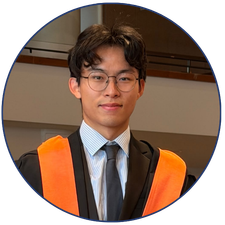
I am Yuecheng Wen, an incoming BBSRC Doctoral Focal Award student at Queen Mary University of London. I recently completed a BSc in Biomedical Sciences (Neuropharmacology) at King’s College London, where my studies combined experimental neuroscience and drug discovery. For my final year dissertation, I wrote about the pharmacological approaches to treating the atherosclerotic plaque which strengthened my interest in vascular biology. Recently, I completed a placement at the London Institute of Health Engineering where I worked with health-technology partners on patient and public involvement, collecting primary data and on communicating AI for respiratory monitoring. Alongside this, I have used Python and R for data analysis, including RNA-sequencing data and have completed the Deep Learning specialisation on Coursera.
I will be undertaking the CASE project Multimodal 3D Tissue Modelling (M3TM) for Metabolic Status, supervised by Dr Qianni Zhang and Dr James Timmons. This project will involve reconstructing three-dimensional human skeletal-muscle volumes from Merscope, serial H&E and confocal imaging data. Following this, graph neural networks will be used to find a correlation between microvascular architecture and cell-cell interactions to insulin sensitivity.
What excites me most is the chance to develop my machine-learning and AI skills while learning spatial biology in depth. I want to apply that training to push beyond two-dimensional snapshots and build 3D models of the vascular-muscle interface. If this project is successful, the work will help clarify how muscle microvasculature contributes to healthy insulin action and potentially highlight pathways relevant to diabetes and related disease.
 Comments from Dr Qianni Zhang: We are delighted to welcome Yuecheng (Leo) to our research team and to support his development as an interdisciplinary researcher at the interface of AI, spatial biology, and metabolic health. Leo has demonstrated strong motivation to combine biological understanding with computational approaches, and this project provides an excellent opportunity to build expertise in both areas. Through the development of multimodal 3D tissue models and graph-based AI methods, the research will help uncover how cellular and vascular organisation influences insulin sensitivity. We hope the outcomes will provide valuable insights into the mechanisms underlying metabolic disease and contribute to the development of more targeted preventative and therapeutic strategies.