
25 years after 9/11: what can the World Trade Center Health Program teach us about cancer screening and prevention?
By Jane Rigney
Jane Rigney is a Clinical Project Manager at the Centre for Cancer Screening, Prevention and Early Diagnosis, Queen Mary University of London. With a background in public health and health promotion, she is interested in cancer prevention, early detection, patient and public involvement, and communicating research in ways that make it accessible and meaningful to wider audiences.
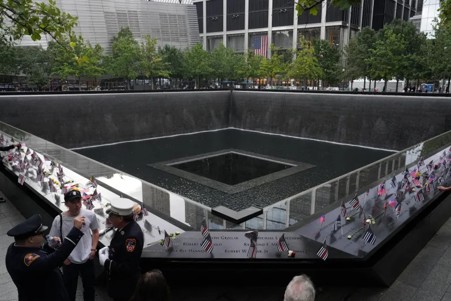
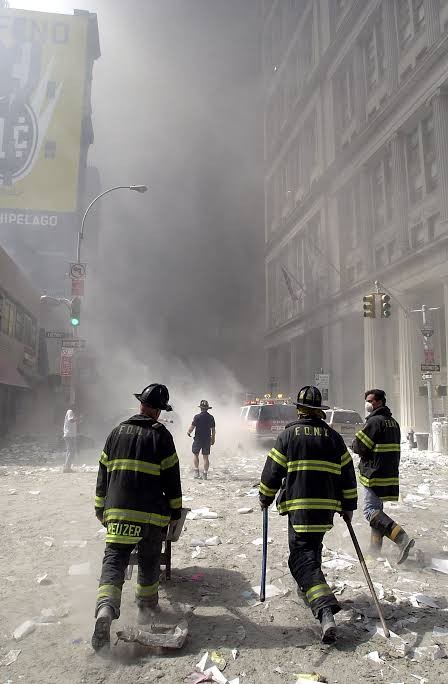
September 11, 2026 marked 25 years since the attacks on the World Trade Center in New York, which exposed thousands of people to environmental toxins and hazardous materials. For many, the health consequences have continued to evolve over decades.
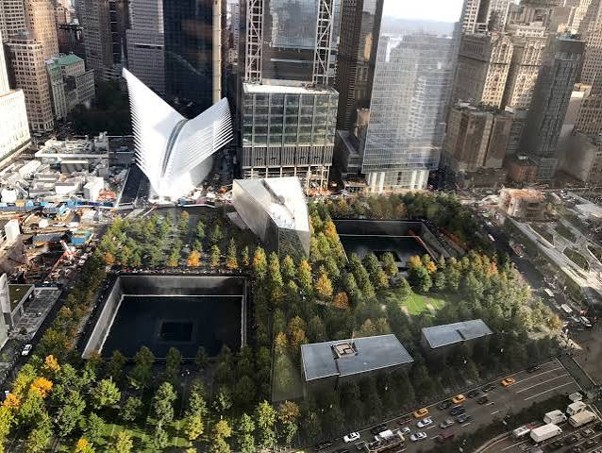
In the years following the attacks, healthcare for those affected was often inconsistent and uncertain. Ten years later, in 2011, the World Trade Center (WTC) Health Program was established to provide eligible responders and survivors with medical monitoring and treatment for 9/11-related health conditions at no out-of-pocket cost. Twenty-five years after the attacks, more than 154,000 people are enrolled in the programme.
 A recent JAMA Perspective reflects on what has been learned from this remarkable long-term programme.
There are many ways to look at the experience of the WTC Health Program. For us, one of the most interesting is what it can tell us about cancer prevention and screening.
What happens when prevention is proactive?
We often think about cancer screening as something that is offered to a population, with the individual then deciding whether to take it up.
The WTC Health Program offers a rather different model.
People enrolled in the programme are followed over the long term, with an initial comprehensive health evaluation followed by annual monitoring examinations. Surveillance, clinical care and research are closely connected, allowing emerging evidence to feed back into clinical practice and the programme to adapt over time.
And the screening figures are striking.
In 2024, around 54% of eligible WTC Health Program members who met US Preventive Services Task Force criteria underwent lung cancer screening. That compares with around 18% nationally across the US in 2022. Screening for breast, cervical and colorectal cancers was also reported to be above national Healthy People 2030 benchmarks.
 This doesn't mean that simply putting people into a programme will automatically solve the problem of screening uptake. The populations are different, and there are important differences between the WTC programme and routine population screening.
But the contrast is difficult to ignore.
The WTC model combines regular contact, health monitoring, access to clinical care and case management. Screening isn't an isolated intervention. It sits within a system that is actively following people over time.
Perhaps the lesson isn't simply that screening works. It is that how we deliver screening may matter just as much as what screening we offer.
Prevention isn't just about finding precancer / cancer.
There is another interesting finding in the paper.
Smoking prevalence among enrolled members was around 4% in 2025, compared with 9.1% among US adults. The authors suggest that this may partly reflect the availability and uptake of smoking cessation and related services within the WTC Health Program.
It is an important reminder that cancer prevention doesn't begin when we find a tumour.
Preventing exposure to tobacco smoke, supporting people to stop smoking, identifying disease early and providing effective treatment are all part of the same continuum.
For someone known to have been exposed to a potentially harmful environment, it makes sense to think about prevention in this broader way. The question becomes not simply “Does this person need screening?” but “What can we do, across the whole pathway, to reduce their risk and improve their health?”
The WTC Health Program brings many of these elements together.
Does finding cancer earlier mean people live longer?
Perhaps the most striking finding is what the programme reports about cancer survival.
Among responders with cancer who participated in the WTC Health Program, mortality was reported to be 26% to 64% lower than in the New York State general population across several cancer types, including prostate, lung, kidney and colorectal cancer.
These are substantial differences.
The authors suggest that access to regular monitoring, early detection and coordinated treatment, including case management and care at no out-of-pocket cost, may contribute to better outcomes.
But there is an important caveat.
The WTC Health Program isn't a randomised trial. People who participate in a programme like this may differ from people who don't, in ways that affect their health outcomes. And when screening detects a cancer earlier, simply increasing the amount of time between diagnosis and death can make survival after diagnosis longer, without necessarily extending a person's life. This is known as lead-time bias, and the authors specifically acknowledge it as a possible explanation for some of the observed survival findings.
But that doesn't make the findings uninteresting.
Quite the opposite. They raise an important question about what happens when screening and early detection are combined with consistent access to healthcare, coordinated treatment and long-term follow-up.
Screening is often evaluated by asking whether it reduces cancer mortality. But perhaps we also need to think more carefully about the system surrounding the screening test: who is offered it, who actually receives it, what happens when an abnormality is found, how quickly people move through the diagnostic pathway, and whether they can access appropriate treatment.
Finding a cancer earlier is only useful if the rest of the system can respond.
What happens when you follow people for decades?
Perhaps the biggest lesson from the WTC Health Program is simply the value of time.
The median age of people enrolled was 39 at the time of the attacks. By 2025, their median age was 63. More than 154,000 responders and survivors are now enrolled.
That means the programme has been following a large, exposed population through a substantial part of their adult lives.
And the experience demonstrates why long-term follow-up matters.
Some health conditions associated with 9/11 exposure can emerge years after the original exposure. The programme's list of covered conditions has therefore evolved as scientific evidence has developed, with all cancers among the conditions now covered. Conditions are generally added when epidemiological evidence provides strong support for a causal association.
This creates an interesting cycle:
monitor → learn → adapt → treat → monitor again.
Research isn't something that happens separately from healthcare. Findings from surveillance and research can inform decisions about which conditions should be recognised and treated, while the experience of treating patients generates further evidence. The authors describe this as an iterative feedback loop.
That may be one of the most valuable lessons for future populations exposed to environmental or occupational hazards.
A different way of thinking about prevention?
The WTC Health Program was created in response to an extraordinary event. It isn't a model that could simply be transplanted into routine population screening.
But it does challenge us to think about what proactive prevention and early detection could look like.
What if screening wasn't simply an invitation that arrived in the post, but one part of a relationship with the health system?
What if people at increased risk had regular opportunities to discuss prevention, smoking cessation, screening and symptoms?
What if abnormal results were followed through by a coordinated system rather than leaving individuals to navigate the next steps themselves?
 And what if surveillance, clinical care and research were designed to learn from each other over decades?
There are no simple answers to these questions. The WTC Health Program is a very particular response to a very particular disaster, and its results need to be interpreted carefully.
But 25 years of experience provide a powerful reminder that cancer prevention is not just about the test we use to find cancer. It is also about the system we build around the person who needs it.
Enjoyed this article? Subscribe to our blog to receive updates when we publish new posts on cancer screening, prevention and early diagnosis.