Thank you for considering an application
To apply you’ll need to:
- Make note of the Queen Mary institution code: Q50
- Make note of your chosen course UCAS code:
Mathematics
- G100 — BSc (Hons)
- G10Y — BSc (Hons) with a Year Abroad
- GGX2 — BSc (Hons) with Foundation
- G101 — BSc (Hons) with Professional Placement
- Click on the link below:
Have further questions? How to apply | Entry requirements
Mathematics BSc
4 study options
Mathematics BSc (Hons)
Key information
- Degree
- BSc (Hons)
- Duration
- 3 years
- Start
- September 2027
- UCAS code
- G100
- Institution code
- Q50
- Typical A-Level offer
- Grades ABB at A-Level. This must include grade A or above in A-Level Mathematics.
Full entry requirements (including contextual admissions) - Home fees
- £10050
- Overseas fees
- £30950
Funding information
Paying your fees
Mathematics with a Year Abroad BSc (Hons)
Key information
- Degree
- BSc (Hons)
- Duration
- 4 years
- Start
- September 2027
- UCAS code
- G10Y
- Institution code
- Q50
- Typical A-Level offer
- Grades ABB at A-Level. This must include grade A or above in A-Level Mathematics.
Full entry requirements (including contextual admissions) - Home fees
- £10050
- Overseas fees
- £30950
Funding information
Paying your fees
Mathematics with Foundation BSc (Hons)
Key information
- Degree
- BSc (Hons)
- Duration
- 4 years
- Start
- September 2027
- UCAS code
- GGX2
- Institution code
- Q50
- Typical A-Level offer
- Grades BBC at A-Level. This must include A-Level Mathematics.
Full entry requirements (including contextual admissions) - Home fees
- £10050
- Overseas fees
- £26750
Funding information
Paying your fees
Mathematics with Professional Placement BSc (Hons)
Key information
- Degree
- BSc (Hons)
- Duration
- 4 years
- Start
- September 2027
- UCAS code
- G101
- Institution code
- Q50
- Typical A-Level offer
- Grades ABB at A-Level. This must include grade A or above in A-Level Mathematics.
Full entry requirements (including contextual admissions) - Home fees
- £10050
- Overseas fees
- £30950
Funding information
Paying your fees
Overview
Harness the power of logic and reasoning to solve complex real-world analytical, technological, and scientific challenges.
Mathematics underpins much of the modern world. It’s behind the most advanced scientific and technological developments. It explains the phenomena in your everyday life: the acceleration you feel in a car, how much interest you’re gaining in your bank account, the way characters interact in video games.
Solving the problems of the 21st century alongside other intellectually curious students, you’ll be able to tailor your degree to your interests and career aspirations as you choose from a variety of modules.
Create an impression
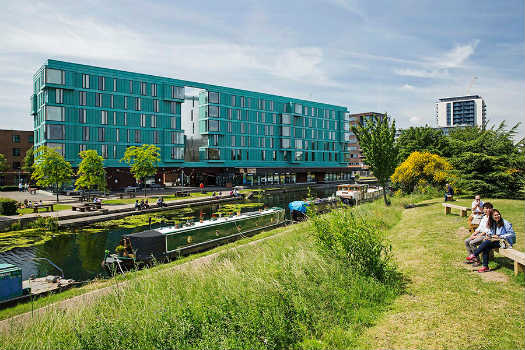
Taught in our recently renovated £18-million building with state-of-the-art facilities, you’ll be inspired by a large team of expert academics. Learn from their years of experience in industry and hear about their cutting-edge research, including how Mathematics helped save thousands of lives in Sub-Saharan Africa.
Outside the lecture theatre, you can experience events led by our award-winning Mathematics Society. Or perhaps you’ll discover new ways of thinking from experts in one of our four research groups, including algebra and number theory, statistics with data science, and more.
Structure
You can complete your Mathematics degree in three, four or five years.
If you choose to do a professional placement or study abroad, this will take place in Year 3, and Year 3 modules will instead be studied in Year 4.
Year 1
Core and compulsory
- Programming in Python I
- Numbers, Sets and Functions
- Introduction to Algebra
- Vectors and Matrices
- Introduction to Analysis with Calculus
- Probability and Statistics
Please note that all modules are subject to change.
Year 2
Core and compulsory
- Linear Algebra I
- Differential Equations
- Programming in Python II
- Probability and Statistics II
- Professional Skills for Mathematicians
- SMS Placement Tutorial
Guided elective
- Convergence and Continuity
- Actuarial Mathematics I
- Complex Variables
- Differential and Integral Analysis
- Linear Programming and Games
- Statistical Modelling I
Please note that all modules are subject to change.
Year 3
Core and compulsory
Please note that all modules are subject to change.
The full programme details and description are available in our Programme and Module Directory
Study options
Apply for this degree with any of the following options. Take care to use the correct UCAS code - it may not be possible to change your selection later.
Integrated foundation year
Students who do not have the required high school qualifications for admission to this degree, and students who do not meet their UCAS Conditional offer may be considered for the 4 year degree (foundation year plus the 3 year degree).
International students with Year 12 or a completed international high school certificate qualify for the one year foundation programme commonly known as the ISEFP.
The foundation programme offers a range of transferable skills and an opportunity to improve on your knowledge content for relevant Maths and Science subjects.
You will enrol on a Mathematics BSc with Foundation which will offer progression to a range of degrees in the School of Mathematical Sciences including BSc Mathematics. At the end of the foundation programme, students will be required to meet the progression requirements for admission to BSc Mathematics
Professional Placement
Apply for our Mathematics BSc with Professional Placement to spend a year carrying out paid work in the financial sector as part of your degree. As well as helping you to stand out from the crowd and secure graduate employment, a placement is an excellent opportunity to develop your business skills and put your learning into context.
A Professional Placement/Industrial Experience year is not guaranteed, but you will receive support to identify and apply for opportunities, as well as interview preparation support to secure a placement/industrial experience year.
Year abroad
Go global and study abroad as part of your degree – apply for our Mathematics BSc or MSci with a Year Abroad. Queen Mary has links with universities in across the globe, including North America, Asia and Australia (partnerships vary for each degree programme).
Find out more about study abroad opportunities at Queen Mary and what the progression requirements are.
You can do either a year in a professional placement or a year abroad - you cannot combine these options.

Student Testimonial
"Every day, I achieve little goals thanks to the opportunities at Queen Mary. You can literally do whatever you want, and Queen Mary will support you to achieve anything. I’ve attended talks from experts at top companies and start-ups and learned from their personal experiences. Queen Mary equips you with the right tools to secure internships and, ultimately, a job after graduation."
Teaching
Teaching and learning
You’ll learn through lectures and tutorials, and also in exercise classes where students work together on problems, discuss ideas and ask questions. Some modules have a practical element presented in one of our computer labs.
Formal teaching time typically takes up 16 hours each week. You’ll also be expected to complete additional hours of independent study.
Assessment
We use a wide range of assessment methods, including examinations (typically contributing 60% and 80% of the module mark), individual and group projects, computer-based assessments and oral presentations. Students also complete a final-year project, giving them the opportunity to apply their knowledge and skills to a research or industry-focussed problem.
Resources and facilities
The School of Mathematical Sciences has invested £18m to create an inspiring, collaborative space for our community of students and staff. The building includes high-quality teaching rooms, private and group study areas and a new social hub.
Find out what our students think about studying mathematics at Queen Mary.
Entry requirements
| A-Level | Grades ABB at A-Level. This must include grade A or above in A-Level Mathematics. |
| IB | International Baccalaureate Diploma with a minimum of 32 points overall, including 6,5,5 from three Higher Level subjects. This must include Mathematics at Higher Level. We will consider either Mathematics: Applications and Interpretation or Mathematics: Analysis and Approaches at Higher Level. |
| BTEC | BTEC qualifications are considered for entry to this programme.\n |
| Access HE | We consider applications from students with the Access to Higher Education Diploma in a Physics or Mathematics based discipline. The minimum academic requirement is to achieve 60 credits overall, with 45 credits at Level 3, of which 18 credits must be at Distinction and 27 credits at Merit or higher. The 18 credits at Distinction must be achieved in Mathematics Modules. Applications are considered on a case by case basis. Due to the high volume of applications, we do not make offers of study purely on the basis of meeting grade requirements. |
| GCSE | Both GCSE English and Maths at grade C or 4 or an acceptable equivalent will be required.\n\n |
| Contextualised admissions | Our standard contextual offer: BBC, including B in Maths at A-Level. \n\nOur enhanced contextual offer: BCC including B in Maths at A-Level. \n\nMore information on our contextual offer criteria can be found on our contextualised admissions page. \n\nPlease note that General Studies and Critical Thinking are excluded from any A-Level offer and cannot be considered. \n |
| A-Level | Grades ABB at A-Level. This must include grade A or above in A-Level Mathematics. |
| IB | International Baccalaureate Diploma with a minimum of 32 points overall, including 6,5,5 from three Higher Level subjects. This must include Mathematics at Higher Level. We will consider either Mathematics: Applications and Interpretation or Mathematics: Analysis and Approaches at Higher Level. |
| BTEC | BTEC qualifications are considered for entry to this programme. |
| Access HE | We consider applications from students with the Access to Higher Education Diploma in a Physics or Mathematics based discipline. The minimum academic requirement is to achieve 60 credits overall, with 45 credits at Level 3, of which 18 credits must be at Distinction and 27 credits at Merit or higher. The 18 credits at Distinction must be achieved in Mathematics Modules. Applications are considered on a case by case basis. Due to the high volume of applications, we do not make offers of study purely on the basis of meeting grade requirements. |
| GCSE | Both GCSE English and Maths at grade C or 4 or an acceptable equivalent will be required. |
| Contextualised admissions | Our standard contextual offer: BBC, including B in Maths at A-Level. Our enhanced contextual offer: BCC including B in Maths at A-Level. More information on our contextual offer criteria can be found on our contextualised admissions page. Please note that General Studies and Critical Thinking are excluded from any A-Level offer and cannot be considered. |
| A-Level | Grades BBC at A-Level. This must include A-Level Mathematics. |
| IB | International Baccalaureate Diploma with a minimum of 28 points overall, including 5,5,4 from three Higher Level subjects. This must include Mathematics at Higher Level. We will consider either Mathematics: Applications and Interpretation or Mathematics: Analysis and Approaches at Higher Level. |
| BTEC | BTEC qualifications are considered for entry to this programme. |
| Access HE | Access qualifications are not considered for entry to this programme. |
| GCSE | Both GCSE English and Maths at grade C or 4 or an acceptable equivalent will be required. |
| Contextualised admissions | We consider every application on its individual merits and will take into consideration your individual educational experiences and context. More information on how academic schools and programmes use this information as part of the admissions process, can be found on our contextualised admissions pages. |
| A-Level | Grades ABB at A-Level. This must include grade A or above in A-Level Mathematics. |
| IB | International Baccalaureate Diploma with a minimum of 32 points overall, including 6,5,5 from three Higher Level subjects. This must include Mathematics at Higher Level. We will consider either Mathematics: Applications and Interpretation or Mathematics: Analysis and Approaches at Higher Level. |
| BTEC | BTEC qualifications are considered for entry to this programme. |
| Access HE | We consider applications from students with the Access to Higher Education Diploma in a Physics or Mathematics based discipline. The minimum academic requirement is to achieve 60 credits overall, with 45 credits at Level 3, of which 18 credits must be at Distinction and 27 credits at Merit or higher. The 18 credits at Distinction must be achieved in Mathematics Modules. Applications are considered on a case by case basis. Due to the high volume of applications, we do not make offers of study purely on the basis of meeting grade requirements. |
| GCSE | Both GCSE English and Maths at grade C or 4 or an acceptable equivalent will be required. |
| Contextualised admissions | Our standard contextual offer: BBC, including B in Maths at A-Level. Our enhanced contextual offer: BCC including B in Maths at A-Level. More information on our contextual offer criteria can be found on our contextualised admissions page. Please note that General Studies and Critical Thinking are excluded from any A-Level offer and cannot be considered. |
Non-UK students
We accept a wide range of European and international qualifications in addition to A-levels, the International Baccalaureate and BTEC qualifications. Please visit International Admissions for full details.
If your qualifications are not accepted for direct entry onto this degree, consider applying for a foundation programme.
English language
Find out more about our English language entry requirements, including the types of test we accept and the scores needed for entry to the programme.
You may also be able to meet the English language requirement for your programme by joining a summer pre-sessional programme before starting your degree.
Further information
Funding
Loans and grants
UK students accepted onto this course are eligible to apply for tuition fee and maintenance loans from Student Finance England or other government bodies.
Scholarships and bursaries
Queen Mary offers a generous package of scholarships and bursaries, which currently benefits around 50 per cent of our undergraduates.
Scholarships are available for home, EU and international students. Specific funding is also available for students from the local area. International students may be eligible for a fee reduction. We offer means-tested funding, as well as subject-specific funding for many degrees.
Find out what scholarships and bursaries are available to you.
Support from Queen Mary
We offer specialist support on all financial and welfare issues through our Advice and Counselling Service, which you can access as soon as you have applied for a place at Queen Mary.
Take a look at our Student Advice Guides which cover ways to finance your degree, including:
- additional sources of funding
- planning your budget and cutting costs
- part-time and vacation work
- money for lone parents.
Careers
Preparing you for your future
As a student of mathematics, you'll gain skills employers value.
Develop highly valued numerical, analytical and problem-solving skills that can prepare you for a wide range of careers. You’ll learn to apply mathematical theories and techniques to real-world problems, developing a versatile skill set that can take you into finance, business, technology and beyond.
From using mathematical models to solve complex problems to analysing data and identifying patterns, the skills you develop can be applied across a wide range of industries. Many graduates go into finance, accounting and actuarial professions, while others pursue careers in management consulting, marketing, engineering, teaching and the public sector.
Where the School of Mathematical Sciences graduates are now
Our graduates have gone on to work in roles such as Data Analyst, Auditor, Consultant, Associate, Software Engineer, Operations Manager and Accountant, at organisations including:
Deloitte LLP
EY
KPMG
PwC
HSBC
NatWest
Lloyds
Aviva
Kubrick Group
Revolut
Career support
Build your employability through networking opportunities, careers events and industry-focused certifications, including Microsoft Excel and SAS. You’ll also have access to a dedicated careers consultant to help you explore your options and gain valuable experience.
The Queen Mary careers team can also offer:
specialist advice on choosing a career path
support with finding work experience, internships and graduate jobs
feedback on CVs, cover letters and application forms
interview coaching.
Learn more about career support and development at Queen Mary
Data for these courses
Mathematics - BSc (Hons)
The Discover Uni dataset (formerly Unistats)
About the School
With over 60 academic staff passionate about mathematics, the School of Mathematical Sciences is an exciting place to be for those who share our love of mathematical discovery. We foster a thriving research culture and a supportive learning environment that puts the needs of our students first.
Our aim is to make your studies enjoyable, challenging and rewarding, and to provide you with every opportunity to build the knowledge and experience you need for future success.
Our active Mathematics Society organises social events, residential trips, talks and career events. We are also engaged in the wider community and regularly run interactive activities to encourage more students to take mathematics at A-level and degree level.
The School holds a department-level Athena SWAN Bronze award, which recognises and celebrates good employment practice for women working in mathematics and science education and research.