Thank you for considering an application
To apply you’ll need to:
- Make note of the Queen Mary institution code: Q50
- Make note of your chosen course UCAS code:
Biology
- C100 — BSc (Hons)
- NULL — BSc (Hons) with Year in Industry
- CCX2 — BSc (Hons) Biological Sciences with Foundation
- C10Y — BSc (Hons) with a Year Abroad
- Click on the link below:
Have further questions? How to apply | Entry requirements
Biology BSc
4 study options
Biology BSc (Hons)
Key information
- Degree
- BSc (Hons)
- Duration
- 3 years
- Start
- September 2026
- UCAS code
- C100
- Institution code
- Q50
- Typical A-Level offer
- Grades ABB at A-Level. This must include A-Level Biology.
Full entry requirements (including contextual admissions) - Home fees
- £9790
- Overseas fees
- £32950
Funding information
Paying your fees
Biology with Year in Industry BSc (Hons)
Key information
- Degree
- BSc (Hons)
- Duration
- 0 years
- Start
- September 2026
- UCAS code
- NULL
- Institution code
- Q50
- Entry Requirements
- Full entry requirements (including contextual admissions)
- Fees
- Fees for this course are not available yet. Please contact the Fees Office for more information.
Biological Sciences with Foundation BSc (Hons)
Key information
- Degree
- BSc (Hons)
- Duration
- 4 years
- Start
- September 2026
- UCAS code
- CCX2
- Institution code
- Q50
- Typical A-Level offer
- Grades CCC at A-Level. This must include A-Level Biology or Chemistry. A second science subject at A-Level from either Biology, Chemistry, Maths, Further Maths, Physics or Psychology is also required.
Full entry requirements (including contextual admissions) - Home fees
- £9790
- Overseas fees
- £25500
Funding information
Paying your fees
Biology with a Year Abroad BSc (Hons)
Key information
- Degree
- BSc (Hons)
- Duration
- 4 years
- Start
- September 2026
- UCAS code
- C10Y
- Institution code
- Q50
- Typical A-Level offer
- Grades ABB at A-Level. This must include A-Level Biology.
Full entry requirements (including contextual admissions) - Home fees
- £9790
- Overseas fees
- £32950
Funding information
Paying your fees
Overview
Demand for trained biologists is high. Not just in the scientific world, but across different sectors and society as a whole.
<p><span data-contrast="auto">New generations of scientists are</span><span data-contrast="auto"> crucial to the future of our world.</span><span data-contrast="auto"> Become a biologist to carry out research, find solutions and create change to preserve our planet. </span><span data-ccp-props="{"201341983":0,"335559739":200,"335559740":312}"> </span></p>
<p><span data-contrast="auto">Our teaching team have extensive experience. Studying with us, </span><span data-contrast="auto">yo</span><span data-contrast="auto">u’</span><span data-contrast="auto">ll</span><span data-contrast="auto"> learn from our research</span><span data-contrast="auto"> on genetics, ecology, and the intersection of the two</span><span data-contrast="auto">, so that you can make a real difference, whatever you decide to do. </span><span data-ccp-props="{"201341983":0,"335559739":200,"335559740":312}"> </span></p>
<p><span data-contrast="auto">Alongside core areas, you’ll</span><span data-contrast="auto"> choose from a wide range of</span><span data-contrast="auto"> optional</span><span data-contrast="auto"> modules</span><span data-contrast="auto"> covering everything from physiology to </span><span data-contrast="auto">computing skills. Mix and match to take a broad approach to your studies or drill deep into the areas that interest you</span><span data-contrast="auto">.</span><span data-ccp-props="{"201341983":0,"335559739":200,"335559740":312}"> </span></p>
<h2 aria-level="2"><span data-contrast="none">Diverse career opportunities </span><span data-ccp-props="{"134245418":true,"134245529":true,"201341983":0,"335559739":0,"335559740":312}"> </span></h2>
<p><span class="TextRun SCXW233097874 BCX8" data-contrast="auto"><span class="NormalTextRun SCXW233097874 BCX8">P</span></span><span class="TextRun SCXW233097874 BCX8" data-contrast="auto"><span class="NormalTextRun SpellingErrorV2Themed SCXW233097874 BCX8">assionate</span><span class="NormalTextRun SCXW233097874 BCX8"> about ecology, </span><span class="NormalTextRun SCXW233097874 BCX8">conservation</span><span class="NormalTextRun SCXW233097874 BCX8"> or animal biology</span></span><span class="TextRun SCXW233097874 BCX8" data-contrast="auto"><span class="NormalTextRun SCXW233097874 BCX8">? Y</span></span><span class="TextRun SCXW233097874 BCX8" data-contrast="auto"><span class="NormalTextRun SpellingErrorV2Themed SCXW233097874 BCX8">ou</span></span><span class="TextRun SCXW233097874 BCX8" data-contrast="auto"><span class="NormalTextRun SpellingErrorV2Themed SCXW233097874 BCX8">’</span></span><span class="TextRun SCXW233097874 BCX8" data-contrast="auto"><span class="NormalTextRun SpellingErrorV2Themed SCXW233097874 BCX8">ll</span></span><span class="TextRun SCXW233097874 BCX8" data-contrast="auto"><span class="NormalTextRun SCXW233097874 BCX8"> have the chance to develop </span></span><span class="TextRun SCXW233097874 BCX8" data-contrast="auto"><span class="NormalTextRun SCXW233097874 BCX8">real-world skills with our field </span></span><span class="TextRun SCXW233097874 BCX8" data-contrast="auto"><span class="NormalTextRun SCXW233097874 BCX8">trips. Past students have</span></span><span class="TextRun SCXW233097874 BCX8" data-contrast="auto"><span class="NormalTextRun SCXW233097874 BCX8"> </span><span class="NormalTextRun SCXW233097874 BCX8">studied</span></span><span class="TextRun SCXW233097874 BCX8" data-contrast="auto"><span class="NormalTextRun SCXW233097874 BCX8"> </span></span><span class="TextRun SCXW233097874 BCX8" data-contrast="auto"><span class="NormalTextRun SCXW233097874 BCX8">large mammals in South Africa </span></span><span class="TextRun SCXW233097874 BCX8" data-contrast="auto"><span class="NormalTextRun SCXW233097874 BCX8">and explored</span></span><span class="TextRun SCXW233097874 BCX8" data-contrast="auto"><span class="NormalTextRun SCXW233097874 BCX8"> ecological interactions in Croatia</span></span><span class="TextRun SCXW233097874 BCX8" data-contrast="auto"><span class="NormalTextRun SCXW233097874 BCX8">.</span></span></p>
<p><span data-contrast="auto">A degree in biology opens up endless options. Yo</span><span data-contrast="auto">u’</span><span data-contrast="auto">ll have the skills you need for a career in </span><span data-contrast="auto">conservation and wildlife management,</span><span data-contrast="auto"> the</span><span data-contrast="auto"> agricultural industry or biotechnology</span><span data-contrast="auto">. Y</span><span data-contrast="auto">ou</span><span data-contrast="auto">’</span><span data-contrast="auto">ll also be a great match for roles with clinical and laboratory work. We</span><span data-contrast="auto">’</span><span data-contrast="auto">ll make sure your CV dazzles potential employers and is packed with the experience you need for your first role.</span><span data-ccp-props="{"201341983":0,"335559739":200,"335559740":312}"> </span></p>
<h2 aria-level="2"><span data-contrast="none">Fascinating Fieldwork</span><span data-ccp-props="{"134245418":true,"134245529":true,"201341983":0,"335559739":0,"335559740":312}"> </span></h2>
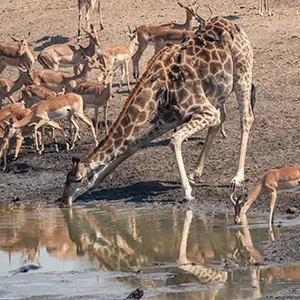
<p><span data-contrast="auto">We believe you should apply your skills to the real world too. As part of our core and optional modules, you</span><span data-contrast="auto">’</span><span data-contrast="auto">ll join us on trips across the UK and abroad. You might study tropical ecology in Kruger Park, South Africa. Or perhaps you</span><span data-contrast="auto">’</span><span data-contrast="auto">ll explore terrestrial and freshwater aquatic ecosystems in Croatia.</span><span data-contrast="auto"> </span><span data-ccp-props="{"201341983":0,"335559739":200,"335559740":312}"> </span></p>
<p><span data-contrast="auto">Where in the world will this degree take you?</span><span data-ccp-props="{"201341983":0,"335559739":200,"335559740":312}"> </span></p>
<p><a href="https://www.qmul.ac.uk/sbbs/undergraduate/undergraduate/field-trips/"><span class="action--primary action"><strong><span class="TextRun SCXW233097874 BCX8" data-contrast="auto"><span class="NormalTextRun SCXW233097874 BCX8">Learn more about field trips</span></span></strong></span></a></p>
<p><span data-ccp-props="{"201341983":0,"335559685":720,"335559739":200,"335559740":312}"> </span></p>
Structure
You can complete your Biology degree in three or four years.
If you choose to study abroad, this will take place in Year 3, and the Year 3 modules will instead be studied in Year 4.
Year 1
Core and compulsory
- Practical Biology
- Cells
- Evolution
- Molecular Genetics
- Essential Skills for Biologists
- Practical Molecular and Cellular Biology
- Physiology
- Ecology
- Basic Biochemistry
Please note that all modules are subject to change.
Year 2
Core and compulsory
Guided elective
- Ecological Interactions I
- Genes and Bioinformatics
- Microbial Physiology and Growth
- Ecological Interactions II
- Cell Biology and Developmental Genetics
- Comparative & Integrative Physiology
- Enzymes and Metabolism
- Infectious Disease Biology
- Urban Ecology
Please note that all modules are subject to change.
Year 3
Core and compulsory
Guided elective
- Behavioural Ecology
- Population and Chromosome Genetics
- Molecular Basis of Disease
- Functional Genomics and Epigenetics
- Neuroscience: from Molecules to Behaviour
- Reproductive and Development Biology
- Endocrine Physiology and Biochemistry
- Coding Skills and Data Science
Please note that all modules are subject to change.
The full programme details and description are available in our Programme and Module Directory
Study options
Apply for this degree with any of the following options. Take care to use the correct UCAS code - it may not be possible to change your selection later.
Year in industry
This option is available to transfer onto subject to a satisfactory academic result in Year 1. You will spend a year working in a professional experience position in your penultimate year as part of your degree. During your second year you will identify and apply for a professional experience opportunity, with one on one support provided by your adviser.
As well as helping you to stand out from the crowd and secure graduate employment, professional experience is an excellent opportunity to develop real world skills and put your learning into context. Students can apply for Year in Industry positions in a range of sectors, including hospital clinics, mental health charities, HR, market research, youth centres, government or clinical research labs.
Please note year in industry opportunities are highly competitive. If you are unable to obtain a professional experience position, you'll transfer onto our BSc programme and complete your third year at Queen Mary. Go global and study abroad as part of your degree - apply for our Biology BSc with a Year Abroad. Queen Mary has links with universities in Europe, North America, Asia and Australia (partnerships vary for each degree programme). Find out more about <ss-link data-t4-type="sslink" data-t4-ss-link-id="882" data-fs="57485" data-fc="545869" data-ts="34855" data-tc="0" data-tl="en" data-link-text="study abroad opportunities at Queen Mary" data-title="Home » QMUL Main channel » Global Opportunities" data-broken-link="false" data-path="Home » QMUL Main channel » Global Opportunities" data-lang="en">study abroad opportunities at Queen Mary</ss-link>. <span>Learn more about </span><a href="https://www.qmul.ac.uk/international/global-opportunities/outgoing-students/excha Compulsory fieldwork will not cost you anything extra. For optional fieldwork, you will have to cover the cost of your flight and contribute towards accommodation and food.Year abroad
Additional Costs
Student Testimonial
The highlight of my course has been the hands-on experience during field trips in ecology, where we collected raw data from sites and turned it into scientific reports. These practical aspects, coupled with engaging modules and informative lectures, have been invaluable in my academic journey. The opportunity to apply theoretical knowledge in laboratories, working with techniques such as PCR and gel electrophoresis, has made me proficient in various microbiology techniques like micropipetting and hematology.
Teaching
Teaching and learning
We use a mixture of teaching styles - lectures, tutorials, classroom activities and laboratory work.
Outside of classes, you’ll need to spend 20 to 25 hours per week preparing, writing up and reading.
Assessment
<p>Each module is assessed by written examinations and coursework (practical reports, field course reports, essays, problem sheets, online exercises and tests).</p>
<p>Final year students undertake a research or investigative project, assessed with a detailed written report.</p>
<h2 aria-level='2'><span data-ccp-props='{"134245418":true,"134245529":true,"201341983":0,"335559739":0,"335559740":312}'>Field Trips</span></h2>
<p><span data-ccp-props='{"201341983":0,"335559685":720,"335559739":200,"335559740":312}'><span class='TextRun SCXW233097874 BCX8' data-contrast='auto'><span class='NormalTextRun SCXW233097874 BCX8'>P</span></span><span class='TextRun SCXW233097874 BCX8' data-contrast='auto'><span class='NormalTextRun SpellingErrorV2Themed SCXW233097874 BCX8'>assionate</span><span class='NormalTextRun SCXW233097874 BCX8'> about ecology, </span><span class='NormalTextRun SCXW233097874 BCX8'>conservation</span><span class='NormalTextRun SCXW233097874 BCX8'> or animal biology</span></span><span class='TextRun SCXW233097874 BCX8' data-contrast='auto'><span class='NormalTextRun SCXW233097874 BCX8'>? Y</span></span><span class='TextRun SCXW233097874 BCX8' data-contrast='auto'><span class='NormalTextRun SpellingErrorV2Themed SCXW233097874 BCX8'>ou</span></span><span class='TextRun SCXW233097874 BCX8' data-contrast='auto'><span class='NormalTextRun SpellingErrorV2Themed SCXW233097874 BCX8'>’</span></span><span class='TextRun SCXW233097874 BCX8' data-contrast='auto'><span class='NormalTextRun SpellingErrorV2Themed SCXW233097874 BCX8'>ll</span></span><span class='TextRun SCXW233097874 BCX8' data-contrast='auto'><span class='NormalTextRun SCXW233097874 BCX8'> have the chance to develop </span></span><span class='TextRun SCXW233097874 BCX8' data-contrast='auto'><span class='NormalTextRun SCXW233097874 BCX8'>real-world skills with our field </span></span><span class='TextRun SCXW233097874 BCX8' data-contrast='auto'><span class='NormalTextRun SCXW233097874 BCX8'>trips. Past students have</span></span><span class='TextRun SCXW233097874 BCX8' data-contrast='auto'><span class='NormalTextRun SCXW233097874 BCX8'> </span><span class='NormalTextRun SCXW233097874 BCX8'>studied</span></span><span class='TextRun SCXW233097874 BCX8' data-contrast='auto'><span class='NormalTextRun SCXW233097874 BCX8'> </span></span><span class='TextRun SCXW233097874 BCX8' data-contrast='auto'><span class='NormalTextRun SCXW233097874 BCX8'>large mammals in South Africa </span></span><span class='TextRun SCXW233097874 BCX8' data-contrast='auto'><span class='NormalTextRun SCXW233097874 BCX8'>and explored</span></span><span class='TextRun SCXW233097874 BCX8' data-contrast='auto'><span class='NormalTextRun SCXW233097874 BCX8'> ecological interactions in Croatia</span></span><span class='TextRun SCXW233097874 BCX8' data-contrast='auto'><span class='NormalTextRun SCXW233097874 BCX8'>.</span></span></span></p>
Resources and facilities
<p>The School offers excellent on-campus resources to aid your studies, including:</p>
<ul>
<li>newly refurbished lecture theatres</li>
<li>up-to-date IT facilitie</li>
<li>modern, well-equipped labs.</li>
</ul>
<p><a class='action' title='View tour of Fogg Building' href='https://www.qmul.ac.uk/study/explore-our-campuses/mile-end/ge-fogg-building/'>View tour of Fogg Building</a></p>
Entry requirements
| A-Level | Grades ABB at A-Level. This must include A-Level Biology. |
| IB | International Baccalaureate Diploma with a minimum of 32 points overall, including 6,5,5 from three Higher Level subjects. This must include Biology at Higher Level. |
| BTEC | BTEC qualifications are considered for entry to this programme.\n |
| Access HE | We consider applications from students with the Access to Higher Education Diploma in a science discipline e.g. Biology, Chemistry, Maths or Physics. The minimum academic requirement is to achieve 60 credits overall, with 45 credits at Level 3, of which 18 credits must be at Distinction and 27 credits at Merit or higher. Applications are considered on a case by case basis, and we may request an interview. Due to the high volume of applications, we do not make offers of study purely on the basis of meeting grade requirements. |
| GCSE | Minimum five GCSE passes including English and Maths at grade C or 4. |
| EPQ | Alternative offers may be made to applicants taking the Extended Project Qualification. \nFor further information please visit: qmul.ac.uk/undergraduate/entry/epq |
| Contextualised admissions | Our standard contextual offer: BBC including B in Biology at A-Level. \n\nOur enhanced contextual offer: BCC including B in Biology at A-Level. \n\nMore information on our contextual offer criteria can be found on our contextualised admissions page. \n\nPlease note that General Studies and Critical Thinking are excluded from any A-Level offer and cannot be considered. \n |
| A-Level | Grades CCC at A-Level. This must include A-Level Biology or Chemistry. A second science subject at A-Level from either Biology, Chemistry, Maths, Further Maths, Physics or Psychology is also required. |
| IB | International Baccalaureate Diploma with a minimum of 26 points overall, including 4,4,4 from three Higher Level subjects. This must include Biology or Chemistry at Higher Level. A second science subject at Higher Level of Chemistry, Maths, Further Maths, Physics or Psychology is also required. |
| BTEC | BTEC qualifications are considered for entry to this programme. |
| Access HE | We consider applications from students with the Access to Higher Education Diploma in a science discipline e.g. Biology, Chemistry, Maths or Physics. The minimum academic requirement is to achieve 60 credits overall, with 45 credits at Level 3, of which 9 credits must be at Distinction, 36 credits at Merit or higher. Applications are considered on a case by case basis, and we may request an interview. Due to the high volume of applications, we do not make offers of study purely on the basis of meeting grade requirements. |
| GCSE | Minimum five GCSE passes including English and Maths at grade C or 4. |
| Contextualised admissions | We consider every application on its individual merits and will take into consideration your individual educational experiences and context. More information on how academic schools and programmes use this information as part of the admissions process, can be found on our contextualised admissions pages. |
| A-Level | Grades ABB at A-Level. This must include A-Level Biology. |
| IB | International Baccalaureate Diploma with a minimum of 32 points overall, including 6,5,5 from three Higher Level subjects. This must include Biology at Higher Level. |
| BTEC | BTEC qualifications are considered for entry to this programme. |
| Access HE | We consider applications from students with the Access to Higher Education Diploma in a science discipline e.g. Biology, Chemistry, Maths or Physics. The minimum academic requirement is to achieve 60 credits overall, with 45 credits at Level 3, of which 18 credits must be at Distinction and 27 credits at Merit or higher. Applications are considered on a case by case basis, and we may request an interview. Due to the high volume of applications, we do not make offers of study purely on the basis of meeting grade requirements. |
| GCSE | Minimum five GCSE passes including English and Maths at grade C or 4. |
| Contextualised admissions | Our standard contextual offer: BBC including B in Biology at A-Level. Our enhanced contextual offer: BCC including B in Biology at A-Level. More information on our contextual offer criteria can be found on our contextualised admissions page. Please note that General Studies and Critical Thinking are excluded from any A-Level offer and cannot be considered. |
Non-UK students
We accept a wide range of European and international qualifications in addition to A-levels, the International Baccalaureate and BTEC qualifications. Please visit International Admissions for full details.
If your qualifications are not accepted for direct entry onto this degree, consider applying for a foundation programme.
English language
Find out more about our English language entry requirements, including the types of test we accept and the scores needed for entry to the programme.
You may also be able to meet the English language requirement for your programme by joining a summer pre-sessional programme before starting your degree.
Further information
Funding
Loans and grants
UK students accepted onto this course are eligible to apply for tuition fee and maintenance loans from Student Finance England or other government bodies.
Scholarships and bursaries
Queen Mary offers a generous package of scholarships and bursaries, which currently benefits around 50 per cent of our undergraduates.
Scholarships are available for home, EU and international students. Specific funding is also available for students from the local area. International students may be eligible for a fee reduction. We offer means-tested funding, as well as subject-specific funding for many degrees.
Find out what scholarships and bursaries are available to you.
Support from Queen Mary
We offer specialist support on all financial and welfare issues through our Advice and Counselling Service, which you can access as soon as you have applied for a place at Queen Mary.
Take a look at our Student Advice Guides which cover ways to finance your degree, including:
- additional sources of funding
- planning your budget and cutting costs
- part-time and vacation work
- money for lone parents.
Careers
<p>Biology graduates are equipped for careers in conservation and wildlife management, or in the agricultural industry or biotechnology. Many of our students go on to clinical and laboratory work, postgraduate research or science education. Others transfer their skills into sectors such as marketing and finance.</p>
<p><span>96 per cent of our graduates are in work or further study within six months of graduation (HESA GOS 2021/22).</span></p>
<p>Recent Biology graduates have been hired by:</p>
<ul>
<li><span class="s1"></span>National Hospital for Neurology and Neurosurgery</li>
<li><span class="s1"></span>Deloitte</li>
<li><span class="s1"></span>GlaxoSmithKline<span class="s1"></span></li>
<li>The Centre for Reproductive and Genetic Health<span class="s1"></span></li>
<li>the NHS<span class="s1"></span></li>
<li>EY.</li>
</ul>
Career support
The School of Biological and Behavioural Sciences has a careers consultant, who can offer specialist advice and organise subject-specific events. We also have a dedicated internships coordinator.
The Queen Mary careers team can also offer:
<ul>
<li>specialist advice on choosing a career path</li>
<li>support with finding work experience, internships and graduate jobs</li>
<li>feedback on CVs, cover letters and application forms</li>
<li>interview coaching.</li>
</ul>
Learn more about career support and development at Queen Mary.
Data for these courses
Biology - BSc (Hons)
The Discover Uni dataset (formerly Unistats)
About the School
The School of Biological and Behavioural Sciences is a large and dynamic school with strong links to industry. We offer a stimulating and supportive learning experience.
You’ll experience inspirational teaching from high-calibre staff who are leaders in their field. According to the Research Excellence Framework 2021, 91 per cent of our Biological Sciences research is either world-leading or internationally excellent. You’ll stay up to date with weekly departmental seminars on new research findings.
Thanks to our close teaching and research links, students have special opportunities for original investigative work with the Natural History Museum, ZSL London Zoo, Forest Enterprise, and University of London’s Marine Biological Station at Millport in Scotland.