
News
 Acute dental problems are driving people to their GP for help, but GPs can only offer temporary relief
1 in 5 (21.3%) people who visit their GP for a dental problem return with the same issue, usually within two months. Going to a GP instead of a dentist for a dental problem is often a short-term solution because a GP can offer pain relief but cannot resolve the underlying issue.
Date added: Monday, October 26, 2026
 1 in 7 middle-aged adults are prescribed inappropriate medication
Research led by the Clinical Effectiveness Group has revealed that about 1 in 7 (13.9%) people aged 45-64 are prescribed medication that could be inappropriate for them - either because the potential harms outweigh the likely benefits, because safer alternatives exist, or because an additional treatment has been omitted.
Date added: Monday, July 27, 2026
 Machine learning algorithms could support early diagnosis of HIV, Hepatitis B, and Hepatitis C in primary care settings
Researchers from the Clinical Effectiveness Group have collaborated on the first study to investigate the use of machine learning algorithms with primary care data to support testing for blood-borne viruses.
Date added: Monday, May 11, 2026
 Electronic Health Records can provide reliable, up-to-date statistics about a population
We collaborated with Swansea University and the University of Edinburgh to test whether health records can provide accurate, up-to-date information about a local population.
Date added: Monday, November 24, 2025
 Real-world impact: Barts Charity Impact Report features the work of our Child Health team, which has improved timely MMR vaccination in North East London by 4.1%
Funding from Barts Charity enabled a CEG clinical effectiveness programme to improve timeliness and equity of childhood immunisations, including the Measles, Mumps and Rubella (MMR) vaccine.
Date added: Wednesday, October 8, 2025
 Professor Rohini Mathur is celebrated in Women in Data ‘Top Twenty in Data and Tech’
Rohini Mathur, Professor of Health Data Science at CEG, has been selected for the ‘Top Twenty in Data and Tech’, an annual initiative by Women in Data that celebrates inspirational, trailblazing and dedicated women.
Date added: Thursday, March 27, 2025
 Half of families with children in North East London are living in overcrowded households
Data scientists at CEG used novel methods to estimate inequalities in household overcrowding in North East London. In some areas of the region, over 70% of families have less than 16.6m2 per person, which is little more than a parking space.
Date added: Thursday, January 23, 2025
 Dr John Ford: Taking 'Living Evidence Maps' to Evidence Week in Parliament
Dr John Ford is a Senior Clinical Lecturer in Health Equity at CEG. This week, he will join Evidence Week in Parliament to demonstrate how ‘Living Evidence Maps’ can help policy makers find the high-impact ideas within large bodies of evidence.
Date added: Tuesday, January 21, 2025
 CEG partnership with NHS North East London is protecting an additional 1,100 children from measles every year
In 2022, CEG launched a programme in North East London to make it simpler for GP practices to call children for the right vaccination at the right time. An evaluation of the programme, published in Vaccine, found that the proportion of children receiving their first measles, mumps and rubella (MMR) vaccination on time increased by 4.1% (77.7% to 81.8%) as a result. This equates to 92 additional children being protected every month, or more than 1,100 children a year.
Date added: Thursday, December 5, 2024
 CEG researchers present at the Society for Social Medicine & Population Health 68th Annual Scientific meeting in Glasgow
Researchers from CEG’s Household Health, Child Health and Health Inequalities teams will deliver five oral presentations and three posters throughout the conference from 4-6 September.
Date added: Wednesday, September 4, 2024
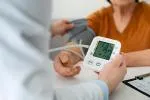 Covid-19 had a significant impact on blood pressure recording, but not on blood pressure control
An analysis of GP records for people with hypertension reveals that the pandemic had a major effect on whether or not their blood pressure was recorded, but only a modest effect on whether or not it was controlled.
Date added: Tuesday, August 13, 2024
 International collaboration led by CEG awarded £2.2 million to trial a ‘Learning Health System’ approach to disease management in Thailand
An international team from Queen Mary University of London, Chiang Mai University, the Ministry of Public Health in Thailand, and the London School of Hygiene & Tropical Medicine has been awarded a £2.2 million grant to pilot an intervention to empower doctors in Thailand to improve outcomes for their patients.
Date added: Friday, August 9, 2024
Children living in deprived areas are three times more likely to need dental extractions in hospital
Our research has found that children living in areas with high levels of deprivation are three times more likely to have severe tooth decay that requires a dental extraction in hospital, compared with children living in more affluent areas. The findings highlight an urgent need for equitable access to preventive dentistry.
Date added: Tuesday, July 16, 2024
 GP Patient Survey analysis lays bare stark regional inequalities
Experts from our Health Equity Evidence Centre analysed data from the 2024 GP Patient Survey to see what it reveals about socio-economic inequalities in primary care.
Date added: Thursday, July 11, 2024
 New standardised method for grouping patient records into ‘households’ will enable more effective research into the factors that shape our health
CEG data scientists have published a fast, standardised method to help health researchers group occupants of the same household at any point in time.
Date added: Tuesday, April 9, 2024
 AI-enabled research into patterns of multimorbidity in people with gum disease wins prestigious William J. Gies Award for best paper
CEG’s Dr Harriet Larvin and Professor Jianhua Wu have won the William J. Gies Award, given for the best paper published in the Journal of Dental Research during the preceding year. The award is presented by the International Association for Dental, Oral, and Craniofacial Research (IADR) and American Association for Dental, Oral, and Craniofacial Research (AADOCR).
Date added: Monday, March 18, 2024
 School-age girls with obesity are more likely to experience joint and muscle pain
Girls with obesity are more likely to experience pain in their bones, joints, muscles, ligaments or tendons compared with children with a healthy weight, according to CEG research. The same did not apply to boys.
Date added: Wednesday, March 13, 2024
 HSJ Awards 2023 - winners!
A collaborative programme to prevent heart attacks and strokes in north east London has won Medicines, Pharmacy and Prescribing Initiative of the Year at the HSJ Awards 2023. The winners were announced at a ceremony on 16 November.
Date added: Friday, November 17, 2023
 ‘Research to support renewal, recovery and resilience’ – Rohini Mathur gives keynote speech at the ADRUK annual conference
The Administrative Data Research UK (ADRUK) annual conference will take place in Birmingham on 14-16 November, with the theme ‘Public data for resilience and inclusion’. The event brings together researchers, data scientists and civil servants from across the UK, to share insights and methodologies that use routinely-collected data for public benefit.
Date added: Tuesday, November 14, 2023
QOF results 2022-23: North East London is among the best in England for all cardiovascular metrics
Latest results of the Quality and Outcomes Framework (QOF) show North East London Integrated Care System is among the best regions in England for all cardiovascular indicators and in the top 10 for many other clinical metrics. The region has achieved this with the smallest number of exclusions (Personalised Care Adjustments) in England.
Date added: Wednesday, September 27, 2023
 CEG presents four major work programmes to national GP teams at the annual EMIS conference in London
Facilitators and GPs from Queen Mary's Clinical Effectiveness Group (CEG) will present four major work programmes to delegates at the EMIS National User Group Annual Conference, taking place in London on 13-15 September.
Date added: Wednesday, September 13, 2023
 A strong post-pandemic recovery: North East London is best in England for key areas of cardiovascular disease prevention and management
National data released by CVD Prevent shows NHS North East London is once again among the top performing regions in England for key metrics relating to the prevention and management of cardiovascular diseases.
Date added: Tuesday, August 29, 2023
 Half as many AF patients dying of heart attacks and strokes
New research finds patients living with atrial fibrillation - one of the UK’s most common heart rhythm conditions - are 50% less likely to die from a heart attack or stroke than they were at the start of the millennium, but there are significant health inequalities between richest and poorest.
Date added: Friday, August 25, 2023
 Programme preventing heart attacks and strokes shortlisted for HSJ Awards 2023
A collaborative programme to prevent heart attacks and strokes in North East London has been shortlisted for Medicines, Pharmacy and Prescribing Initiative of the Year at the HSJ Awards 2023. The team developed a novel pathway to identify people at risk of heart attack and stroke, ensure they are taking the most suitable medication, treat them closer to home without the need for a hospital referral, and improve access to new therapies.
Date added: Monday, August 14, 2023
 CEG collaboration awarded £710k for a ground-breaking data linkage project that will enable research into household health
With ADR UK funding, the ‘Healthy Households’ collaboration will develop a de-identified, research-ready dataset linking health data, housing data and other administrative data for the populations of England, Scotland and Wales. This will enable new methods for characterising households by social, economic, environmental, educational and health factors to better understand the wider determinants of health.
Date added: Wednesday, August 23, 2023
New research highlights inequities in blood pressure control
A study of adults diagnosed with persistent high blood pressure (hypertension) has found that people who are younger or of Black ethnicity are less likely to have their blood pressure successfully controlled. This puts them at increased risk of heart attack and stroke.
Date added: Monday, August 7, 2023
New CEG and NHS initiative will help GPs provide better care for patients with wider problems that may be affecting their health
People living in more affluent areas of the UK live almost ten years longer than people in deprived areas1. Housing conditions, money, social isolation and understanding of health information all play a part by significantly impacting our opportunities to be healthy. CEG is working with NHS North East London to enable GP practices to understand which of their patients are affected by these ‘wider determinants of health’. This will give healthcare professionals a broader understanding of an individual’s needs and enable them to deliver better care.
Date added: Monday, August 7, 2023
 CEG at the SAPC Annual Scientific Meeting
Three academic GPs from CEG will present their work at the Society for Academic Primary Care (SAPC) Annual Scientific Meeting, taking place in Brighton on 18-20 July.
Date added: Monday, July 10, 2023
 Initiative to prevent strokes in east London wins first place in AF Association Healthcare Pioneers Report 2023
An initiative led by Barts Health NHS Trust, with CEG, UCL Partners and east London clinicians, is featured as the first-place winner in the AF Association Healthcare Pioneers Report 2023. The report highlights innovative approaches to detecting, protecting, correcting and perfecting atrial fibrillation management.
Date added: Sunday, June 18, 2023
New evidence supports sex-specific strategies to prevent heart attack and stroke
An observational study led by a student of CEG’s Health Data in Practice doctoral training programme has found that the influence of risk factors for heart attack and stroke vary significantly between women and men.
Date added: Thursday, June 15, 2023
Join us at The King’s Fund event: ‘Accelerating progress on cardiovascular disease’
CEG's Dr John Robson and Dr Stuart Rison are among the speakers and panelists at a forthcoming in-person event hosted by The King’s Fund. ‘Accelerating progress on cardiovascular disease’ will bring together leaders and experts from across the NHS and its partners, to discuss ways of reducing heart disease in the population and improving early detection, management and treatment of heart disease and its risk factors.
Date added: Tuesday, June 6, 2023
 CEG at GeoPlace annual conference 2023
Dr Gill Harper, honorary post-doctoral research fellow in health data science, will present the ASSIGN algorithm to delegates at the GeoPlace annual conference on 10 May.
Date added: Tuesday, May 9, 2023
 Is a Government programme to tackle childhood obesity doing more harm than good?
Research from Queen Mary University of London is the first to focus on the experiences of parents and their children who were categorised as ‘overweight’ and ‘very overweight’ by England’s National Child Measurement Programme (NCMP), an intervention designed to tackle childhood obesity. The results suggest that the current programme may be at risk of harming the children it aims to help.
Date added: Thursday, February 9, 2023
 Fahmida Akthar shortlisted in Cambridge Spark Data Awards
We’re proud to announce that our Data and Communications Assistant, Fahmida Akthar, has been shortlisted for ‘Data Citizen Apprentice of the Year’ at the Cambridge Spark Data Awards 2023. Her work with CEG’s facilitation team supports GP practices with curated data to inform patient care, report practice achievements and address health inequalities.
Date added: Tuesday, February 7, 2023
 Comment in The Lancet: How do we collect good-quality data on race and ethnicity and address the trust gap?
Rohini Mathur and international co-authors write that high-quality data on race and ethnicity are “pivotal in redressing the historical under representation of diverse populations in clinical research and ensuring that algorithms underpinning patient care do not perpetuate bias and inequalities”. The article is an invited comment as part of The Lancet Series on racism, xenophobia, discrimination, and health.
Date added: Friday, December 9, 2022
 Action needed to tackle neighbourhood ‘hotspots’ where fewer than 60% of children receive first MMR vaccine on time
There has been an increase in neighbourhoods in north east London where fewer than 60% of children receive their first MMR vaccine on time following the pandemic, according to research from the Clinical Effectiveness Group at Queen Mary University of London. The study, published today in BMJ Open, found that only 75% of children are receiving the first dose of the MMR vaccine on time, compared to the 95% needed to prevent outbreaks of measles, a highly infectious disease. The poorest neighbourhoods were most affected, raising concerns about growing health inequalities after the pandemic.
Date added: Friday, December 2, 2022
 CEG's 'Clinical Effectiveness' approach featured in new cardiovascular disease report by The King's Fund
CEG's work with the NHS in North East London is featured as a case study in a new report by The King’s Fund: Cardiovascular disease in England: Supporting leaders to take actions. The report calls for “urgent action by government, national and local leaders to tackle the large and unequal burden of disease and mortality associated with cardiovascular disease - much of which is potentially preventable through timely, evidence-based public health measures and health care.”
Date added: Friday, November 11, 2022
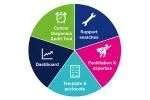 CEG Cancer Toolkit will support GPs to reduce avoidable delays in cancer diagnosis and care
The Clinical Effectiveness Group (CEG) has launched a to GP practices across North East London. It includes a clinical template, patient record searches, a data dashboard and a new Cancer Diagnosis Audit Tool. Together, the resources will support GP practice teams to address inequalities and deliver timely cancer diagnosis and care for everyone who needs it.
Date added: Tuesday, November 1, 2022
 Initiative to improve equal access to diabetes treatment wins Quality in Care Diabetes Award
Using CEG’s software tools, GP practices across North East London reviewed the care of hundreds of people with type 1 diabetes to ensure they can access the treatment they need, regardless of gender, ethnicity, language, disability or wealth. The region has since seen an 11% increase in the numbers of patients re-engaging with diabetes specialists at local hospitals and community care centres. On 13 October, it was announced that the initiative won a Quality in Care (QiC) Diabetes Award, under the category: Patient Care Pathway, Secondary and Community.
Date added: Friday, October 14, 2022
 CEG-supported health service for young people in Tower Hamlets is shortlisted for London Youth Awards 2022
Health Spot – a collaboration between Spotlight, Tower Hamlets GP Care Group, the Clinical Effectiveness Group (CEG), Docklands Outreach and Safe East – has been shortlisted for the Partnership Working Award at the London Youth Awards 2022. The Health Spot service offers friendly, confidential medical appointments with a doctor who is experienced in supporting young people with health needs.
Date added: Thursday, October 13, 2022
 CEG presents three innovative projects at the International Population Data Linkage Network conference in Edinburgh
Linking anonymised GP records to other datasets (for example, on housing or collected by schools) can reveal important insight into how circumstances interact and influence our health. At the International Population Data Linkage Network conference, between 7-9 September, CEG researchers presented three projects that use innovative data linkage methods to address important research questions that have broad implications for policy.
Date added: Tuesday, September 20, 2022
 Two thirds of atrial fibrillation patients on dual-antithrombotic therapy are prescribed the medication for too long, increasing the risk of internal bleeding
An observational study of people with the heart condition atrial fibrillation, published by a student of Queen Mary’s Wellcome Trust-funded PhD programme: Health Data in Practice, has found that almost 2 in 3 (65.9%) patients on dual-antithrombotic therapy (DAT) receive the treatment for more than 12 months. This is considered too long and puts the patient at increased risk of bleeding complications.
Date added: Thursday, September 15, 2022
 CEG provides swift response to data needs for the Polio Booster Campaign
Queen Mary’s Clinical Effectiveness Group (CEG) is collaborating with the NHS in North East London, providing intelligence to inform the logistics of the immunisation campaign and software tools to ease the burden for GPs.
Date added: Thursday, August 25, 2022
 CEG launches version 2 of its childhood immunisation tool and urges GPs in North East London to use it to ensure children are fully protected against polio
The software tool ‘APL-Imms’ was developed by Queen Mary’s Clinical Effectiveness Group (CEG) to help GP practices immunise more children against preventable illness. The timing of the updated tool will help GPs to protect more children against polio, which has recently been detected in north east London sewage.
Date added: Wednesday, August 3, 2022
 Seeing the same GP is good for your health, but only half of patients are able to do so
Researchers at Queen Mary University of London found that only half of patients regularly see the same GP, despite increasing evidence that continuity of care between GPs and patients leads to better outcomes.
Date added: Wednesday, June 29, 2022
Collaboration to reduce strokes in east London is recognised with HSJ Patient Safety Award nomination
A collaborative project by Barts Health NHS Trust, CEG, UCLPartners and east London clinicians has been shortlisted for Best use of integrated care and partnership working in patient safety at the HSJ Patient Safety Awards 2022. The team worked to reduce strokes in people with the heart condition atrial fibrillation (AF) by increasing the use of life-saving anticoagulant medications. In the first 12 months, anticoagulant prescription rates in people with AF in the region reached 95% – well above the national target of 90%.
Date added: Monday, June 20, 2022
 More than a quarter of people with asthma are still over-using rescue inhalers – putting them at increased risk of severe attacks and hospitalisation
Researchers at Queen Mary University of London have found that more than a quarter of asthma patients are still over-using inhalers intended for rapid relief of symptoms. Overuse of these inhalers is linked to an increased risk of hospital admissions and severe asthma attacks. They also found that prescribing varies between GP practices, with some overprescribing rescue inhalers to 6% of their asthma patients and some to as many as 60%.
Date added: Wednesday, June 15, 2022
 Type 2 diabetes sub-groups could guide future treatment approaches in primary care
Researchers in the Clinical Effectiveness Group (CEG) have identified sub-groups of type 2 diabetes, which could inform a personalised approach to managing the condition. The study, published in the British Journal of General Practice, uses data from the multi-ethnic population of east London and analyses standard metrics that are routinely recorded by GPs.
Date added: Thursday, May 26, 2022
 CEG address-matching algorithm selected by HDR UK Impact Committee
The paper ‘Evaluation of the ASSIGN open-source deterministic address-matching algorithm for allocating Unique Property Reference Numbers to general practitioner-recorded patient addresses’ has been selected by the HDR UK Impact Committee as having significant impact and clearly demonstrating the value of uniting the UK’s health data to make discoveries that improve people’s lives. The committee meets monthly to select research outputs put forward by research directors, researchers, and other members of the HDR UK community.
Date added: Tuesday, April 26, 2022
 Testing for underlying causes of high blood pressure in young adults can be life-lengthening and should be routine
In an article published in the BMJ: ‘Investigating hypertension in younger patients’, Doctors Stuart Rison, Chris Carvalho and John Robson of Queen Mary’s Clinical Effectiveness Group (CEG) argue that GPs should be mindful of the possibility of an underlying condition when treating patients with hypertension who are under 40 years old and investigate this as appropriate.
Date added: Monday, March 28, 2022
 How CEG’s data scientists and support team are helping GP teams prevent measles outbreaks using software tools on practice patient records
By Carol Dezateux, Professor of Clinical Epidemiology and Health Data Science at the Clinical Effectiveness Group (CEG), Queen Mary University of London
Date added: Wednesday, March 2, 2022
Optimising treatments for high blood pressure and cardiovascular disease is life-saving and cost effective
A recent study shows that optimising medicines for high blood pressure and cardiovascular disease patients living in East London could reduce lifetime hospital costs and prevent cardiovascular events such as heart attacks and strokes.
Date added: Friday, January 14, 2022
CEG receives funding to tackle falling pre-school immunisation rates as part of London Health Data Strategy
Four projects tackling some of London’s key health challenges have been awarded a total of £1 million to demonstrate how the use of data at scale can improve health outcomes, supporting delivery of the London Health Data Strategy. The Clinical Effectiveness Group at Queen Mary University of London leads one of the four successful projects: a primary care quality improvement system designed to address falling rates of routine childhood immunisations.
Date added: Tuesday, December 14, 2021
 CEG researchers develop algorithm to study how health is impacted by where we live
Researchers from Queen Mary’s Clinical Effectiveness Group have developed an address-matching algorithm to link patient health records to geospatial information.
Date added: Wednesday, December 8, 2021
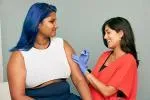 HPV vaccine cuts cervical cancer cases by almost 90% – but one in ten girls still haven’t been vaccinated
Professor Carol Dezateux and Nicola Firman from Queen Mary's Clinical Effectiveness Group (CEG) have co-written a piece for The Conversation on a recent study published in The Lancet, which found that the HPV vaccine cuts cervical cancer cases by nearly 90 per cent, and their research on uptake.
Date added: Thursday, November 4, 2021
 Applications open for our PhD Health Data in Practice
Our Wellcome Trust funded doctoral training programme, Health Data in Practice, is open for applications until Monday 10 January. We aim to develop future scientific leaders who are able to apply interdisciplinary perspectives to research and realise the potential of innovations in health data research for the benefit of patients, the public, health care systems and society.
Date added: Wednesday, October 27, 2021
 CEG receives new funding to research inequalities in childhood immunisation
Dr Milena Marszalek, NIHR Academic Clinical Fellow in General Practice and member of Queen Mary University of London’s Clinical Effectiveness Group (CEG), has been awarded £7,000 from Barts Charity to investigate the impacts of ethnicity and deprivation on timely uptake of the Measles, Mumps and Rubella (MMR) vaccine in children.
Date added: Friday, October 15, 2021
CEG uses patient data to prevent 200 heart attacks and strokes in east London
The Clinical Effectiveness Group (CEG) at Queen Mary University of London is supporting a programme to prevent 200 heart attacks and strokes in the London borough of Redbridge over five years. The team have built a data-driven tool for GP practices, to increase prescribing of statin medication and identify patients for a new ground-breaking drug that reduces cholesterol.
Date added: Monday, October 11, 2021
 CEG’s data searches will support proactive care for a third of adults in England with long-term conditions
CEG’s risk stratification searches form an integral part of the Proactive Care Frameworks developed by UCL Partners. These resources have now been adopted into a national NHS programme ‘Proactive Care @home’, to be used in 12 Integrated Care Systems across England. This covers around one third of the adult population.
Date added: Thursday, October 7, 2021
 Clinical Effectiveness Group awarded funding for new Primary Care Research Fellowships
Queen Mary University of London has received funding for three fellowships in primary care as part of our membership in the National Institute of Health Research (NIHR) School for Primary Care Research (SPCR). Two of the fellows – Dr Meredith Hawking and Dr Chris Carvalho – are members of the university’s Clinical Effectiveness Group (CEG) who use primary care data to improve population health in north east London.
Date added: Monday, September 27, 2021
Young women not in mainstream education are missing out on vital protection against cervical cancer
HPV vaccination prevents several serious diseases caused by the Human papillomavirus, including cervical cancer. The UK has been vaccinating young women, aged 12-13 years, against HPV since 2008 through a school-based programme. Uptake is high – around 84% of young women are fully immunised through the programme*, but new research published in Vaccine reveals some groups are less likely to be vaccinated than others.
Date added: Friday, September 24, 2021
Researchers test an algorithm that could predict heart attacks in young people
Press release: Researchers in the Clinical Effectiveness Group at Queen Mary University of London have tested an algorithm on 700,000 patient records in east London, to find out if the data routinely collected by GPs can reveal cases of Familial Hypercholesterolemia – a leading cause of heart attack in young people.
Date added: Thursday, May 20, 2021
 NHS Health Checks are not helping people who need them most
According to a seven-year study of more than three million people, led by researchers in the Clinical Effectiveness Group, only 8 per cent of people at greater risk of heart disease who would benefit from taking statins, were prescribed them.
Date added: Monday, June 14, 2021
 CEG research makes BJGP's top ten most read papers of 2020
Update: Research by CEG made the top ten list for the most read articles in the British Journal of General Practice in 2020. We used data from GP records across east London to demonstrate there were three times as many suspected Covid-19 cases presented to GPs during the peak of the first wave than shown in official Covid-19 test results, and twice the risk for ethnic minorities. Read the full research paper here, or find out more about our work on Covid inequalities in our .
Date added: Monday, January 25, 2021
 £6.7 million investment to ‘harness’ the power of NHS patient data and develop targeted care
Barts Life Sciences – a partnership between Queen Mary University of London and Barts Health NHS Trust – has been awarded £6.7m by Barts Charity to research new ways to improve the prevention, diagnosis and treatment of a variety of diseases. The diseases to be studied include Covid-19, cancer, heart disease and diabetes, which affect many in the East London population.
Date added: Friday, December 18, 2020
UCLP Proactive Care Frameworks
CEG is collaborating with UCL Partners on their Proactive Care Frameworks. The programme will help primary care practices deliver proactive care to patients with long-term conditions post-Covid, where as much as possible needs to be delivered remotely.
Date added: Friday, September 25, 2020
Supporting primary care through the pandemic
Update: Covid-19 has created an urgent need to deliver routine care more efficiently, particularly for patients with long-term conditions. There has been an increased need to prioritise at-risk groups, enable virtual reviews and self-management, and assess needs that can be met by a variety of professionals such as healthcare assistants, pharmacists and nurses. Here’s how we are supporting these activities and where to find our resources.
Date added: Monday, September 14, 2020
 Covid-19 data from GPs shows triple the number of suspected cases and twice the risk for ethnic minorities
Press release: There were three times as many suspected Covid-19 cases presented to GPs during the peak of the pandemic than shown in official Covid-19 test results, according to research led by the Clinical Effectiveness Group at Queen Mary University of London.
Date added: Tuesday, September 8, 2020
CEG is working remotely
In light of Covid-19, the CEG team will be working from home from Thursday 19 March.
Date added: Monday, March 16, 2020
 Conference: The Scottish Deep End Project, University of Glasgow
Dr John Robson presented at The Scottish Deep End Project: The Exceptional Potential of General Practice.
Date added: Thursday, February 14, 2019
CEG Community Kidney Service featured in the NHS Long Term Plan
Update: The NHS Long Term Plan was launched today. It is an ambitious vision to improve NHS care with an increased focus on prevention and digital solutions. The , developed jointly by CEG, three east London Clinical Commissioning Groups and St. Bartholomew's Hospital is featured as a case study in the opening chapter 'A new service model for the 21st century'.
Date added: Monday, January 7, 2019