
Acute dental problems are driving people to their GP for help, but GPs can only offer temporary relief
1 in 5 (21.3%) people who visit their GP for a dental problem return with the same issue, usually within two months. Going to a GP instead of a dentist for a dental problem is often a short-term solution because a GP can offer pain relief but cannot resolve the underlying issue.
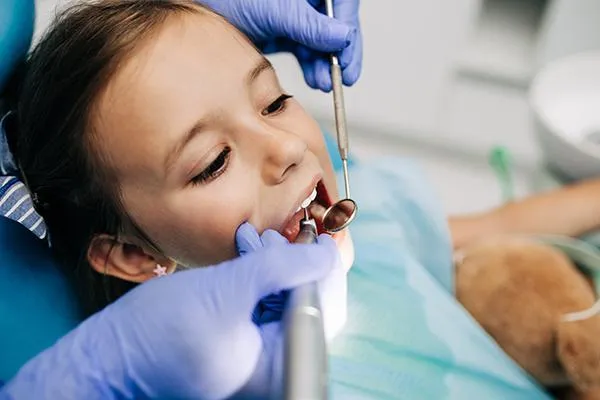
Researchers at Queen Mary University of London found that GP consultations for dental problems in England are driven by urgent, painful conditions, with abscesses or swellings accounting for 42% of cases.
The study team analysed data from the anonymised health records of 6.6 million patients from 1999-2023, observing the reasons for dental-related consultations, changes over time, and inequalities in the groups of people reaching out to GPs for dental care. The paper, published in Lancet Primary Care, is the first national study to show the spillover effects of dental policies on GP visits before and after COVID-19, at a time when doctors are already under enormous pressure.
Clear inequalities associated with GP visits for dental problems
The groups most likely to visit GPs with dental problems were:
- Children aged 5-9
- Young adults aged 20-24
- People with Black or Mixed ethnicity
- People living in London
Dental patients living in the most deprived areas in England consistently had the highest GP visiting rates for dental issues, which suggests that the cost of dental treatment is a major barrier. The study authors say this raises questions about the effectiveness of simply expanding urgent dental appointments, which the Government implemented in 2025/26. Increasing the supply of urgent appointments may have little effect where cost is a deciding factor, because people living under financial constraints may still choose to visit GPs for dental problems to avoid NHS dental charges.
The findings support previous research by the Queen Mary team, which found that children living in deprived areas are three times more likely to have severe tooth decay requiring a dental extraction in hospital compared with children in more affluent areas.
Joint lead author Dr Vanessa Muirhead, Reader in Dental Public Health at Queen Mary University of London, said:
“We are currently running a series of focus groups in collaboration with Social Action for Health. Our conversations with people who have used GPs for dental care indicate that some parents may not be aware that NHS dental care is free for children. Additionally, negative experiences, challenges finding an NHS dentist, and perceptions about trusting GPs more than dentists are emerging as important drivers.”
COVID-19 and dental policies impact GP visits
The researchers’ analysis of trends over time reveals that the most significant decrease in GP consultations for dental problems occurred after the 2022 Dental Reform Plan, which was designed to incentivise dentists to treat patients with complex treatment needs and to see people who had not visited a dentist for two years or more. However, inequalities by ethnicity and deprivation persisted throughout all policy changes and fluctuations observed during the study.
Repeated GP visits increase GP workload
Repeat visits to the GP for dental problems suggest a lack of integration between dentists and GPs, which is adding significant workload and delaying patients from receiving the right treatment.
Co-author Dr Anna De Simoni, Clinical Reader in Primary Care Research at Queen Mary, and a GP in east London, said:
“We need a more integrated approach between primary dental and medical care, with clear pathways and timely access to dental expertise.
“Access to NHS dental care remains at a critical level, particularly in coastal and other underserved areas where provision is severely limited. Some GPs continue to see patients presenting with acute dental pain and abscesses because they cannot access timely dental care. However, GPs do not have the clinical remit or specialist expertise to provide dental treatment.”
Joint lead author Dr Chenyi Gao, postdoctoral research fellow in Health Data Science at Queen Mary, said:
"Our study is a great example of using anonymised data from real-world electronic health records to generate actionable insight and inform policies. We used data from Clinical Practice Research Datalink (CPRD), which contains symptoms, diagnoses, prescriptions, and demographics. Analysing this data over time has allowed us to report the potential impacts of past policy changes and to uncover inequalities in how primary care services are being used."
This interdisciplinary study is a collaboration between researchers in the Wolfson Institute of Population Health and the Institute of Dentistry at Queen Mary University of London and was funded by Barts Charity (G-002982).
Victoria King, Director of Funding and Impact at Barts Charity, said:
“This important work, supported by Barts Charity, has shown that there are significant inequalities when accessing the right care for dental problems. We’re proud to support data-driven research that helps us better understand and address these challenges, improving healthcare for people in east London and beyond.”
More information
- Read the paper: Dental-related consultations in general practice in England: a population-based retrospective study of national trends and inequalities. Chenyi Gao, Vanessa Elaine Muirhead, Canan Eroglu, Anna De Simoni, Jianhua Wu. The Lancet Primary Care.
- For media information, please contact press@qmul.ac.uk