Thank you for considering an application
To apply you’ll need to:
- Make note of the Queen Mary institution code: Q50
- Make note of your chosen course UCAS code:
Dentistry
- A200 — BDS
- Click on the link below:
Have further questions? How to apply | Entry requirements
Dentistry BDS
Key information
- Degree
- BDS
- Duration
- 5 years
- Start
- September 2027
- UCAS code
- A200
- Institution code
- Q50
- Entry Requirements
- Full entry requirements (including contextual admissions)
- Home fees
- £10050
- Overseas fees
- £63000
Funding information
Paying your fees
Overview
Study an innovative dental curriculum at a top school with world-class facilities and access to London's diverse population.
This five-year degree is designed to help you build the skills needed to become a dental professional. The Institute of Dentistry at Queen Mary University of London offers a new and innovative curriculum, covering the care of the mouth, including the prevention and treatment of dental diseases, screening for oral cancers, managing trauma, orthodontics, and oral surgery. Throughout the programme, you will develop your academic, clinical, professional, and personal skills, putting into practice your communication and teamwork abilities while delivering supervised dental care. You will gain experience collaborating with dental professionals and broader healthcare teams, demonstrating the expertise, competencies, and ethical behaviours essential to qualifying as a safe and capable practitioner.
Our location in east London means you will serve a population of great diversity and encounter a wide range of disease, including some of the more unusual oral cancers. You will be exposed to patients early on, and as you progress through your studies, you will gain hands-on experience at our outreach clinics in Canary Wharf, Stratford, and our newest centre in Homerton.
We encourage you to take a holistic approach to dentistry by studying the human sciences along with your core dentistry modules – including sociology and psychology – to examine patients’ attitude to oral healthcare and the dental profession.
The Dental Schools Council has published a guide to the core values and attributes needed to study dentistry, which we recommend you read before making your application.
More information about the course including entry requirements and selection criteria.
Our undergraduate dental curriculum incorporates the General Dental Council’s (GDC) Safe Practitioner framework of behaviours and outcomes for dental professional education which is effective from 2025. The dental curriculum has been reviewed and co-created with students with the aim of ‘Opening the doors of opportunity to serve our patients by producing outstanding Dentists, Therapists and Dental Care professionals of the future’. The curriculum embodies what is expected by the GDC with the domains listed below running through each year of the course:
• Clinical knowledge and skills.
• Interpersonal skills.
• Professionalism.
• Self-management.
Applicants should be aware that the government plans to make it a requirement for newly qualified dentists to practice in the NHS for a minimum period, as announced in the 10 Year Health Plan for England. This requirement is expected to apply to individuals entering a dental course of study from academic year 2027/28. More information is expected from the Department of Health and Social Care in due course.
UCAS application deadline: 15 October
Structure
Throughout the course you will be supported and guided so that you achieve your potential and patients will be at the centre of your teaching and learning. A breakdown of what is delivered in each year is provided below:
Year 1
Year 1 provides a strong foundation in the basic sciences, clinical practice, and professionalism, preparing you for a career in dentistry. The curriculum introduces core biological, clinical, and professional principles, with a focus on oral health and patient-centred care. Modules explore structure and function of cells, tissues, organs, and body systems, dental materials science, and impact of systemic health, medication, and social and environmental factors on oral health.
Early clinical exposure is central to learning. You develop practical skills through haptics, clinical skills laboratories, patient observation, and dental clinics, alongside lectures and small-group teaching. Professionalism and reflective practice are assessed through portfolios, with opportunities for interprofessional learning alongside Dental Hygiene and Therapy students. The spiral curriculum ensures knowledge and skills are revisited and progressively developed.
Please note that all modules are subject to change.
Years 2 - 3
Years 2 and 3 focus on applying and integrating knowledge gained in Year 1 to body systems in health and disease, aligned with the needs of dental practice. A significant component of learning takes place in clinical settings, with extensive patient contact supported by seminars, tutorials, clinical skills laboratory work, e-learning projects, and independent study.
You will develop knowledge and skills in the diagnosis and management of oral disease, oral biology, and normal and abnormal structures of the mouth. Teaching covers key specialty areas including restorative dentistry for adults and children, prosthodontics, endodontics, oral medicine, oral surgery, and orthodontics. Clinical experience is further enhanced through placements at The Royal London Dental Institute and rotations across outreach clinics, where you will provide preventive and treatment-focused care while serving local communities and strengthening professional skills.
Please note that all modules are subject to change.
Years 4 - 5
Years 4 and 5 focus on consolidating knowledge and skills in preparation for professional dental practice. You will gain experience across a wider range of cases, including hospital-based treatments, supported by symposia, small-group teaching, modular learning, and extensive clinical exposure. The curriculum incorporates new digital scanning technology, using 3D imaging to enhance treatment planning and the delivery of restorative dental care.
To support the transition to practice, you will learn about career pathways and hear from graduates and specialists about job applications and professional development. Student-selected components allow in-depth study of areas of personal interest, with options including audit and quality improvement projects, research, clinical and communication skills, dental materials science, pathology, pharmacology, and prevention of oral disease.
Please note that all modules are subject to change.
The full programme details and description are available in our Programme and Module Directory
Intercalated degrees
Intercalated BSc
Take a year out of your medical studies to earn a Bachelor of Science (BSc) degree. You might choose this route through the course to gain a deeper understanding of the scientific basis of medicine, demonstrate your commitment to a particular area, or simply broaden your career options.
You can apply for an intercalated BSc to start after your second, third or fourth year on the course. Selection is based on your exam results and performance at interview.
A small number of students also take intercalated degrees at other institutions.
Intercalated MSc
We also offer Master of Science (MSc) degrees for intercalation, taken after your third or fourth years.
Find out more about intercalated degrees
Additional Costs
Opportunities for observational placements (within the UK or abroad) may become available to eligible students. These would be self-funded so you will need to factors in costs for flights, accommodation and potentially host fees.
Student Testimonial
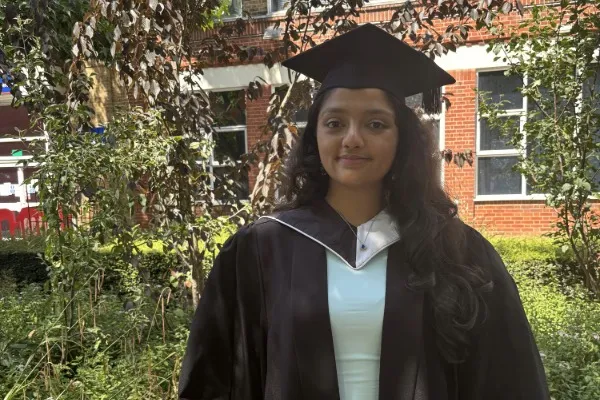
One of the biggest highlights of being at Queen Mary was treating patients in clinic. My very first patient hadn't been to the dentist for around 25 years, and being able to help improve their oral health was incredibly satisfying. I don't think I'd have been able to do that without the support and reassurance of my tutors. Going from someone who overthought everything and didn't know much about dentistry to someone who can formulate treatment plans, make decisions and help patients has been the biggest highlight of my time here.
Teaching
Teaching and learning
You will learn through:
- lectures, seminars and symposia
- outreach clinical teaching
- practical sessions in our clinical skills laboratories, Haptics, VR and IT labs
- training in interview techniques and special sessions devoted to communication between dentists, patients and members of the Dental Team.
You will have access to an extensive online medical knowledge base, which includes lecture notes from across the programme, papers and research.
Assessment
Your progress will be assessed throughout the programme, using:
- Continuous assessment – including in-course examinations, independent projects and success in student-selected components
- Longitudinal assessments to evaluate the development of clinical competence, interpersonal skills and professionalism throughout all years
- Examinations – where you’ll demonstrate the knowledge, skills and attitudes you’ve developed throughout the programme
- Formative assessments, which do not count towards your final marks but allow us to identify whether you need additional help with your studies
- Objective Structured Clinical Examinations (OSCEs) to assess your clinical and communication skills. You will be assessed on your ability to interact with clinical simulations, accomplish tasks and communicate or interact with both real and simulated patients
- Clinical case studies
- Feedback is provided to support student learning and the development of insight as well as facilitate reflective practice
- Reflective practice is an essential component of your professional identity formation. You will be taught and assessed on your ability to think critically about your practice enabling you to identify your learning needs. This will support self-awareness development, which enables self-monitoring and regulation.
Resources and facilities
The Institute of Dentistry moved into the Alexandra Wing of The Royal London Hospital in Whitechapel in 2014. Costing £78m, it is the first new dental school to be built in the UK for over 40 years and houses state-of-the-art facilities – setting the standard for the most modern learning environment for dental education of any UK dental hospital.
Facilities to aid your studies include:
- The Blizard Building, which offers an inspiring environment for medical and dental students and staff – including open-plan research laboratories, a 400-seat lecture theatre, and a café
- Garrod Building, which has been recently opened (Jan 2024) following a £11.2 million refurbishment project by the university. The space is the new home for Barts and The London Students Association and Queen Mary's Institute of Health Sciences Education. It also houses The Griff, which is located at the heart of the Garrod Building serving delicious coffee, food and drinks
- Newly refurbished treatment areas
- Numerous library facilities – the Queen Mary Library at Mile End, large medical archives at The Royal London and Barts hospitals, and the University of London Library
- Kenworthy Road Dental Clinic, a £3.2 million investment, was completed in January 2024 and opened by England's Chief Dental Officer to provide free dental services in Hackney and nearby areas - a place where dental decay is prevalent and access to care is in high demand. The state-of-the-art facility provides a fit for purpose environment with 20 dental chairs for undergraduate dental students and dental hygiene therapy students. This Outreach centre alone will provide around 7,000 dental appointments per year for the local community.
Entry requirements
|
UCAT |
Fourth decile or above, SJT Bands 1- 3. |
|
A-Level |
A*AA (results must be achieved in one sitting over a study period of no longer than two years) |
|
IB |
37 points overall and three Higher Level subjects at 666 including Chemistry or Biology plus one further science subject from (Chemistry, Biology, Physics or Maths). |
|
BTEC |
BTEC qualifications are not considered for entry to this programme. |
|
Degree |
2:1 or above in any degree subject with supporting Biology and Chemistry qualifications where necessary. Please see the Faculty of Medicine and Dentistry webpage on entry requirements for further information. |
|
GCSE |
Six GCSEs at grades 777666/AAABBB including Biology, Chemistry, English Language or English Literature and Mathematics. The Science Double Award may substitute all sciences at GCSE. If you are an international student who does not study GCSEs/IGCSEs as part of your qualifications, then we would not expect you to have met this requirement. GCSEs are not required for graduates. |
|
Contextualised admissions |
Our standard contextual offer: AAA (results must be achieved in one sitting over a study period of no longer than two years). Must include Biology or Chemistry, and a second science (Chemistry, Biology, Physics or Mathematics) More information on our contextual offer criteria can be found on our contextualised admissions page. |
Non-UK students
To see a list of the international qualifications we accept, please see our full entry requirements.
English language
Find out more about our English language entry requirements, including the types of test we accept and the scores needed for entry to the programme.
You may also be able to meet the English language requirement for your programme by joining a summer pre-sessional programme before starting your degree.
Individual circumstances
We will take into account some of your personal circumstances and background when considering your application.
Further information
Candidates must be aged 18 or over by the start of the course (mid-September). Applicants who will be under the age of 18 by the start of the programme can apply for deferred entry so that they will meet the minimum age requirement by the start of the course the following year.
Funding
Loans and grants
Years 1-4: you can apply for the same package of student finance as students on other courses. Graduate students are not eligible for a tuition fee loan from the UK government.
Year 5 and beyond: the NHS will pay your tuition fees. Grants, loans and bursaries are available to cover living costs for UK and EU students, including graduate students.
Read more about financial support for medical students.
Scholarships and bursaries
The John Abernethy (Barts) Scholarship of £5,000 per year is available to two new medical students and one new dental student each year, on the basis of household income and academic achievement. All first degree home students who enrol in the School of Medicine and Dentistry are considered for the scholarships – you do not need to enter a separate application.
Find out about other bursaries and scholarships.
Find out more about fees and funding.
Support from Queen Mary
We offer specialist support on all financial and welfare issues through our Advice and Counselling Service, which you can access as soon as you have applied for a place at Queen Mary.
Take a look at our Student Advice Guides which cover ways to finance your degree, including:
- additional sources of funding
- planning your budget and cutting costs
- part-time and vacation work
- money for lone parents.
Careers
Most graduates go on to work as Dental Foundation Trainees, then either remain in the NHS or move into the private sector. Dentists can work in general practice in the community or in the armed forces, within the UK or overseas. A small number defer starting work as a dentist to pursue a specialist postgraduate degree.
There are numerous specialist options including oral and maxillofacial surgery, orthodontics, children’s dentistry and prosthodontics (implants and false teeth). You could specialise in periodontology (gum disease) or restorative dentistry (fillings, crowns and bridges), or become a lecturer and researcher in any of these areas. Oral pathology – diagnosing and treating oral diseases – is another possible career path.
Dentistry can be an ideal career for those who would like to take regular time off, work flexible days or hours, or practice in multiple locations.
Recent graduates work in a range of dental general practices and hospitals in London and across the UK including:
- Barts Health NHS Trust
- Cardiff and Vale University Health Board
- Leeds Teaching Hospitals NHS Trust
- Mersey and West Lancashire Teaching Hospitals NHS Trust
- Perry Vale Dental
- Royal Free London NHS Foundation Trust
- Surrey Docks Dental Practice
- University Hospital Southampton NHS Foundation Trust
- University Hospitals of Northamptonshire NHS Group
Our graduates also work across the UK and beyond including Health Education England (Graduate Outcomes Survey 2021/22 and 2022/23).
Career support
You’ll have access to a bespoke careers programme, including workshops, talks and practical sessions to prepare you for applying for your first job as a dental professional. We also make sure you understand the various specialist careers paths and how to access them.
You’re encouraged to build your extracurricular work experience throughout your period of study.
The Queen Mary careers team can also offer:
support with finding work experience, internships and volunteering services
feedback on CVs, cover letters and application forms
interview coaching.
Learn more about career support and development at Queen Mary.
Course data
Dentistry - BDS
The Discover Uni dataset (formerly Unistats)
About the School
Opened in 1911, the Institute of Dentistry at the Faculty of Medicine and Dentistry has a long and proud record of internationally recognised excellence in oral and dental science. Queen Mary has consistently been ranked in the top 20 in the world for dentistry in the QS World University Rankings by Subject, and we were ranked joint first in the country for research environment for dentistry in the most recent national assessment (REF 2021).
We are a research-led institution, at the forefront of the provision of dental education and excellent patient care, with specialisms including oral cancer and public oral health. With around 70 students per year, we are a relatively small dental school with a strong sense of community. You’ll be taught by experts who are passionately engaged with their subject.