
Impact at a glance
At least 75 countries
Around the world are using AI technologies for surveillance.
Carnegie Endowment for International Peace
500+ interviews
Conducted by Dr Murray to understand the impact of surveillance on people’s behaviour
At least 4
Major organisations, including the UN, House of Lords and EU Fundamental Rights Agency have used Dr Murray’s research to inform policy discussions
Meeting the data needs
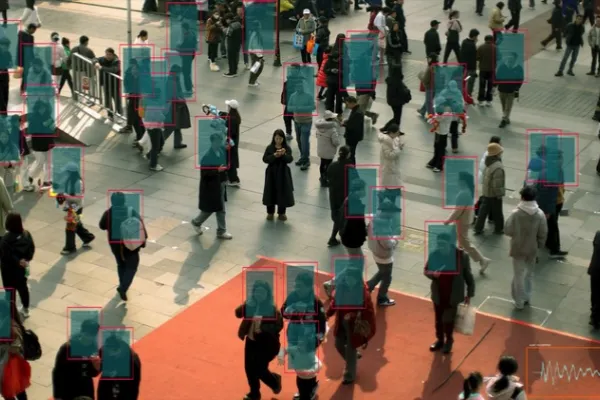
Dr Daragh Murray, Reader in International Law and Human Rights at Queen Mary University of London and a UKRI Future Leaders Fellow, is examining the unintended consequences of AI on people’s behaviour and sense of identity, as well as overarching impacts on society and democracy.
With artificial intelligence (AI) embedded in the lives of people and systems across the globe, AI tools are now being used by governments around the world to make decisions about different aspects of society including determining prison sentences, parole eligibility, social welfare allocations, and to monitor events and protests.
To work effectively when making these decisions, AI tools require a lot of data about people’s behaviours and actions. One way in which this need for increased data is met is through surveillance – for example of people’s online activities, attendance at events or monitoring of their movements.
Dr Murray’s research aims to understand the unintended consequences of this – the so-called ‘chilling effects’ of surveillance.
“The danger is that without understanding this, we sleepwalk into an authoritarian society where, although unintentionally, people are constrained in how they act and how they interact," he says.
Understanding the 'chilling effects'
The ‘chilling effect’ is a term used by academics to describe the psychological or behavioural response that people have when they know or suspect their actions are being monitored.
Chilling effects can have a serious impact on how freely people develop their identities, which has a knock-on effect for democratic society. Will people continue to march or protest? Will they continue to express opinions that differ from the status quo?
In his research, Dr Murray has conducted semi-structured interviews with over 500 people from many different backgrounds and organisations, and with different experiences and perceptions of AI surveillance. Through this qualitative approach, he has shown that ‘chilling effects’:
- consistently occur across different contexts and jurisdictions: their impact isn’t restricted to one area or decision-making process
- significantly impact individuals’ ability to freely develop their identity: developing a sense of self hinges on being able to experiment and have anonymity, which is significantly lessened with increase AI survellience
- impact individuals and groups’ ability to engage on socio-political issues: people become frightened to organise marches or protests, or even to attend one
- aren’t always contextualised: someone may sign up to go to a demonstration but not attend or leave early because they don’t like it, but AI cannot distinguish this
It’s also known that these ‘chilling effects’ have a bigger negative impact on people at the margins of societies and people who have a history or being overpoliced. This is because the ‘chilling effects’ tend to encourage conformity and so those who already don’t align with the ‘status quo’ are more impacted by these effects.
As Dr Murray reports, "We interviewed somebody who said: 'It's impossible to build a community, or a mass movement, when you can't trust anybody.”
What made the difference

Creating the right environment
The interdisciplinary, collaborative research environment at Queen Mary is a key component to Dr Murray’s work

Addressing inequalities
Queen Mary’s long history of addressing social inequalities supports Dr Murray’s work into AI surveillance, which disproportionately impacts marginalised communities

Driving policy change
Dr Murray’s work is bringing the ‘chilling effects’ of AI surveillance into the heart of AI policy debates, including at the United Nations.
The heart of the debate
Through his research, Dr Murray has demonstrated the now foreseeable, unintended consequences of AI-assisted surveillance, and the impact that they are, and will continue to have, on people’s identity and behaviour, and democracy overall.
To reduce the impact of the ‘chilling effect’ Dr Murray’s research findings are being used at the national and international level to ensure the chilling effects are at the heart of debates about AI surveillance.
To date, he has worked with the UN to make sure chilling effects are incorporated into human rights analysis, and supported the UN Special Rapporteur on freedom of assembly in developing a global study of the impact of digital surveillance on civil society across the world.
Dr Murray has also co-led the digital component of a new protocol for the policing of protests. He highlighted how digital surveillance might interfere with the right to protest, and that the police should consider the chilling effect when planning their action.
Overall, his work is ensuring that when governments are thinking about bringing in new AI tools, that they consider not only the benefits that tool could bring, but also the potential chilling effects.
Meet the researchers
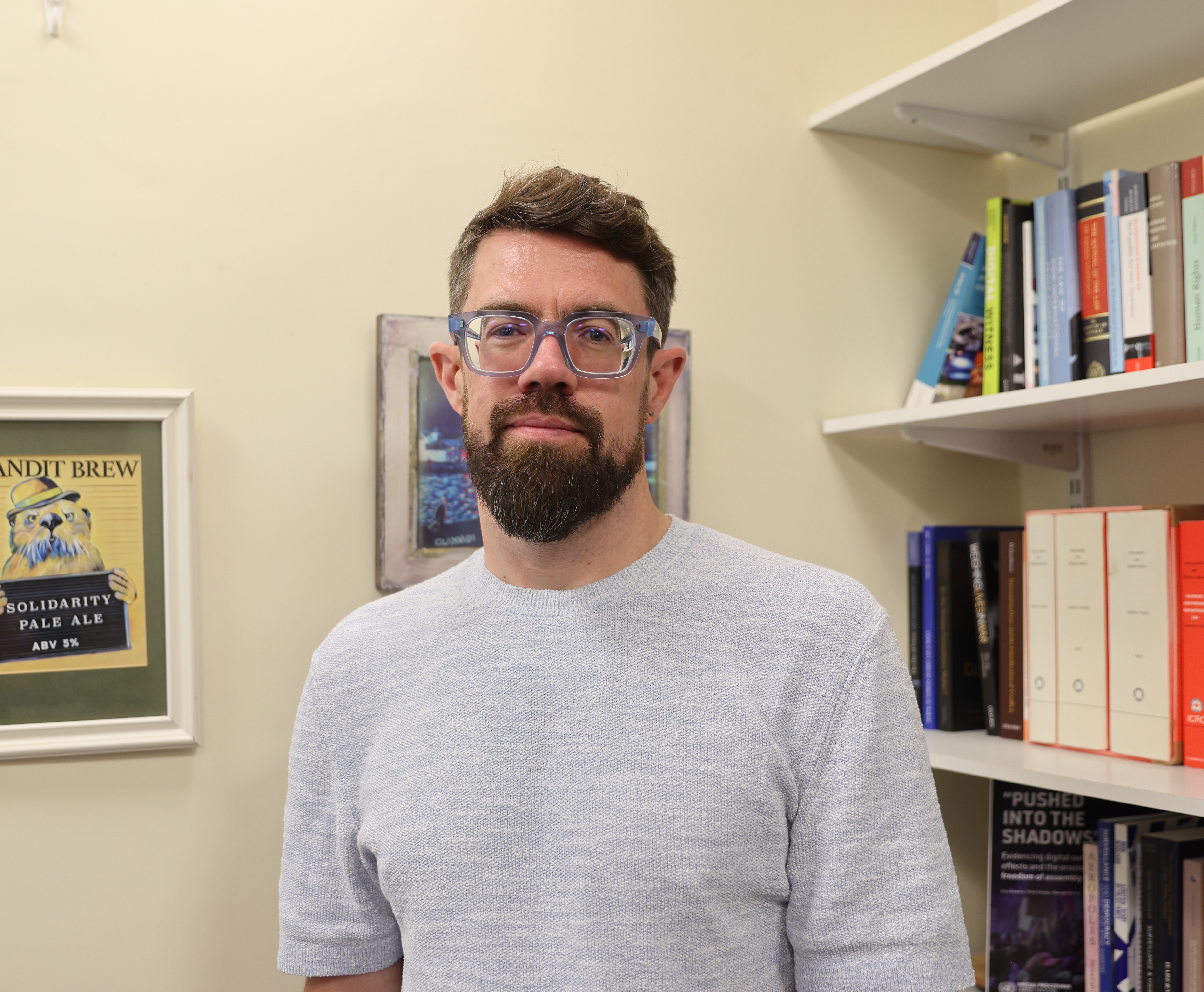
Daragh Murray is a Reader in International Law and Human Rights at Queen Mary University London School of Law, and a Fellow of the Institute of Humanities and Social Sciences.
Explore the research

Oxford Academic:
Facial Recognition Surveillance: Policing and Human Rights in the Age of Artificial Intelligence

Modern Law Review:
Police Use of Retrospective Facial Recognition Technology: A Step Change in Surveillance Capability Necessitating an Evolution of the Human Rights Law Framework

Human Rights Law Review:
Re-thinking international human rights law’s approach to identity in light of surveillance and AI