
Spotlight Profiles
Queen Mary’s community is made up of students and colleagues with diverse identities, experiences and perspectives. We recognise the importance of visibility and representation, and are committed to celebrating the breadth of our community.
Through our Spotlight Profiles, we highlight women and non binary members of Queen Mary, with particular attention to those from underrepresented communities and those whose experiences reflect the intersection of multiple identities.
Spotlight Profiles will be published throughout Women’s History Month and around International Women’s Day. Please check back regularly to learn more about the individuals who shape our community.
Thank you to everyone who has contributed a Spotlight Profile. We hope you find them thoughtful and inspiring.
Asma Husain: HR Operations Manager

- Can you describe your career path, your current role and what attracted you to work at Queen Mary
I began my career in the UK about 19 years ago as an HR Administrator in the commercial sector. It didn’t take long for me to realise that the environment wasn’t the right fit for me. Fortunately, in my role as a HR Team Leader, I was able to progress into HR Advisor and Manager roles within the charity sector, and that was where I truly found my stride.
Working in the non-profit sector exposed me to people who were deeply passionate, values‑driven, and committed to making a positive impact. It gave me a sense of purpose and the feeling that, in my own small way, I was contributing to something meaningful.
A recruiter later encouraged me to interview at Queen Mary University of London, an opportunity I had not previously considered achievable, given how difficult the higher education sector can be to enter without prior experience. I was delighted to be successful, and three years ago I joined QMUL as a HR Operations Manager.
I had always hoped to work in the HE sector, having heard that its culture closely resembles that of the charity world. I’m delighted to say that my experience has confirmed exactly that.
- How has your personal identity or identities intersected with your work and your role at Queen Mary?
As someone who moved to the UK and had to rebuild my career from the ground up, my identity as a migrant professional has significantly shaped both my values and my approach to work at Queen Mary. Navigating a new country, a new culture, and new expectations while working to progress professionally has made me particularly empathetic toward colleagues who may feel underrepresented or unsure about how to advance. It has strengthened my commitment to fairness, transparency, and accessibility in all aspects of HR.
Queen Mary’s mission around social mobility, and its focus on purpose, inclusion and supporting diverse communities, strongly resonate with my own values. This alignment influences how I lead my team and make decisions, ensuring people feel supported, respected, and able to thrive. If there is one thing I have learned, it is to speak up when you think things aren’t right. Don’t let uncertainty throttle your voice.
I see my identity and experiences reflected in the institution’s commitment to creating opportunities for diverse communities. This allows me to bring most of myself to work, drawing on both lived experience and professional expertise to help create an open and inclusive culture.
- Can you share an example of something you have given in your role, such as time, knowledge, or support, and how this has helped you grow or learn in return.
I have always valued the people I have worked with, especially those from underrepresented backgrounds. I have stayed in touch with several of them and supported their development by helping them apply for roles within the organisations I have worked in. In fact, I have supported a couple of colleagues from my previous organisation to successfully transition into roles at Queen Mary.
I also serve as a mentor through the SBM mentoring programme. It has been a rewarding experience to support someone who, in many ways, reflects where I once was, navigating the uncertainties of professional life and building confidence in their career journey and identity. Being able to offer guidance, reassurance and a sounding board when needed has been both meaningful and fulfilling.
Dr Nadine Lavan: Senior Lecturer in Psychology & EDI co-lead for the School for Biological and Behavioural Sciences
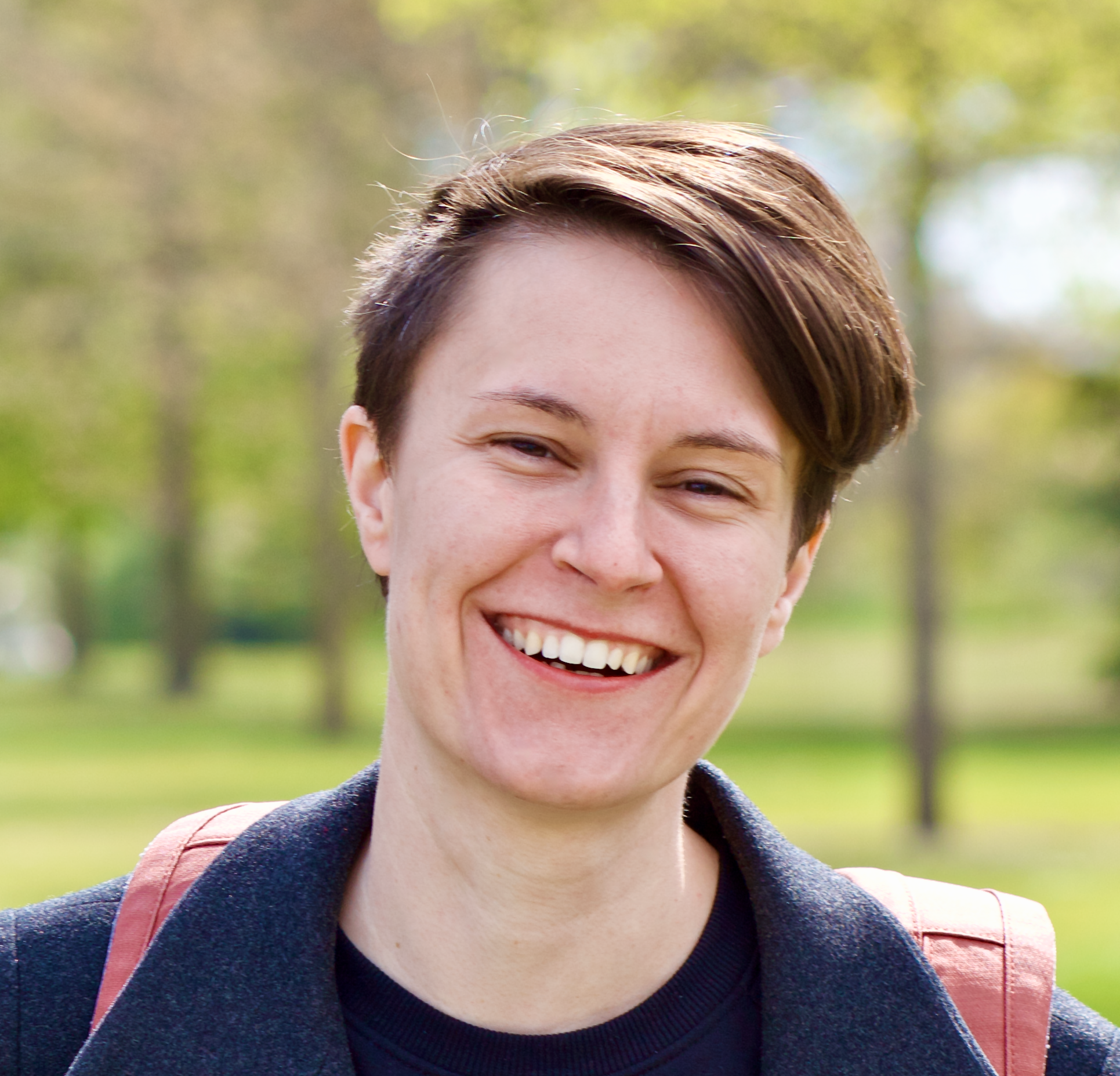
- Can you describe your career path, your current role and what attracted you to work at Queen Mary.
I’m one of the EDI co-leads for the School of Biological and Behavioural Sciences at Queen Mary. As part of this role, I have co-led our School’s Athena Swan Silver application last year, charting out our School's work towards better gender equity, and I am also one of the LGBTQ+ representatives on our EDI committee.
Outside of this EDI co-lead role, I am a Senior Lecturer in Psychology, doing research into voice perception. My work tries to explain how we make sense of who we are talking to when we hear another person speak, and how we keep track of all the different kinds of information encoded in spoken conversation (different words, intention, emotions, speakers, etc.).
I was initially drawn to Queen Mary because there were a lot of researchers working on sound, music, speech perception, and vocal communication across the university — from linguistics, to electronic engineering and computer science, and, of course, within the School of Biological and Behavioural Sciences. Once I arrived, I was delighted to find not only much relevant research expertise but also a truly diverse and vibrant working environment.
- What does Equality, Diversity and Inclusion mean to you, and how important is Queen Mary’s Equality, Diversity and Inclusion work and the marking of events such as International Women’s Day and Women’s History Month to you and your sense of belonging?
I believe that one important aspect of Equality, Diversity and Inclusion work at QMUL is to ensure that everyone can feel like they belong. This can be supported in many different ways, but celebrating events like International Women’s Day and Women’s History Month and beyond can highlight different experiences, show that Queen Mary is trying to support diverse perspectives, and help people find their communities.
- What one piece of information or guidance would you give to others in the Queen Mary community to help them create an inclusive environment or to be an effective ally?
While we should all do our best to consider how our behaviours and decisions will affect different people, it’s incredibly difficult to think of everything all the time. So, if you feel comfortable doing so, be visible and be vocal to represent or amplify different perspectives and experiences to make sure they get considered.
Furthermore, if you see an interesting EDI event advertised at QMUL, make time to attend, whether the event is directly relevant to you, you are an ally, or simply someone who is interested. You’ll likely learn something new and meet new people, or perhaps see people you know in a different context.
Bhagirathi Shah: Equality, Diversity and Inclusion Workforce Analyst

- Can you describe your career path, your current role and what attracted you to work at Queen Mary.
I’m Bhagirathi, I’m an Equality, Diversity and Inclusion Workforce Analyst working in the Workforce, Data and Analytics team in HR; I support the university with EDI-related data and data projects, such as Athena Swan, pay gap analysis and Race Equality Charter. I’m also a co-chair for the Race Equality Network and recently became a mentor on the School of Business and Management’s student mentoring programme.
My career has been quite varied. After graduating with an English Language and Literature degree, I spent six years working in the charity sector at small youth charities. One of my first roles was as a Programme Officer in a team of three full time staff, managing tuition programmes that supported students in Years 5 and 6 from under-resourced backgrounds with their English and Maths; working in a small startup charity, this also involved contributing to business growth. I then went into a more specialised role as a Data and Insight Executive at a youth charity supporting young people who were at risk of becoming NEET (not in education, training or employment) to reach positive outcomes after leaving school, while supporting the charity through a data culture change.
I came across my current role while working on a project as part of a patient advocacy training programme, where I was looking into the importance of employers monitoring and publishing staff disability statistics. I was particularly drawn to the emphasis Queen Mary place on equality, diversity and inclusion, embedding it within their organisational strategy. It felt serendipitous!
While the roles and sectors I’ve worked in have been varied, as a British Asian woman, living with a long-term health condition, I feel driven by opportunities where I can use my skills, knowledge and lived experience to support and empower others from similar communities, and organisations that dedicate work to this.
- What does Equality, Diversity and Inclusion mean to you, and how important is Queen Mary’s Equality, Diversity and Inclusion work and the marking of events such as International Women’s Day and Women’s History Month to you and your sense of belonging?
I think equality, diversity and inclusion is about embracing and celebrating the strengths we bring alongside our backgrounds; I say ‘alongside our backgrounds’ deliberately here, instead of ‘regardless’, because we can gain strengths from our differences and unique lived experiences. Although we should find ways to celebrate each other’s strengths and achievements and demonstrate allyship every day, events like International Women’s Day and Women’s History Month are a great way to do this collectively and more visibly raise awareness.
- What one piece of information or guidance would you give to others in the Queen Mary community to help them foster an inclusive environment or to be an effective ally?
Inclusivity is more than giving people a seat at the table – it’s an important first step, that needs to be accompanied with creating a safe space where staff from all diverse backgrounds can be authentic, open and honest, feel listened to and heard, and supported to thrive. It’s important to think about how we can do that regardless of what role we are in, we all can have some level of influence.