
Wild Bees Warming Up: From London to the World
London is home to more than 150 wild bee species. These bees pollinate the wildflowers, gardens, allotments, and parks that make our city green, sustaining the seeds and berries that feed birds and other wildlife. But cities trap heat, so as the UK warms, our London bees will be the first to feel the effects of extreme temperatures. How will they cope with the heat?

Our group investigates how bees cope with climate, in London and around the world. We observe bees in the wild and in images to understand how they’ve evolved to handle climate variation, how they’ve changed over the past century, and how they’re faring today.
Over millions of years of evolution, bees have evolved diverse body forms and characteristics that allow them to live everywhere from deserts to the Arctic. We use advanced imaging techniques and computer vision tools to visualize these body plans in two to three dimensions. In a recent study (https://besjournals.onlinelibrary.wiley.com/doi/full/10.1111/1365-2435.70051), we photographed more than 600 bee species from around the globe and used computer vision techniques to measure traits that help bees regulate body temperature. We found that bees in hotter places were covered in pale hairs that may help them stay cool in the sun. These patterns provide a record of how bees have adapted to the diverse climates they live in.
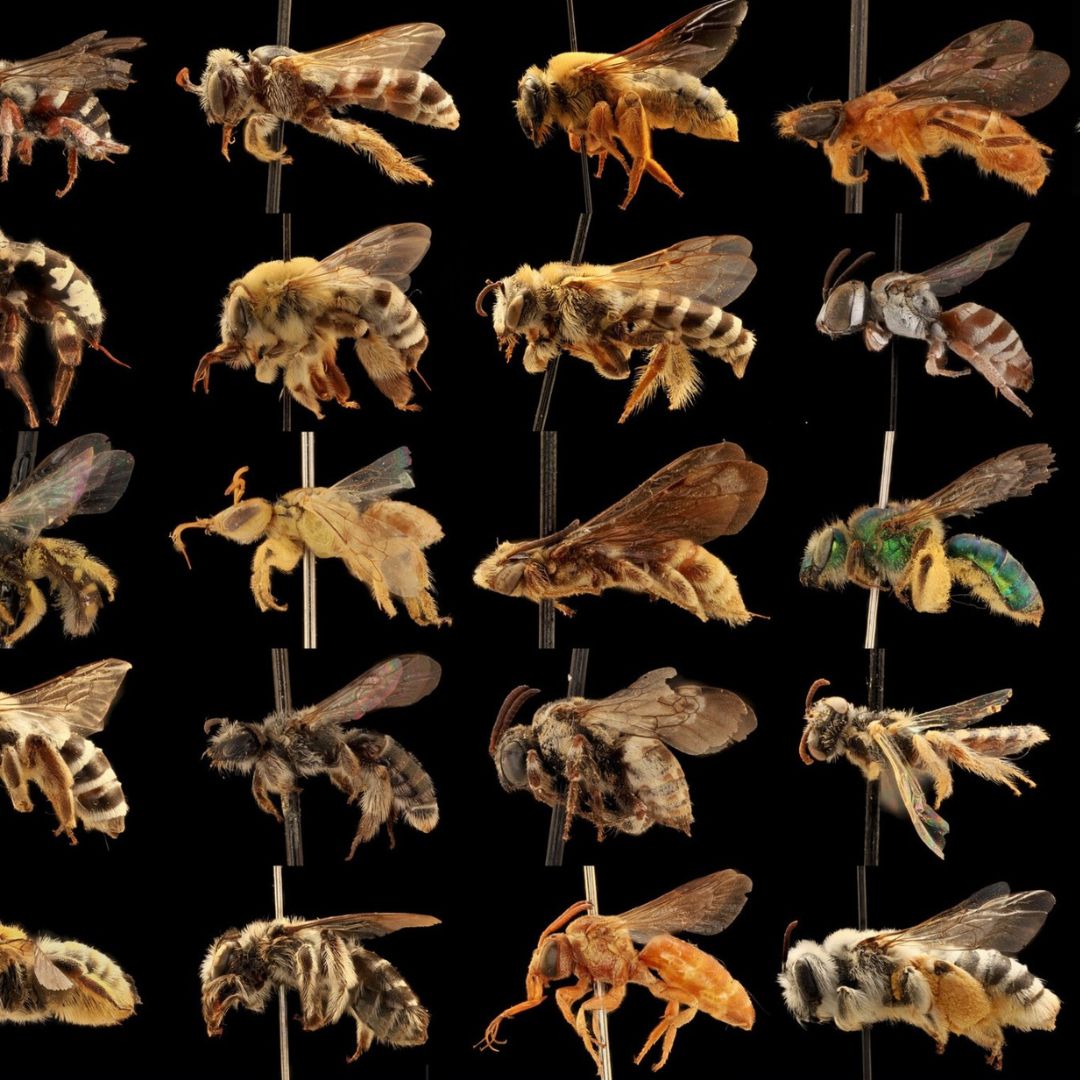
Over the past century, these adaptations have been tested by a changing climate. To see how bees have fared, we worked with citizen scientists to measure the body sizes of thousands of bee specimens collected since 1900. We found that bees have been shrinking over the 20th century, with steep declines in cool, dry years when the flowers they depend on for food may be scarce. Small bees fly shorter distances and carry less pollen, so this shrinking effect may have dire consequences for whole ecosystems that depend on these pollinators.
Today, climate warming is outpacing bees’ ability to adapt. This year was the UK’s hottest summer on record, with record-breaking heatwaves hitting the capital especially hard. We use camera traps, temperature loggers, and thermal cameras throughout London to monitor how bees respond to the heat. When temperatures climbed, bees stayed home, some species seeking refuge in underground nests that could be 5 degrees cooler than the air. But these nests struggled to cool down overnight, suggesting these refuges may not be cool enough, particularly for sensitive eggs and larvae.
We now want to understand the consequences of heat for bee communities and to investigate how we can build more climate-resilient habitat for London’s pollinators. By connecting how bees have adapted over millions of years with the conditions they face today, we aim to help our city’s wild bees weather the summers to come.