
People, Plants and Pollinators: EDI outreach workshops and presenting at a national conference.
/filters:format(webp)/prod01/channel_120/school-of-biological-and-behavioural-sciences/media/sbbs/clara-blog-(4).jpg)
The team of QMUL student volunteers ready to run a “bee safari” at the second pollinator workshop with Dr Konstantinos Tsiolis from Pollinating London Together.
One of my most important discoveries from my time at Queen Mary, has been the importance of embracing the unknown and getting stuck in with new opportunities.
Therefore, when an email came through from Dr Clara Montgomery, looking for volunteers to help run public outreach bee conservation workshops I quickly accepted. Although a bee novice, I was eager to engage in wildlife conservation and urban ecology. It would be a bonus to develop some bee identification skills!
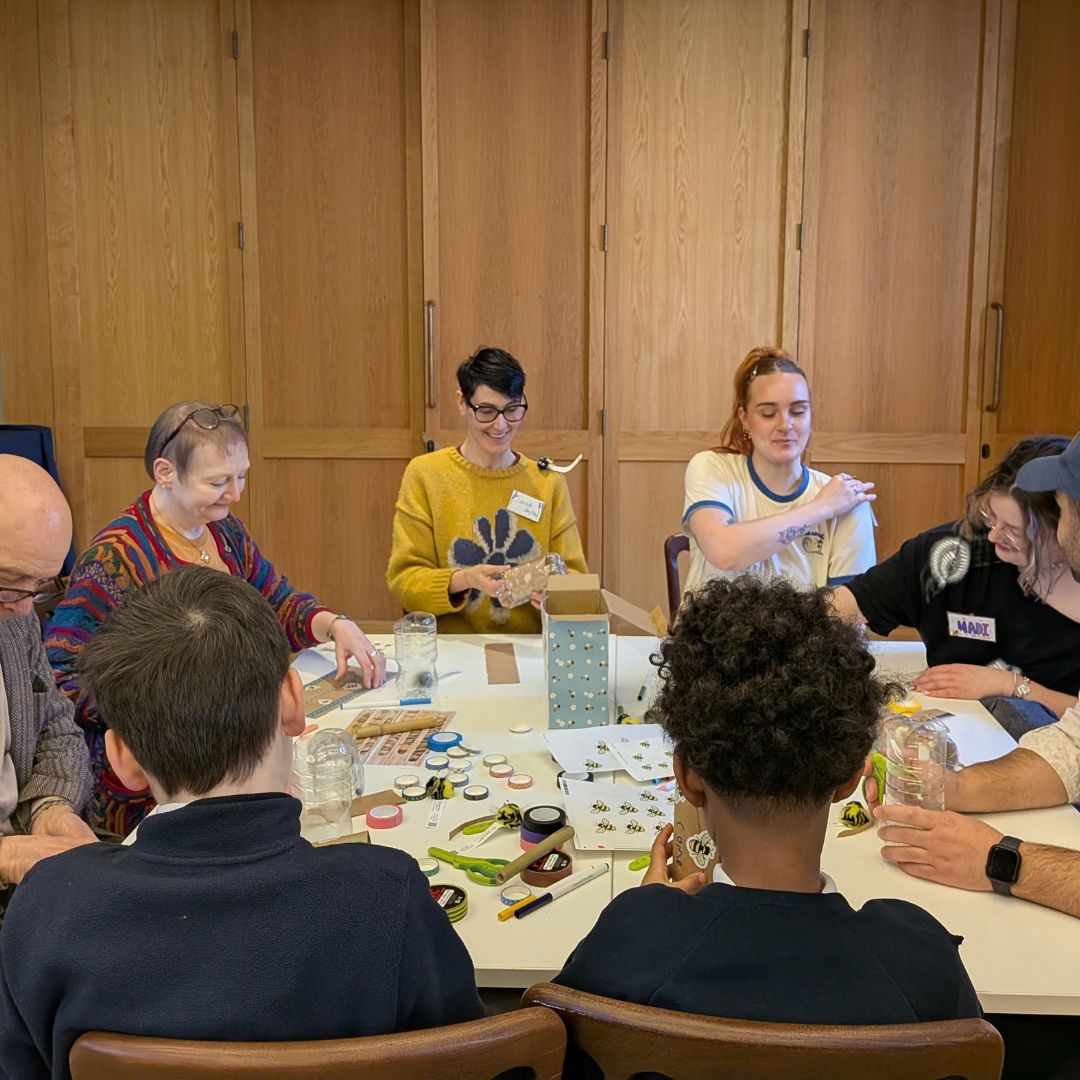
Throughout spring 2026, we ran three workshops in central London at The Charterhouse, St John’s Garden, and St John’s Museum and Cloister Garden in Farringdon. The workshops were generously funded by an EDI grant from the Royal Entomological society, and supported by collaborators Sarah Wood and Pollinating London Together. We aimed to increase interest in entomology in young people from underrepresented backgrounds in entomology, and to create positive experiences with native bees for children and adults living in urban areas. Our target groups were chosen because they are more likely to experience limited access to nature and nature education. This exacerbates biophobia (fear of nature) due to a lack of positive experiences in nature. While our target group was children, participants also included older adults and family groups, to promote intergenerational learning.
Activities included DIY bee hotel building, a bee safari (humane capture and identification of wild bees), and pollinator friendly planting. Before getting stuck in, I, and the other QMUL student volunteers, met with Clara to prepare for the workshops; making practice bee hotels and training to safely capture and identify bees. By trialling and adapting the design and instructions for DIY bee hotels I gained valuable insight into science communication, learning how our target audience can impact activity design.
The workshop activities facilitated educational discussions between volunteers and participants about various wild bee species, their importance, and the use of bee hotels and pollinator friendly plants in pollinator conservation. The bee safaris also facilitated positive direct experience with wild bees.
.jpg)
As well as proving beneficial for participants, volunteers including myself benefited from the workshops. Having developed increased confidence in public engagement and education I was also inspired to continue with nature education, volunteering at the Kent wildlife trusts wilder holiday club.
One of the most exciting outcomes, was getting the unexpected opportunity for me, alongside two fellow students Ronan Sidnell and Anna Kraft to attend and present at the Royal Entomological Society's annual conference Ento26, at Cardiff University. The poster was collaboratively created between ourselves, and 2 other students, Madi, Gordon and Olivia Cecchini and supervised by Clara. We also prepared a short slideshow presentation about the project which we presented at the RES EDI grant workshop..jpg)
Sharing and discussing our work with so many experts in entomology was both highly rewarding, and insightful. Through this, and some fascinating talks and workshops I gained new perspectives on environmental education, current public perceptions of insects and ways that we can work to improve these. A highlight of this was a workshop by ecologist Connor Butler, who used queer perspectives to explore and challenge what we view as disgusting in nature and society.
Overall, the conference allowed me to develop my presenting skills, gain new insights and interest in entomology and environmental education and to make many new friends and connections within the field of entomology. I even found some time for a guided tour of the entomological collection at the National Museum Cardiff where I was especially excited to see their peppered moth specimens. In a wonderful end to the experience, we were honoured to be awarded with the runner up prize for best poster during the closing speeches.
I could not possibly have envisioned the incredible places my venture into entomology would lead this year, but for me it just goes to re-iterate the importance of embracing new and exciting experiences in life. I look forward to heading into my final academic year with new insights and skills, and I can't wait to see what comes next in my academic journey.
- Alice Aldred, Biological Sciences