
Learning in the field: Marine Biodiversity field trip in Scotland
Hear from one of our Zoology students about their recent field trip in Scotland as part of the Marine Biodiversity module. From collecting and identifying marine species to exploring coastal habitats and tackling real-world conservation challenges, learn about Mair's experience of hands-on learning, fieldwork and unforgettable wildlife encounters.
I was lucky enough to be in the first cohort to go on the reintroduced field trip to Millport in Scotland. This forms the Marine Biodiversity module available to second year Biology and Zoology students.
As this field course is new, I was asked to write a diary of how it went, so that students may have an idea of what to expect in future years.We arrived at Euston station on a bright September morning accompanied by suitcases of varying sizes and a sense of anticipation. This was our first proper field trip, and I do not think any of us truly knew what to expect. The train journey up to Glasgow was a long one, with the landscape slowly becoming wilder and more mountainous. But soon enough we were on a bridge over the Clyde, slowing into Glasgow Central.
The train over to Largs and subsequent ferry to Millport seemed to fly by in comparison, and before we knew it, we were settling into our home for the week, the Field Studies Council Centre Millport. The centre was established in the Late 19th century around The Ark, a research vessel used by oceanographer Sir John Murray. Since that point Millport has been a hub of marine research in the UK. The Ark was destroyed by a storm in 1900, but the centre maintains a research vessel, Actinia (named after the Beadlet Anemone, a common species that we found in many of the island’s rock pools), which we were lucky enough to go out on.
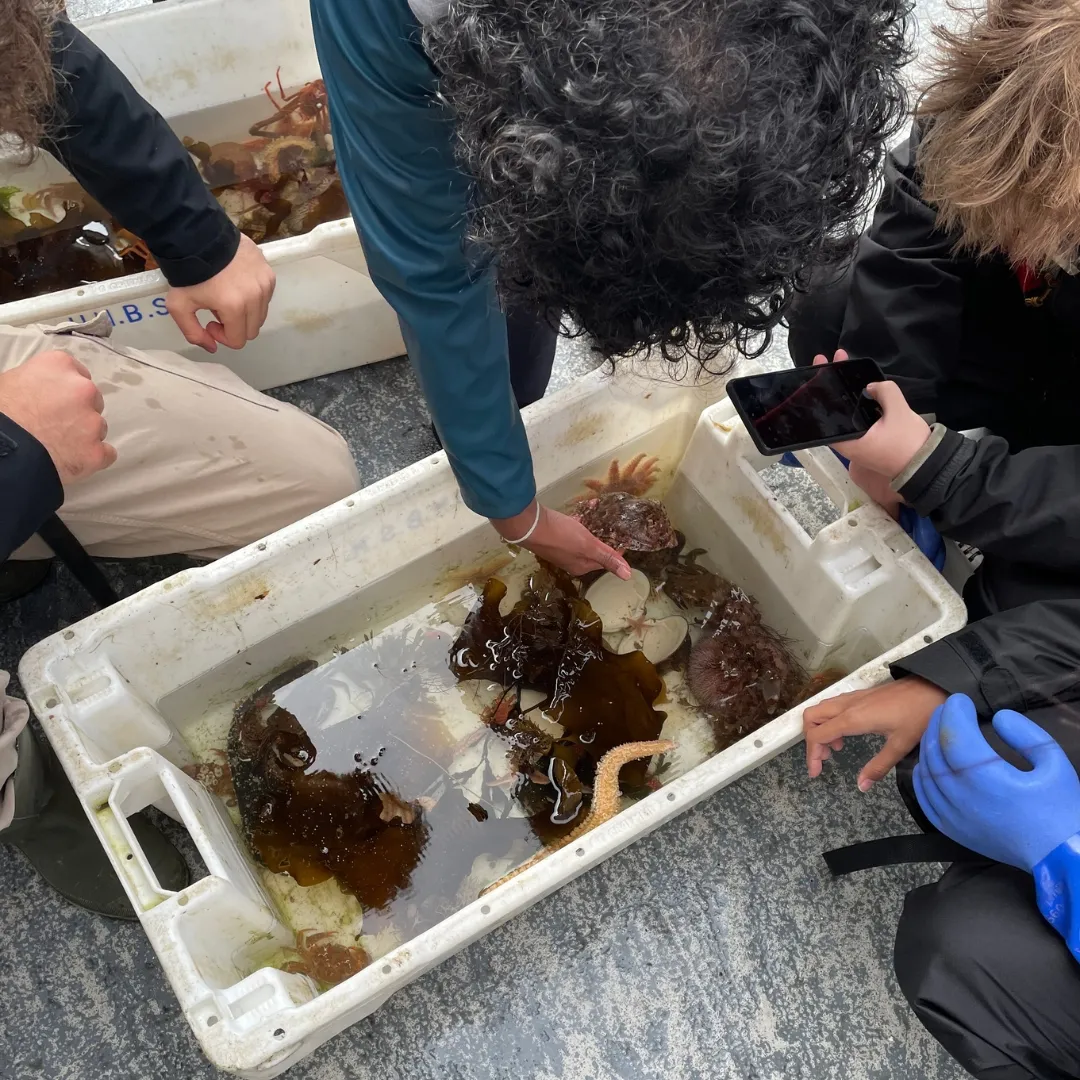
Predictably, the classic West Coast weather had to throw a slight spanner in the works, so our trip out on Actinia was rescheduled from Friday (our last field day) to Wednesday, the morning after we arrived. So, after a good night’s sleep in the on-site hostel and a hearty cooked breakfast, we set off with Captain Tom – Actinia’s captain and a marine biologist who has spent most of his career at Millport – to collect benthic specimens from the seabed near the island. Before setting off we learnt about the sampling methods that are used on Actinia to assess the planktonic and benthic biodiversity in the waters surrounding the island. This gave us a great insight into the practical techniques involved in marine monitoring and research especially as we were able to get hands-on with the equipment aboard ship.
We spent about ten minutes travelling across the – mercifully calm – waters, then let down the boat’s trawl net. After another ten minutes, during which we were able to see a variety of seabirds including guillemots and gannets (another lucky group even saw harbour porpoises, but unfortunately I missed them), we pulled the net back up, writhing with a multitude of marine life. We extracted our catch from the net and then got to work sorting and collecting the specimens that we wanted to take back to the lab to study properly. Once we were satisfied with our haul – and after a few good pinches from the velvet crabs we’d caught – we returned all of the excess animals to the sea.
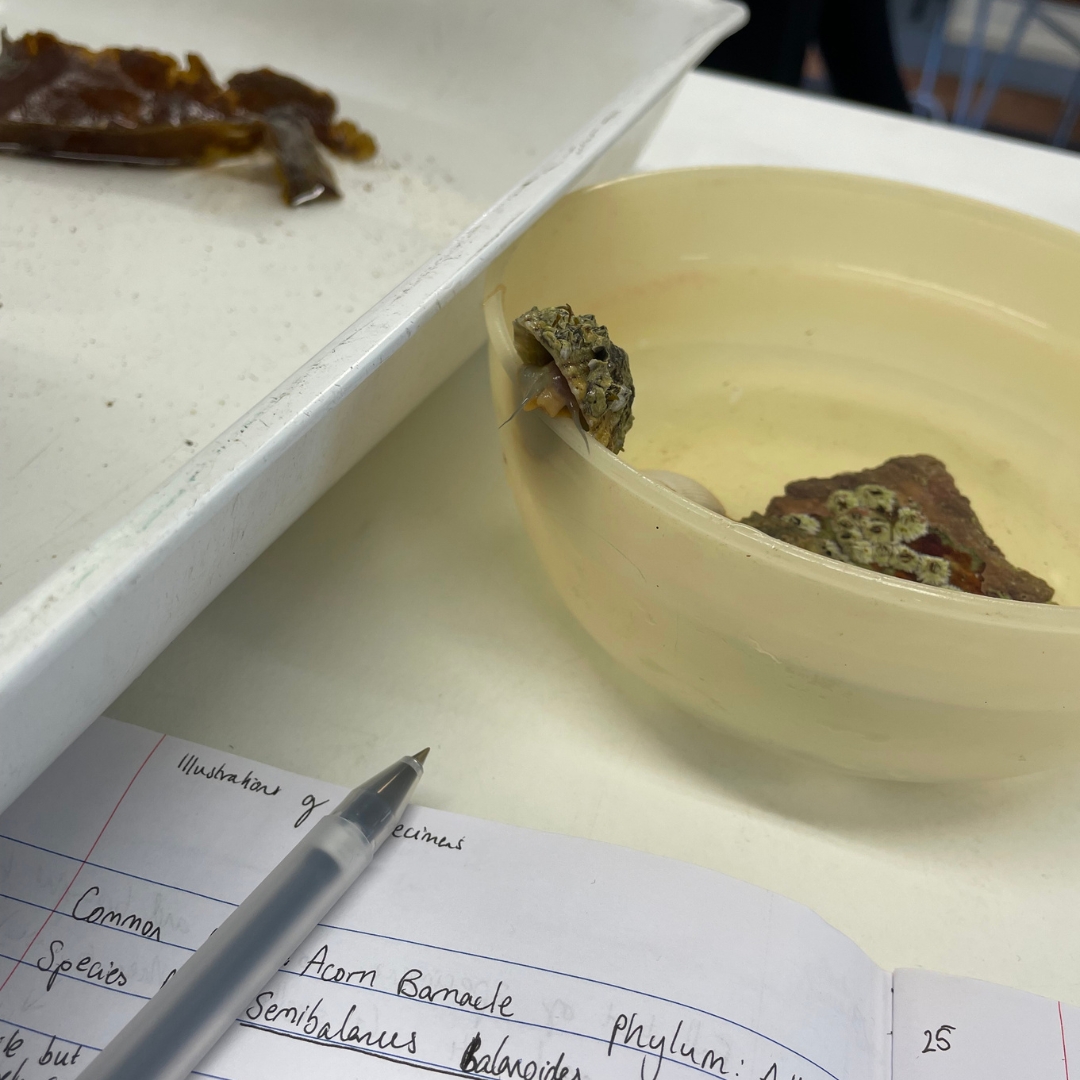
Our days on the island soon found a familiar rhythm. Field excursions in the morning to collect our specimens were followed by a quick lunch, then many hours in the on-site labs, meticulously drawing and identifying what we had caught in our field notebooks. We were also expected to include details about identifying features of each group we observed, and to think about how they were adapted to the variety of habitats we sampled. Our notebooks were a main focus of the trip and were collected and marked as coursework. This was an excellent learning experience, as collating concise, readable field notes and scientific drawing are both important skills for biologists and zoologists that we do not have many opportunities to practise outside of field courses.
The academics were always around during labs to answer any questions we had about the animals, and these informal discussions were one of the most rewarding parts of the trip. After dinner we had lectures, either from the QM academics – who focussed on the taxonomy of the animals we had been studying - or from Captain Tom – who taught us about practical field techniques. These were particularly enlightening when put in context by the animals that we had been hands-on with just a couple of hours earlier. I personally feel that I learnt far more in this setting than I possibly could have done in a typical lecture room.
On our second morning we travelled by bike through alternating showers and sunny spells over to the other side of the island, where the beaches are rocky and flat. We splashed through the damp seaweed to create a transect line, along which we placed quadrats in order to assess the diversity along the gradient of the intertidal zone. It was here that we could observe firsthand a phenomenon we had learnt about in our first year – the competition between two species of barnacle and the effect on their realised ecological niches. This may not sound particularly interesting, but the study first documenting this was conducted on Millport and became fundamental to the field of ecology. We also collected lots of very charming hermit crabs from the rock pools, as well as many other fascinating creatures like brittle stars and goose barnacles.
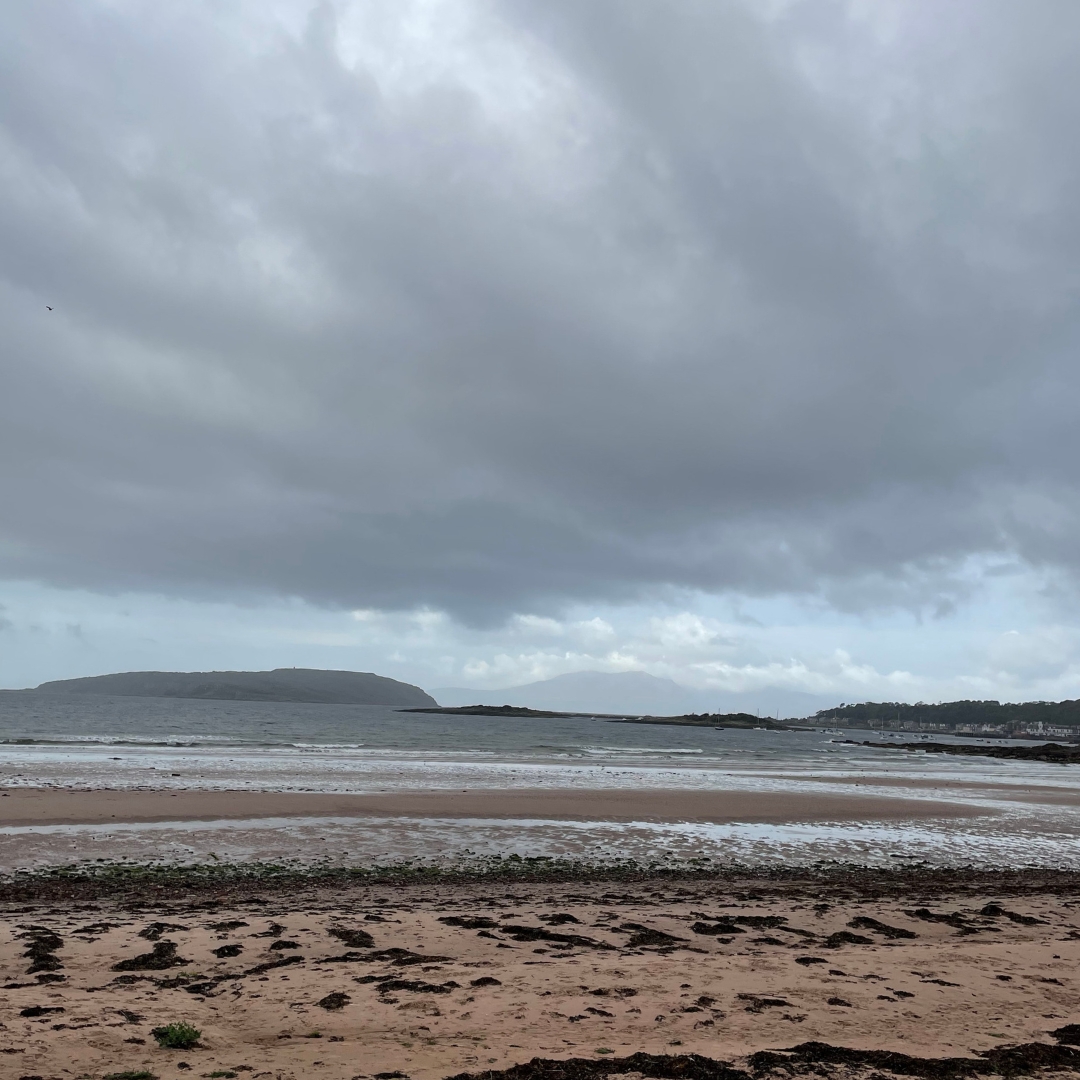
Our third morning was spent in a similar fashion, but on the sandy beach that in in the town of Millport itself. After our transect was completed we spent some time attempting to dig up lugworms, using the casings that dotted the beach as a guide. We also learnt some surveying techniques, such as using theodolites. Some slightly adverse weather conditions were made up for by the beautiful views over Little Cumbrae, with the dramatic Isle of Aran looming in the distance.
We were also able to apply all of the knowledge we had gained from our fieldwork in a practical marine conservation exercise on our final day. We each took the role of a different stakeholder group and had to produce a plan that would suit each group whilst still protecting the fragile ecosystem which the island is a part of. This exercise was a real challenge and gave me a good insight into the nuances of real-world conservation.
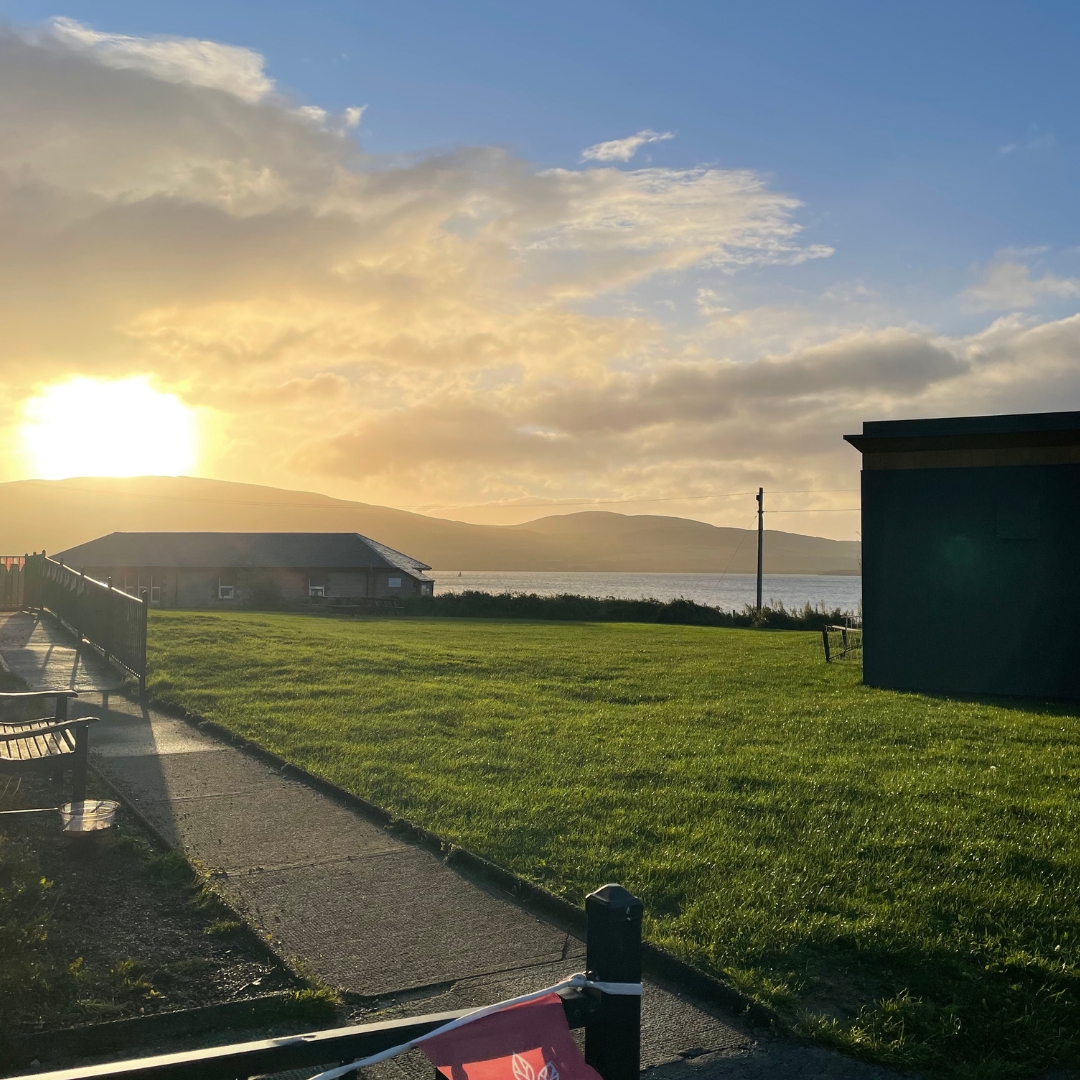
Of course, there was time to unwind in the evenings too, which we spent exploring the local area (and patronising the local sweet shops for their delicious traditional tablet). Some of the group even managed to spot some seals and otters during their explorations, whilst I spent a memorable last morning in town watching a magnificent Curlew foraging on the beach. The experience has definitely bonded us all as a group and set us up well for our second year of study. It also has given me a new appreciation for the incredible diversity of British wildlife and the huge effort it takes to conserve it.
-Mair Lewis
2nd Year Zoology student
BSc Zoology