
Strong Voices, Stronger Care: What South Asian Women Told Us About Life After Gestational Diabetes
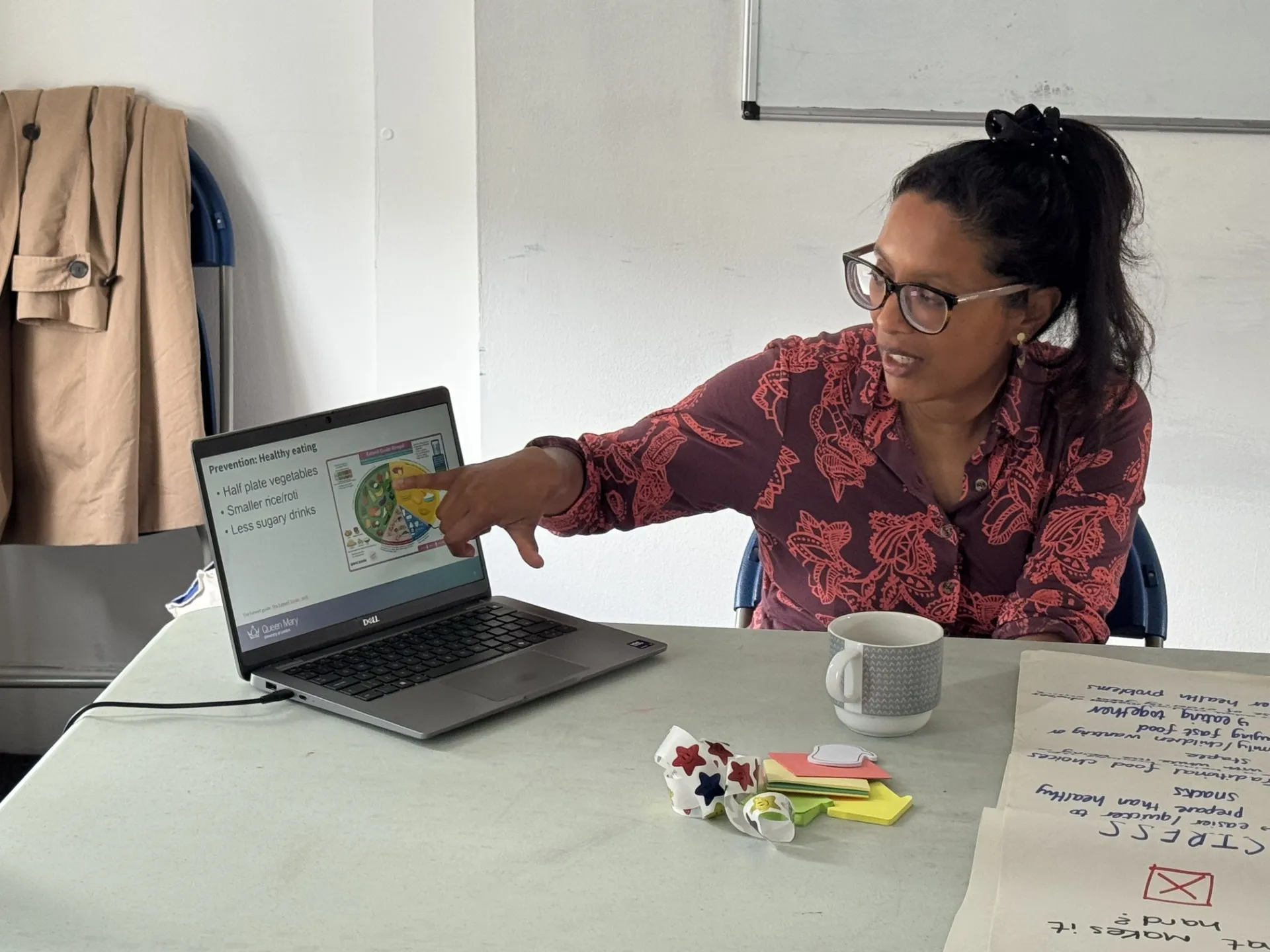
Listening to women whose voices are often missing
What happens after a pregnancy affected by gestational diabetes? For many women, the answer is surprisingly little.
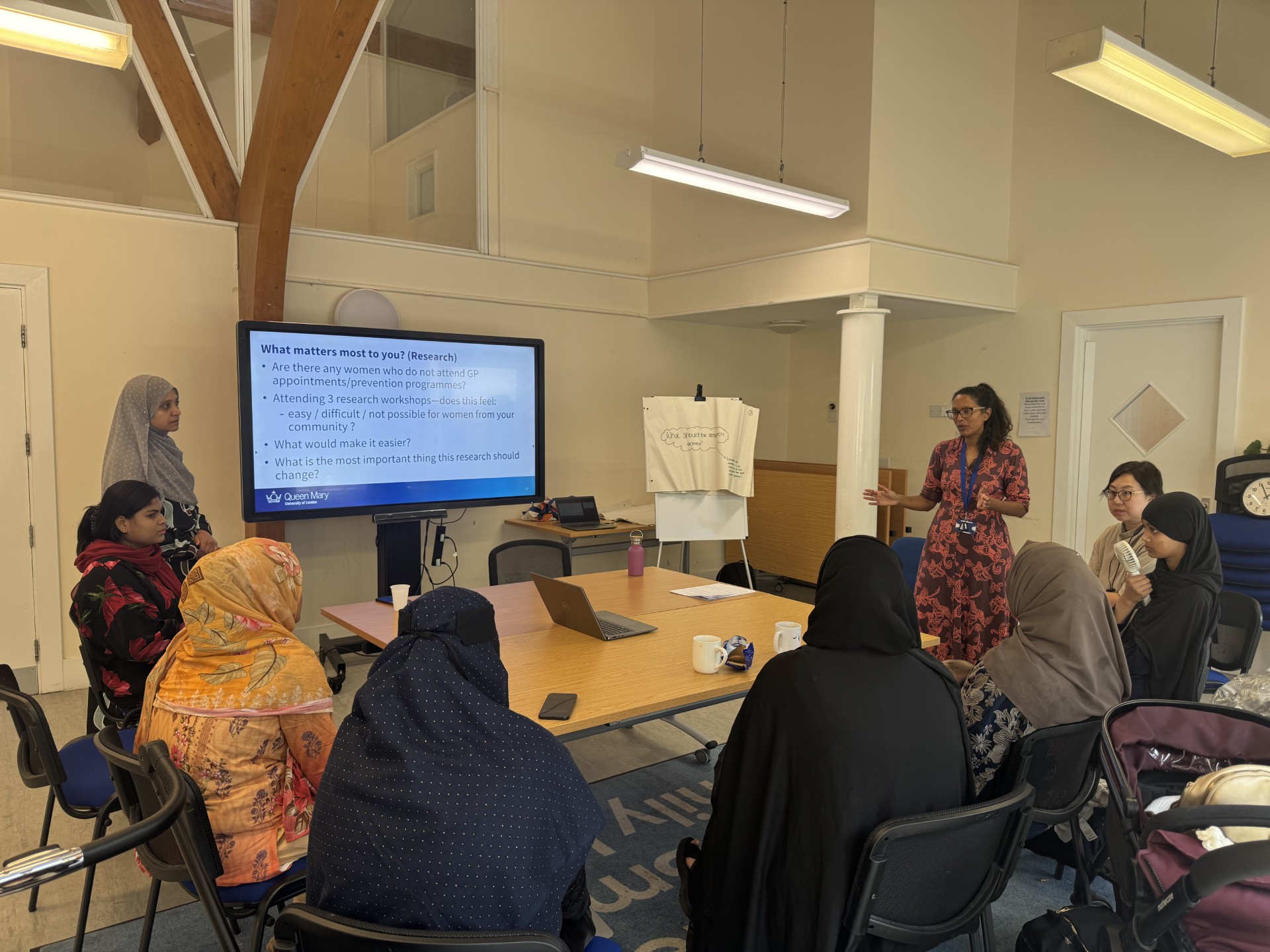
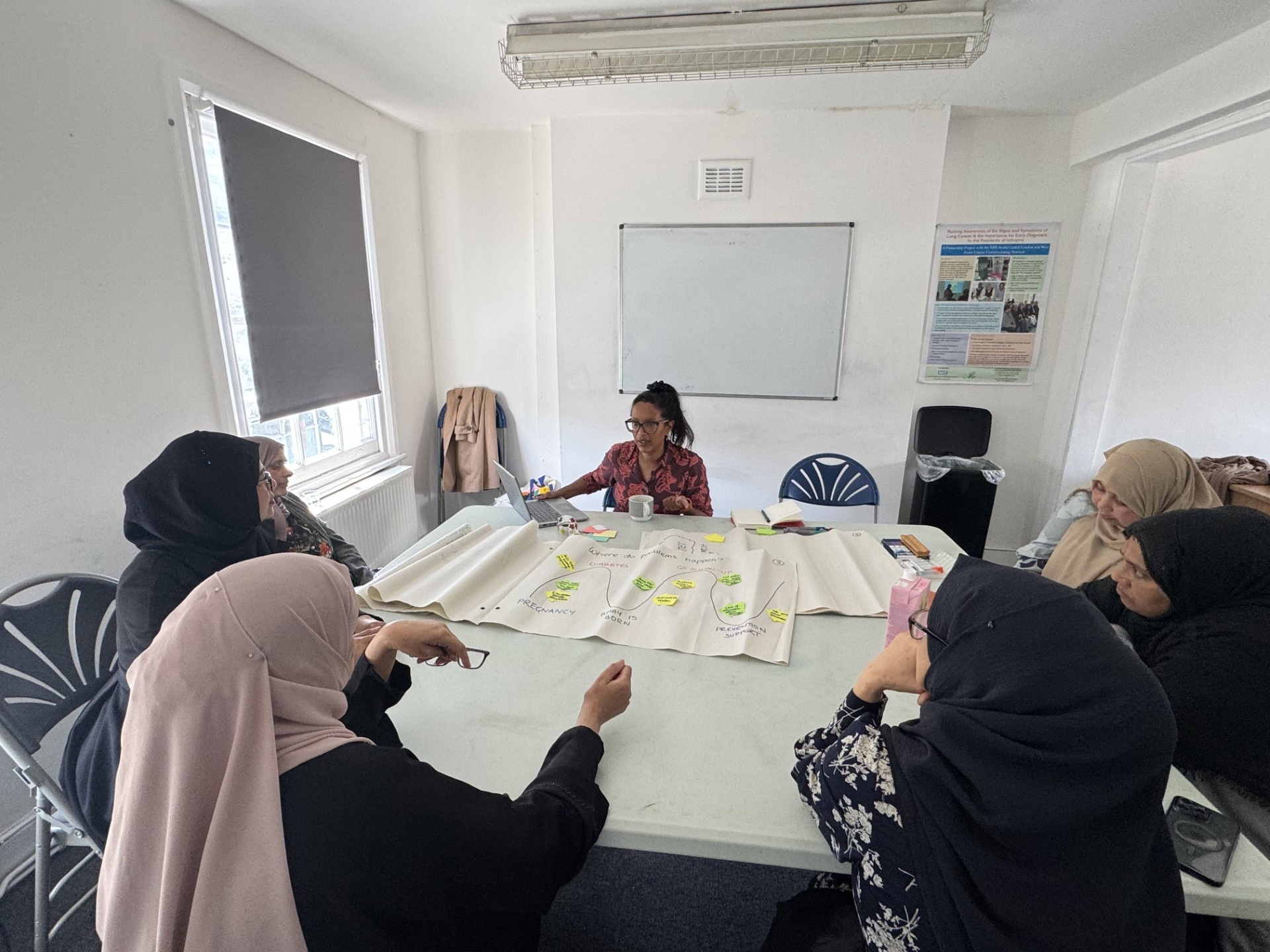
We recently worked with 17 Bangladeshi and Pakistani women through a series of workshops funded by Queen Mary’s Centre for Civic and Public Engagement and the National Institute of Health Research School for Primary Care Research. Together, we explored experiences of gestational diabetes, follow-up care after pregnancy, and what could be done to help prevent future type 2 diabetes. The aim was simple: before designing new research, we wanted to listen to women who are most affected and make sure future research is shaped by what matters to them.
Why this matters
Gestational diabetes is a type of diabetes that develops during pregnancy. Women who have experienced it are at much higher risk of developing type 2 diabetes later in life. This risk is particularly high for South Asian women, who are more likely both to develop gestational diabetes and to develop type 2 diabetes at a younger age.
Yet many women never receive the follow-up blood tests and ongoing support recommended by NHS clinical guidance after a pregnancy affected by gestational diabetes.
Food, family and everyday life
Food plays an important role in gestational diabetes because the foods women eat affect blood sugar levels during and after pregnancy. Making changes to diet is often one of the main ways women are advised to manage gestational diabetes and reduce their future risk of type 2 diabetes.
Women spoke about family meals, cultural traditions and the challenges of balancing healthy eating with everyday life.
As one participant put it: “Paratha is a non-negotiable.”
Women described practical ways they had adapted recipes and portion sizes without abandoning foods that were important to them and their families. Small, sustainable changes felt more realistic than generic advice that felt disconnected from women’s everyday lives and cultures.
The challenge of putting yourself first
Many women described how difficult it can be to prioritise their own health after having a baby. Between childcare, housework, work and wider family responsibilities, attending appointments or focusing on prevention can easily slip down the priority list.
One participant explained: “I have six children, so I am very busy with housework. Everything else can slip from my mind.”
This highlighted an important message for researchers and healthcare professionals alike: support has to fit around the realities of women’s lives.
“They didn’t call me”
Perhaps the strongest finding was that many women felt follow-up after pregnancy simply did not happen.
Some women reported never receiving invitations for follow-up blood tests. Others had been tested but were never given their results. None of the participants had been referred to the NHS Diabetes Prevention Programme.
Women, GPs and a diabetes specialist midwife identified potential system problems behind these experiences, including challenges in transferring information from hospital maternity services into GP records and gaps in recall systems.
What women want to change
Across the three workshops, several clear priorities emerged. Women wanted:
- Automatic follow-up appointments rather than expecting women to remember to book them.
- Clear explanations of test results and future risk.
- Honest language that communicates risk effectively.
- Easier access to prevention support.
“Mum comes first”
One quote captured the spirit of the workshops: “Mum comes first. If the mother isn’t healthy, the whole household goes downhill.”
Participants repeatedly emphasised that supporting women’s health benefits not only mothers, but also children, families and communities.
What happens next?
The workshops directly informed the development of a new National Institute for Health and Care Research (NIHR) funding application focused on improving follow-up care and prevention after gestational diabetes. The findings have shaped the research questions, intervention ideas and plans for future co-design work.
Most importantly, they remind us that meaningful research starts by listening.
The women who took part generously shared their experiences, challenges and ideas. Their voices are now helping shape research that aims to create fairer, more effective support for women after pregnancy.
Read the full Strong Voices report: Strong Voices Summary Report August 2026.pdf [PDF 5,588KB]
Acknowledgements:
This work was supported by the National Institute for Health and Care Research (NIHR) School for Primary Care Research (SPCR) Public Involvement and Engagement (PPIE) Enablement Fund (Grant Reference 809) and the Queen Mary University of London Centre for Public Engagement Small Grant 2025/26.
The views expressed are those of the authors and not necessarily those of the NIHR, the NIHR School for Primary Care Research, the NHS or the Department of Health and Social Care.
Contact:
- Dr Shoba Poduval, Centre for Primary Care, Queen Mary University of London
s.poduval@qmul.ac.uk - Meera Parmar, Centre for Primary Care, Queen Mary University of London meera.parmar@qmul.ac.uk
- Rong Lu, Barts Health NHS Trust rong.lu@nhs.net