
Spotlight
As part of our Pride Month programme, we are proud to celebrate members of our community through a series of Spotlight Profiles.
Each individual featured has been nominated by colleagues and students in recognition of their contributions, impact, and commitment to creating an inclusive environment. These nominations reflect the value of their work, their advocacy, and the meaningful difference they make across our community.
The Spotlight Profiles are an opportunity to recognise and amplify the voices, experiences, and achievements of LGBTQIA+ staff and students, as well as allies who actively support inclusion and equality.
We hope these stories inspire reflection, connection, and continued commitment to creating a more inclusive and supportive environment for all.
Dr Joshua James | MA MSS, Library Assistant, Circulation Cross Team, Library Services
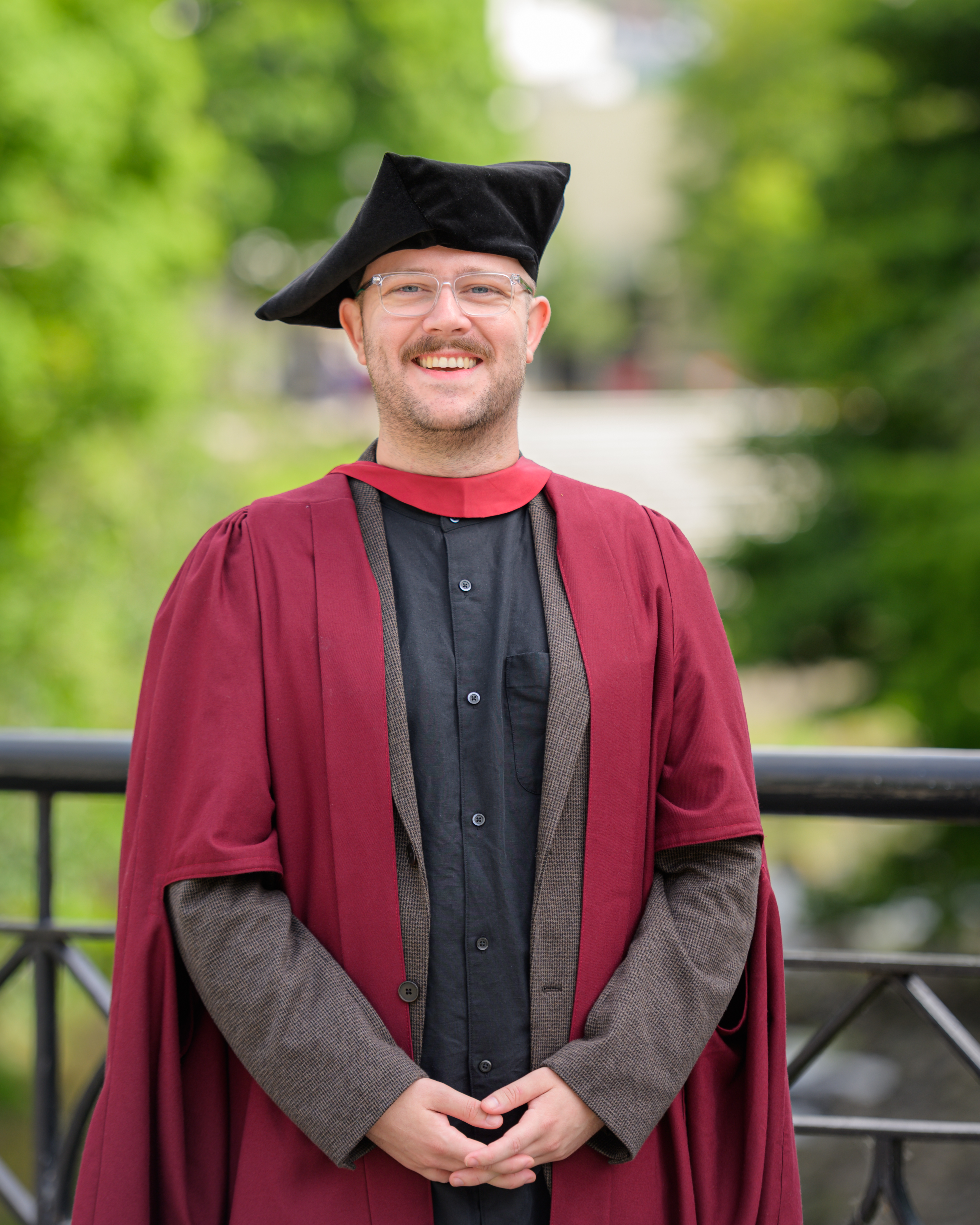
Can you introduce yourself and tell us about your role or studies at Queen Mary?
Kia ora and hello! My name is Joshua James, and I am a Library Assistant at QMUL. I’ve been living in London for the past seven months, but I’m originally from a small town in Aotearoa New Zealand. In my role at the library, I juggle an array of tasks, including helping staff and students at the Welcome Desk, assisting with inter-library loans, and ensuring the library is a safe and comfortable place for everyone to study.
What are you currently studying or working on?
Outside of the library, I am currently working across two bodies of work. The first involves turning my PhD into publications for a wider audience, and the second is contributing to a student equity project in Australia. I finished my PhD in 2024, where I explored how members of the far right who identify as homosexual navigate and resolve conflicts between identities. As you can imagine, studying this topic took its toll over several years, so I needed a break—but I am now easing back into translating the work into journal articles and a book. My student equity work focuses on improving the success, retention, and aspirations of students from rural, regional, and remote areas of Australia, which offers a welcome contrast to my previous research.
What inspired you to choose your course or career path
Libraries are a natural fit for me. As a primary school student, I was a student librarian, and it’s work I’ve always returned to. Throughout my undergraduate, Master’s, and PhD studies, I worked in libraries, so arriving in London and stepping into a library role felt like a natural continuation. Libraries are one of the great equalisers in society, and I find real purpose in supporting students and staff.
What has your experience at QMUL been like so far?
Great! Everyone has been incredibly welcoming and understanding of my antipodean sensibilities—though I still can’t quite get my head around the academic year ending in the middle of the calendar year!
How would you describe your identity?
I am, much like my research suggests, a person of many intersecting identities. Most pertinent to this profile is that I am a queer man, but I am also a partner, an uncle, a son, a dog-lover, a socialist, and a trade unionist.
Are there aspects of your identity that feel especially important to you?
I think so; being queer is important to me insomuch that I am proud that I can live a free life of dignity and openness, something my queer predecessors could not do as recent as forty years ago. I think also being working class is a key part of my identity, it has ingrained a sense of fairness and empathy which drives much of my professional work.
Yes. Being queer is important to me insomuch as I am proud to live a life of dignity and openness - something that was not possible for many just a few decades ago. Being working class is also central to who I am; it has instilled in me a strong sense of fairness and empathy, which shapes much of my professional work.
Has your understanding of yourself changed over time?
Absolutely. I came out of the closet as a teenager during the Lady Gaga era of LGBT+ rights, and at that time I made my queerness the central aspect of my identity. As I’ve grown older, my identity has deepened, and I’m less rigid about defining myself through any single lens.
What does an inclusive university environment mean to you?
An inclusive university is a barrier-free environment where all students and staff feel respected and safe to study, research, and teach. It is also proactive—actively promoting equity while reducing barriers to participation.
Have you found spaces or communities at QMUL where you feel you belong?
Yes and no - I’m still new so in the awkward “finding-my-feet” stage of a workplace. However, the library and my colleagues have been a welcoming community. Library staff are some of the most welcoming folks you’ll ever meet.
What more could universities do to support people from diverse backgrounds?
This is an interesting question, and I think universities are getting better at supporting people from diverse backgrounds. I think the more pertinent question is what can the government do to help universities support people from diverse backgrounds, and the first aspect of this is funding. If we are trying to raise aspiration of all people to go to university, and also lift retention and success rates, universities need to be funded better.
What does Pride Month mean to you?
Pride is a time of celebration, of remembrance, of mourning, and of queer joy. These tensions within the month are not contradictory, they speak to the experience of queer existence – both historic and contemporary. Practically, it is a time of gathering amongst our queer communities; the gathering can be partying, knitting, coffee, dates, book clubs. At the core of these events is queer people being together.
How do you usually reflect or engage during this time?
Three of my favourite pride activities are the dancing, the museum exhibitions, and the film screenings that occur.
What do you think Pride Month represents in a university setting?
It is an opportunity for LGBTQIA* staff and students to celebrate, to plan how we can improve our institutions, and for universities to engage in deep listening with our communities.
What have been some highlights or challenges in your studies so far
Doing a PhD on the far right was a very difficult but rewarding experience. Some of the difficulties lay in the fact that I had to consume so much material from far-right activists and organisations – a very demoralising experience over three years. However, it was rewarding to see the thesis I produced, and the relationships and connections I made along the way. Considering I nearly failed my first year of university, and had to do a second Masters degree to get into a PhD program, it was sometimes surreal to be a doctoral graduate of the oldest university in Aotearoa New Zealand – the University of Otago.
Have you had any work experience or opportunities that have shaped your journey?
When I tell people the career I have had which has led me to this moment they often laugh. I have worked in Parliament, a hot dog cart, four universities in a variety of roles (researcher, teaching fellow, tutor, library staff), owned my own research consultancy, a gardener. All of these jobs have had some imprint in me, and I think the sole factor that contributes to this varied journey is the ability to say yes. Saying yes leads you down some unexpected pathways but makes life fun.
What skills or experiences have been most valuable to you?
I try to lead with empathy, and this is a skill that has served me well. When you understand that people do not often act out of malice, it can turn your whole day around, especially in roles that have a lot of contact with other people.
What advice would you give to students who want to succeed at university?
Read! Read as much as you can. I pretty much flunked through my first year of university as instead of writing papers that were informed by the literature I was reading, I wrote opinion pieces and then found sources to back up my perspective; and this is really just the wrong way round to approach research. My other piece of advice would be to make connections and network wherever possible – go to every faculty event, every industry event, say hello, leave an impression on people. The connections and networks you make during this time might have longstanding impact on your career in the future.
What advice would you give to someone still figuring things out?
Firstly I’d say that no one has everything figured out, and most people are just making it up as they go along. If you’re trying to figure things out, my advice would be to never close any doors or burn any bridges, you never know where life will take you. My other piece of advice would be to try everything – join that club or that society that you were thinking about, apply for the job even if you think you’re unqualified; life has so many opportunities and you never know what will work out.
What helps you stay motivated or grounded?
I think motivation and groundedness come from the single source from me; I grew up in a single-parent family, and my dad was on the disability benefit after loosing half a hand in a workplace accident. This upbringing keeps me grounded – I have had so many experiences in my life that I never thought I’d get to experience, and I am so thankful that I am in this position. But it also motivates me to want more for myself, my peers, and the proletariat more broadly; everyone deserves a life of dignity and I think this motivates me.
What message would you like to share with the QMUL community?
The QMUL community is incredibly diverse, and in that lies its strength. In an era where division gets clicks and sells newspaper, I would really encourage QMUL community to continue to come together. During this Pride month I’d encourage the readers to reflect on how you‑both personally and in your communities‑are embracing the LGBTQIA* people in your lives. How are you making them feel safe, feel loved, feel seen, feel validated, in who they are.
Keannu M. Arnoco (he/him) | Lead Nurse for the Clinical Assistant Workforce & Course Representative for Postgraduate Certificate in Medical Education
Can you introduce yourself and tell us about your role or studies at QMUL?
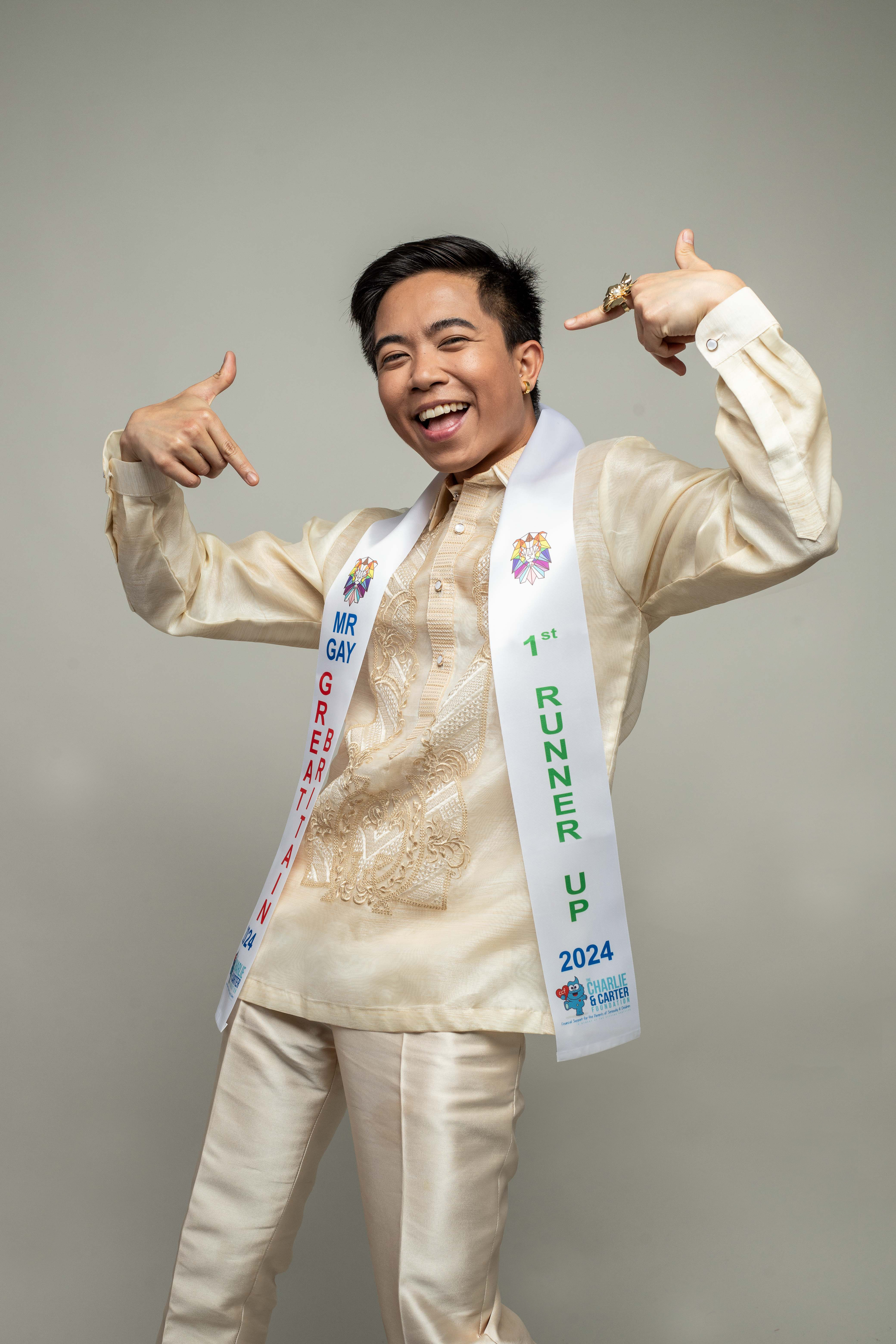 I’m an internationally educated registered nurse from the Philippines and have been based in the UK for the past five years. I completed my Bachelor of Science in Nursing in 2015 and have since gained over a decade of experience in nursing practice and education across international settings.
Currently, I work full-time as a Nurse Educator within the NHS while pursuing a Level 7 Postgraduate Certificate in Medical Education at Queen Mary University of London on a part time basis. Through the programme, I’ve deepened my understanding of teaching and learning within clinical settings, explored contemporary issues in medical education, and developed greater insight into curriculum evaluation and development.
As this is my first experience studying at a UK university, I also took on the role of Course Representative to fully engage with and make the most of the student experience. In this role, I work closely with both students and faculty to ensure that student voices are heard, encourage open communication across cohorts, and contribute to initiatives that enhance the overall learning experience.
Have you had any work experience or opportunities that have shaped your journey?
Over the past decade, I’ve worked across a range of clinical, education, and leadership roles internationally, and these experiences have significantly shaped my professional journey. Before moving to the UK in 2021, I worked in the Philippines across the public sector, government agencies, an international non-government organisation, community settings, and a tertiary private hospital, including general wards and intensive care. These experiences gave me a strong clinical foundation, broadened my understanding of healthcare across diverse contexts, and prepared me to transition into the NHS within a new healthcare system.
Beyond my formal roles, volunteering and leadership opportunities have also been instrumental in my development. These experiences helped me build confidence in communication and public speaking, strengthen my leadership and advocacy skills, and work effectively with diverse groups. They also deepened my commitment to service, community, and continuous learning.
Since moving to the UK, I began my NHS journey in surgical/orthopaedic and intensive care before transitioning fully into nurse education in 2022. I have since worked as a Clinical Skills Facilitator, Practice Educator, and now Lead Nurse for the Clinical Assistant Workforce. Across these roles, I have focused on fostering a culture of learning, supporting staff and learners, promoting evidence-based practice, and creating positive learning environments across the Trust.
My passion for education grew through my experiences in nursing practice, where I recognised the importance of empowering healthcare professionals through effective teaching, mentorship, and lifelong learning. My time at Queen Mary University of London has further enriched this journey, helping me grow both professionally and personally.
Importantly, my professional experience in nursing and education has supported my studies at Queen Mary, allowing me to connect theory with real-world practice in medical education. In turn, my academic learning has strengthened my practice, enabling me to reflect more critically, enhance my teaching, and apply evidence-based educational principles. Together, these experiences continue to shape me into a more reflective and effective educator.
What have been some highlights or challenges in your studies so far?
Key highlights of my studies so far have come from the opportunity to combine my academic learning at Queen Mary University of London with my role as a Course Representative. One of the most rewarding aspects has been contributing to the student experience and working collaboratively with both students and faculty to ensure that feedback is acted upon and to support ongoing improvements in teaching, learning, and the student experience.
A particular highlight has been the relationships and sense of community I have been able to build through this role. Engaging with peers across different cohorts, supporting discussions, and sharing experiences has made the learning journey feel more connected and collaborative.
I have also been honoured to receive recognition through several awards, including the Course Rep Contribution Award, the Gold Skills Award, Course Representative of the Month, and Course Representative of the Year for the School of Medicine and Dentistry (2025–2026). While these acknowledgements are humbling, what I value most is what they represent: the importance of student voice, engagement, and collaborative working to enhance the learning experience.
Alongside these highlights, a key challenge has been balancing full-time clinical and leadership responsibilities within the NHS with part-time postgraduate study. Managing competing priorities has required strong organisation, discipline, and adaptability. However, this has strengthened my ability to integrate theory into practice and approach both work and study with greater reflection and intentionality.
What does pride month mean to you?
To me, Pride Month is about authenticity, self-acceptance, and representation. It is both a celebration of identity and a form of protest, reminding us of the ongoing need to challenge exclusion, discrimination, invisibility, and stigma, while recognising the importance of creating spaces where individuals and communities feel respected, valued, and a sense of belonging.
In a world where there is often pressure to be someone else, Pride feels like a grounding reminder that it is enough to simply be true to yourself. It is about embracing individuality rather than comparison and recognising the strength and relief that comes from living openly and without compromise.
Pride is also about visibility. Not only being recognised as yourself, but contributing to environments where others feel included and able to exist authentically in their own identity. It is about the responsibility and privilege of helping create spaces where difference is acknowledged, affirmed, and valued.
Ultimately, Pride is an appreciation of who we are now, while also embracing growth and the ongoing journey of becoming. Identity is not fixed, and Pride allows us to honour where we are today while continuing to develop into more authentic and self-aware versions of ourselves. In a world where we can be anything, I choose to be myself and hope that others feel empowered to do the same by living authentically.
Are there aspects of your identity that feel especially important to you?
Yes, my identity as a gay man is an important and deeply personal part of who I am, and it has significantly shaped my journey and the way I see the world. Growing up, I experienced challenges around acceptance and understanding, which at times made me feel different and uncertain about how I could fully express myself. Although difficult, these experiences helped develop my resilience, self-understanding, and compassion.
Over time, I’ve come to understand my identity through both these early experiences and how it has influenced my values and how I engage with others. It has deepened my awareness of inclusion and belonging, and my appreciation of what it means for someone to feel seen, supported, and valued.
Importantly, my identity has also informed my sense of purpose in a very tangible way. In the Philippines, I co-founded and served as the first president of a volunteer-led organisation advocating on HIV awareness, where my lived experience of marginalisation informed my commitment to advocacy, education, and inclusion. In this role, I delivered educational campaigns across schools, workplaces, and communities, raising awareness of HIV prevention, treatment, care, and support, alongside providing counselling, testing, and referral services. This experience allowed me to transform personal experience into collective action and service, and continues to strengthen my commitment to advocating for inclusion and supporting LGBTQIA+ and other marginalised communities.
What feels most significant to me is the intersection of my identities as a gay man, a Filipino immigrant, and a healthcare professional and educator, and how these continue to shape my values, perspectives, and approach to inclusion and advocacy. These interconnected aspects deepen my understanding of marginalisation, belonging, and voice, and strengthen my ability to build meaningful connections and contribute to inclusive environments in healthcare and education.
Have you found spaces or communities at QMUL where you feel you belong?
Yes, I have found spaces and communities at Queen Mary where I genuinely feel a sense of belonging, particularly within my course community, group learning environments, and the wider student body. My experience of studying here has been meaningful, and a key part of that has been the ability to show up as my authentic self while learning alongside a diverse group of students from both the UK and internationally.
Being true to myself in these environments has supported my learning in a very natural way. I feel more confident participating in discussions and group work, and more open in engaging with different perspectives. This has helped me learn in a more engaging and enriching way, rather than feeling reserved or disconnected.
My role as a Course Representative has further strengthened this sense of belonging by connecting me more closely to my peers and the faculty. It has given me the opportunity to engage in structured student–staff forums where student voices are genuinely heard and valued, which has been very affirming.
Overall, my sense of belonging at Queen Mary comes from both the academic and community spaces I engage with, where I feel included, supported, and able to be myself.
What message would you like to share with the QMUL community?
My message to the Queen Mary community would be to stay open to growth, and to trust that your voice and presence matter, even when you are still finding your way. University and workplaces can feel like environments of constant learning and adjustment, but I have found that the more I engage authentically, academically, professionally, and personally, the more fulfilling the experience becomes.
For those who want to succeed, I would say success is not only about academic or professional achievement, but also about participation, uplifting others, and being willing to learn from those around you. Reaching out, asking questions, and engaging with peers, staff, and colleagues can make a significant difference, not only in strengthening your understanding of your studies and work but also in building confidence and a genuine sense of belonging.
Ultimately, I would encourage the QMUL community to embrace both individuality and openness, to value who you are while remaining receptive to the people, perspectives, and opportunities that shape your journey. I also believe there is strength in recognising the different aspects of our identities and experiences, and in allowing those perspectives to shape how we support others, advocate for inclusion, and contribute meaningfully to the wider community.
Joyce Wauty (she/her) | Residential Life Officer, Estates and Facilities Directorate
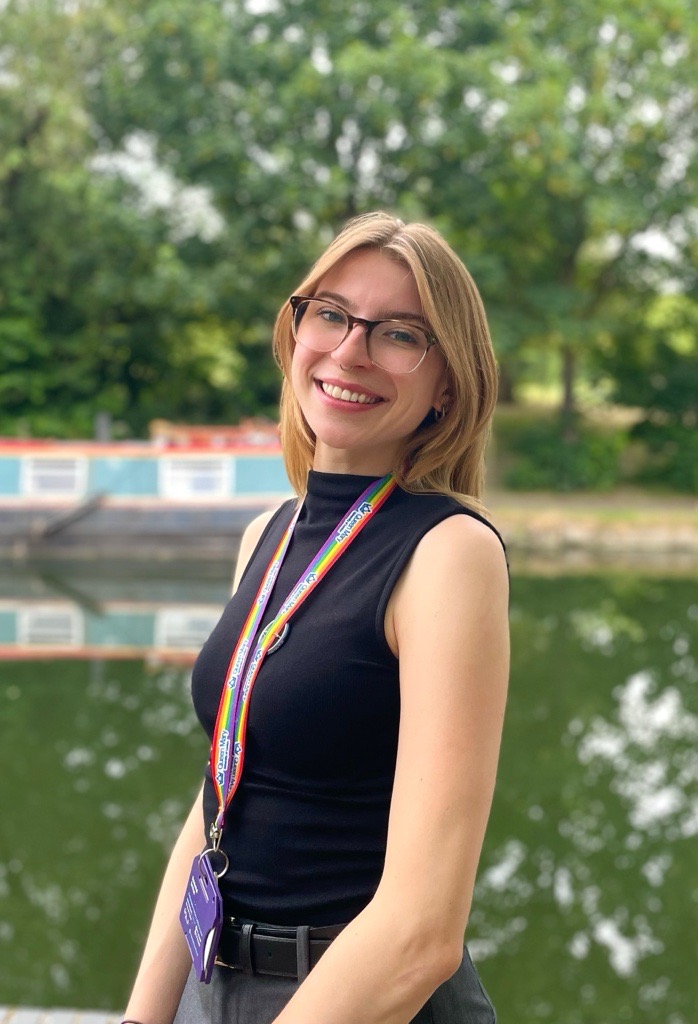 Can you tell us a bit about your role at Queen Mary and your involvement in the Queer Link Up initiative?
I’ve been working as a Residential Officer at Queen Mary for nearly 3 years now. We hold events for students living in Queen Mary halls, manage the Residential Life website and social media, and manage a team of up to 25 student staff.
The Queer Link-up came about when I met Carley Owen from UAL at a conference back in June last year. She presented on the continued importance of LGBTQIA+ representation in halls and I was inspired by how much work her team does for their queer residents. I reached out to Carley to find out how we could combine resources and create an event to bring our queer students together.
What inspired the creation of Queer Link Up, and what need were you hoping to address for LGBTQIA+ students in halls?
Last year, I felt a disconnect with our queer resident community due to low engagement with our queer-specific events and initiatives. I knew there were plenty of LGBTQIA+ residents living in our halls, but what we were providing was either not enough or not what was actually needed.
After many discussions with Carley about how to collaborate in a meaningful way, I came to realise that what young queer people really want is a safe space to be themselves and meet other queer people. We have a lot of international students in our halls, and some of them come from countries where being queer is still criminalised or socially repressed. For others, they might not have felt safe being queer at home or they are still figuring out who they are. Being in London is their first opportunity to explore who they are fully and openly. These feelings can be overwhelming and scary, and a young queer person who maybe hasn’t met many queer people yet might not feel confident going to a gay bar in Soho by themselves.
With this in mind, we created an event to facilitate these early connections with queer identity and queer London culture in a safe environment. Queer Link-Up was held at Zodiac Bar in Euston, a trans-inclusive queer venue that UAL works with regularly. We had two wonderful drag queens who performed and played games with the students. We had pronoun badges and stickers for everyone. The event was run by Carley and I, both queer. Our QM students were even offered to travel to the event with Residential Assistants, again emphasizing that for many this was their first time going out as themselves.
Congratulations on your nomination for the Queer Student Awards. What does this recognition mean to you?
Thank you! While being recognised for good work is always nice, this one feels especially important because we tried something new. The incredible in-person feedback we received from students during and after the event, that impact should be celebrated. I’m proud that it’s being recognised for how it positively affected our students.
How did the collaboration with the University of the Arts come about, and what has that partnership brought to the initiative?
My favourite thing about this partnership is how different our student bodies are. UAL is an arts university, while most Queen Mary students pursue degrees in STEM or law. By doing an event centred around celebrating queer identities, these other differences become almost unimportant. Our students might not have easily met organically, but we created a space where they connected through their lived experiences of being queer. I think that’s beautiful!
What impact has Queer Link Up had on students and the wider community so far?
The immediate impact from this event was incredible. On the night, students came to speak to me about how great the event was and how they want more of it. One person in particular really stuck with me. He came from China to do his postgraduate degree in London and told me that this night was the first time he was openly gay. He was the most energised and engaged person all night, even getting on stage to sing karaoke later. Seeing a person who has been in the closet for so long blossom because we provided that safe space showed us just how impactful this event was.
As for long-term impact, my hope is that by continuing to hold initiatives like this, we can show prospective queer students and residents that there is a place for them here and that we’ll always show up to support and celebrate who they are.
What do you enjoy most about working at Queen Mary?
The people I work with and students I meet at our events!
What advice would you give to students and staff, particularly those from LGBTQIA+ backgrounds, early in their careers?
My biggest piece of advice to any LGBTQIA+ person is that it pays off to be who you are openly and proudly. When I just started working I used to say things like “yeah I’m gay but that’s the least interesting thing about me.” I laugh at that now because why was I trying to make this important part of me smaller? I love being queer, it’s one of the greatest joys of my life, so I embrace being loud about it now. It outrages me that people are made to feel like they have to keep their queerness quiet at work. If your identity makes someone uncomfortable then it’s them that are being unprofessional.
What does this year’s Pride Month theme of Visibility, Community, Inclusion and Action mean to you?
All of these things are incredibly important considering the current climate of LGBTQIA+ rights in the UK and the increasing number of hate crimes against queer people. I think visibility and inclusion are one of the most urgent things. I co-host a podcast on Queer Cinema with a friend of mine and we talk all the time about the different ways queerness shows up in film and how it is so vitally important to have diverse representation. Young queer people need role models that look like them, come from the same background, and want similar things in life. I’m excited about the film screening of El Canto del Colibrí on the 1st of June!
What do you enjoy doing outside of work? How do you like to switch off?
I like a bit of everything! I enjoy a drink (or 2) at the pub, I love hiking, swimming in lakes and rivers, reading, and recently I’ve been getting back into bouldering. There is a big queer community there!
Michael Woolley (He/Him) | Senior Marketing and Communications Officer, School of Mathematical Sciences & School of Physical and Chemical Sciences
 Can you tell us a bit about your role as Chair of QMOut and what the network means to you?
Staff networks create safe spaces for staff to come together and advocate for positive change. Having been an active member of an LGBTQIA+ network at my last workplace, I was excited to join QMOut. As chair of the network, I have been able to provide strategic leadership for the network, ensuring the network delivers meaningful activities and representing the interests of QMOuts members at the EDI steering group.
What have been some key achievements or highlights for QMOut during your time as Chair?
Looking back over the past two years, QMOuts biggest achievement has been the ability to deliver a wide variety of activities. There have been challenges, such as ensuring as many people as possible can access and attend QMOuts activities; however, as a network, we are currently trying to address this hurdle.
A highlight for me is the opportunity to meet so many colleagues from across the University. It's very easy to come to work and only meet colleagues in our departments. This highlights why staff networks are one of the most effective ways to meet colleagues from across Queen Mary.
How is QMOut contributing to Pride Month this year?
For this Pride Month, QMOut is taking this opportunity to assess where we are now and what colleagues would like from the staff network going forward. If you want to get involved with QMOut this Pride month, please join one of our events. On the 19th of June, we are heading to the British Museum. Before then, we will be enjoying a coffee morning in Department W on the 18th June, and of course, we will be heading to the Pub on the 10th June.
Can you share a bit about your role at Queen Mary and your career journey so far?
Queen Mary is the fourth University I’ve worked for. My career in higher education started at the Open University, where I worked in Student Registry Services. Since then, I have worked for Cranfield University, London South Bank University, and now Queen Mary. I joined Queen Mary as an Outreach Officer in the School of Engineering and Materials Sciences. Last summer, I took on the role of Senior Marketing and Communications Officer for the School of Mathematical Sciences and the School of Physical and Chemical Sciences. One of the highlights of this role is the opportunity to create engaging events for prospective students, such as our taster days.
I really enjoy working in higher education as I believe higher education has a significant role to play in promoting social mobility by creating opportunities for people from all backgrounds.
What has been a highlight or achievement in your career that you are particularly proud of?
For a substantial amount of my career, I have worked in the areas of Outreach and Widening Participation, focusing on increasing access, success, and progression for students from underrepresented backgrounds. This is important to me because education can significantly benefit an individual's social mobility, giving them a fairer opportunity to succeed, regardless of factors such as family income or the school they attended. In my current role, I consider these factors when creating engagement opportunities for applicants and potential applicants.
What advice would you give to colleagues and students on supporting LGBTQIA+ inclusion or being an ally?
I think the most important thing we can all do educate ourselves. We can’t walk in each other's shoes, but we can try to understand each other's lived experiences. One of the most important things I learnt was the use of inclusive language. Inclusive language helps validate individual identities, making people feel included. By doing this, we can create safe, welcoming environments for all colleagues. And then finally, attend events. LGBTQIA+ events are not exclusively for people who identify as LGBTQIA+, these events are for everyone and help all of us continue to be good allies for each other.
What do you enjoy doing outside of work? How do you like to switch off?
Away from work, I really enjoy a good walk. London has so many parks and green spaces to explore. I’m also involved in Improv Theatre. Improv is a great way to escape all those little things running around our brains.