
Science and Engineering
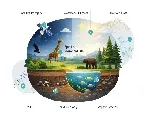 Can AI learn to understand nature? Scientists set out a roadmap for the future of ecology
6 November 2026
An international team of scientists has outlined how a new generation of artificial intelligence models could transform our understanding of ecosystems and help predict their responses to environmental change.
 Scientists uncover how the spine's smallest structures help discs withstand everyday loads
4 November 2026
New imaging technology reveals how collagen fibres and molecules work together to absorb and distribute forces inside spinal discs, offering new insight into the underlying disc degeneration, a major contributor to back pain.
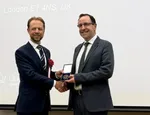 James Busfield recognised with prestigious international tyre industry award
4 November 2026
 Global wildlife trade involves more than 100,000 species, new study reveals
3 November 2026
Major data gaps hide the true scale of global wildlife trade.
 AI learns complex plasma physics to help make large-scale simulations more efficient
1 November 2026
Researchers at Queen Mary University of London develop a machine-learning approach that enables a simpler plasma model to reproduce complex particle-level behaviour, potentially opening a route to faster simulations of collisionless plasmas.
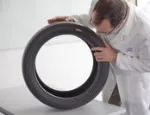 Why understanding tyre wear is key to developing more sustainable transport
27 October 2026
As the world focuses on decarbonising transport, attention is increasingly turning to the environmental impacts that exist beyond the exhaust pipe. Professor James Busfield, Professor of Materials and Head of the Soft Matter group at Queen Mary University of London, explains why understanding the mechanisms behind tyre wear could be key to creating transport systems that are safer, more efficient and more sustainable.
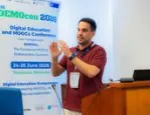 Queen Mary lecturer publishes research on innovative teaching methods in transnational mathematics education
21 October 2026
Two research papers led by Dr Dimitris Chiotis, Lecturer in Mathematics at Queen Mary University of London's Hainan transnational education (TNE) partnership, have been published by the Institute of Electrical and Electronics Engineers (IEEE), highlighting both individual scholarship and collaborative educational innovation in undergraduate mathematics teaching.
Foundation programme welcomes more than 950 students thanks to exceptional teamwork across Science and Engineering19 October 2026
 Scientists are a step closer to understanding and extending lifespan
1 October 2026
Researchers from Queen Mary University of London finds that directly activating a key cellular energy sensor extended lifespan in yeast, worms and flies, offering new clues about the biology of ageing.
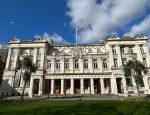 New partnership with UIBE launches two AI-focused programmes in Beijing
30 September 2026
Queen Mary University of London has launched a new transnational education partnership with the University of International Business and Economics (UIBE) in Beijing, bringing two new undergraduate programmes to students in China.
 Professor Dino Distefano elected Fellow of the Royal Academy of Engineering
24 September 2026
Professor Dino Distefano, Professor of Software Verification at Queen Mary University of London, has been elected as a Fellow of the Royal Academy of Engineering.
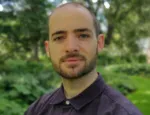 Queen Mary scientist awarded prestigious £1.4 million UKRI Future Leaders Fellowship to uncover biodiversity's hidden benefits to people
22 September 2026
Dr Samuel Pironon, Lecturer in Conservation Biology in Queen Mary University of London's Faculty of Science and Engineering, has been awarded a highly competitive UK Research and Innovation (UKRI) Future Leaders Fellowship worth £1.4 million over four years, with the potential for further extension.
 First ‘backwards’ planet discovered around a small star challenges ideas about how planets form
21 September 2026
Queen Mary researchers help reveal an unusual exoplanet orbit that could provide new clues about the formation and evolution of planetary systems
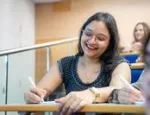 Giving students a voice in how they learn could transform the classroom experience
17 September 2026
Research from Queen Mary University of London explores how combining learner autonomy with student-led enquiry can create a more engaging and collaborative experience for international students learning academic English.
 Scientists and leading dance institutions discover a better way to teach dance online
16 September 2026
From ballet studio to behavioural science: researchers uncover the best view for learning choreography.
New research from Queen Mary University of London finds that less experienced dancers learn choreography more effectively when they follow a teacher's movements from the same perspective, with implications far beyond dance
 Not all roads lead to Rome: Study challenges what we think we know about Roman roads
15 September 2026
New analysis of almost 300,000 kilometres of Roman roads reveals a complex network shaped by people, places and landscapes, in which Rome was less central than is often assumed.
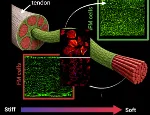 Scientists are one step closer to healing tendon disease in people and animals
15 September 2026
Study reveals how specialised tendon cells respond to changes in their physical environment, opening new possibilities for future research into tendon health and repair
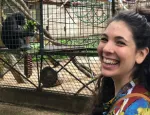 Chimpanzees have accents too, study finds
3 September 2026
A study by Queen Mary University of London finds that young chimpanzees develop dialect, providing a new way of understanding ontogenetic evolution.
 Tiny atomic changes could lead to smarter wireless technology
26 August 2026
Queen Mary University of London researchers have discovered a new way to make wireless communication devices more adaptable, paving the way for smarter antennas, more efficient networks, and next-generation communication technologies.
 Quantum computers could give scientists a new way to explore the hidden behaviour of matter
26 August 2026
Queen Mary University of London researchers develop a quantum computational spectroscopy approach that could open new ways of studying complex quantum systems
 Professor Yang Hao awarded prestigious URSI Booker Gold Medal
17 August 2026
Queen Mary University of London is proud to announce that Professor Yang Hao, Professor of Antennas and Electromagnetics in the School of Electronic Engineering and Computer Science, has been awarded the International Union of Radio Science (URSI) Booker Gold Medal—one of the organisation’s highest honours.
 From teaching challenge to potential spinout: Queen Mary AI assessment project takes next step
13 August 2026
An artificial intelligence project developed at Queen Mary University of London to help academics provide faster, more detailed feedback to students has been selected for a national spinout programme.
 Researchers help unlock a more versatile future for quantum computing
12 August 2026
Researchers at Queen Mary University of London, Imperial College and University of Oxford have helped develop a new architecture that could overcome one of the biggest obstacles preventing photonic quantum computers from reaching their full potential.
 AI gives tomorrow's wireless networks a clearer voice
11 August 2026
Queen Mary University of London researchers develop intelligent communications system that dramatically improves data transmission when bandwidth is limited
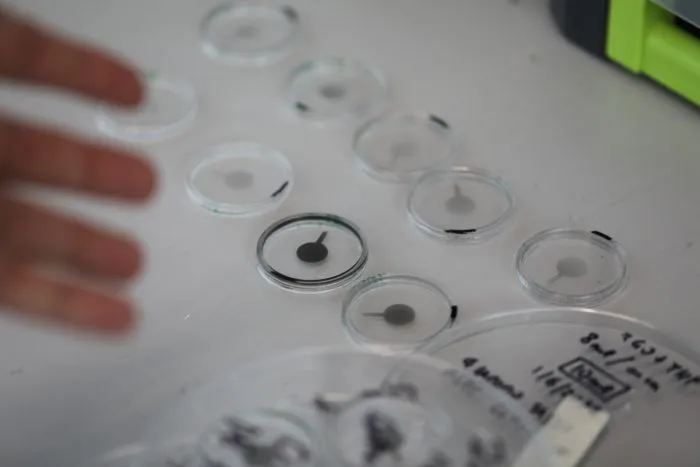 New graphene-powered soft lens could pave the way for smarter glasses, cameras and medical devices
7 August 2026
Queen Mary researchers develop a lightweight, electrically adjustable lens inspired by the flexibility of the human eye
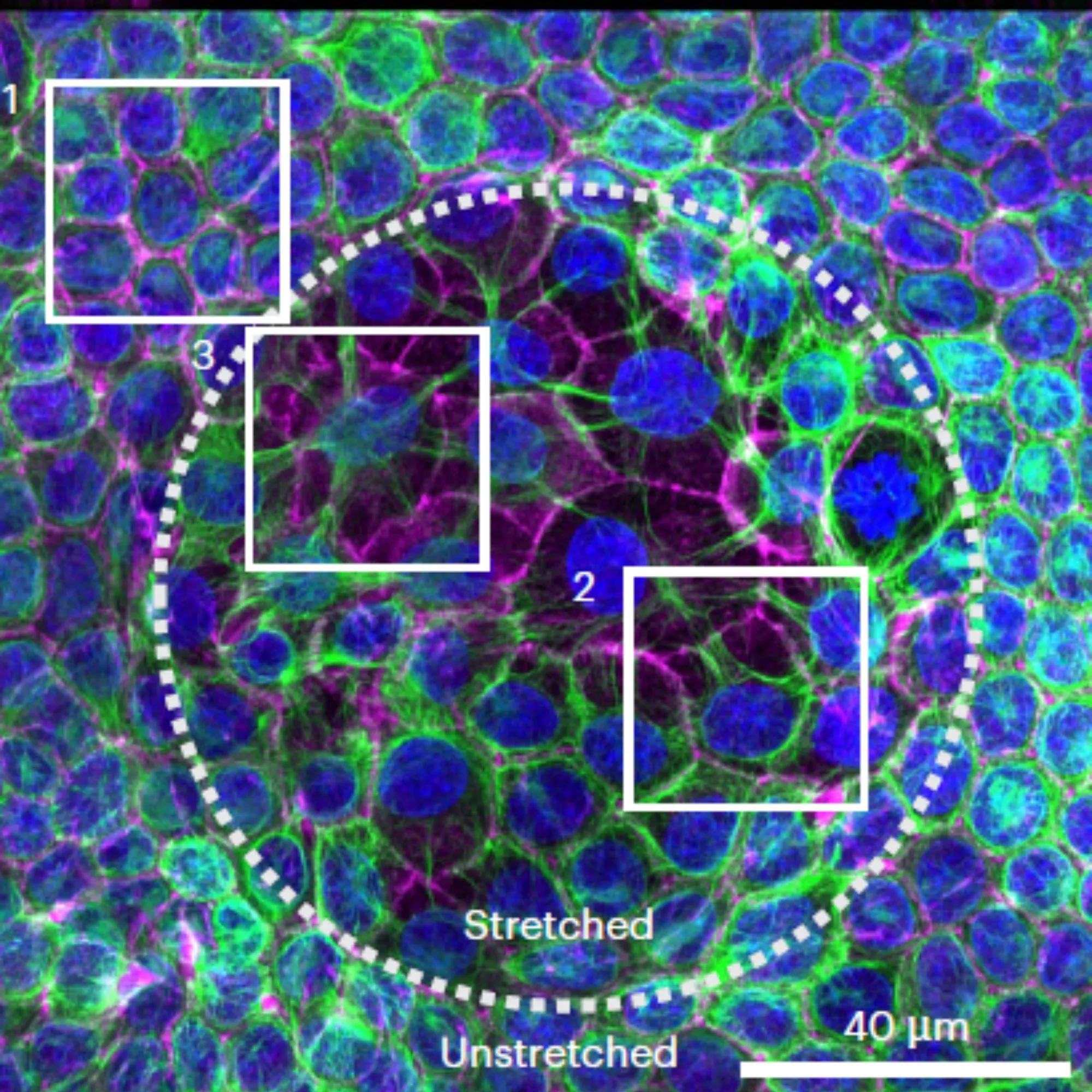 Under pressure: when tension builds up, the nucleus escapes
27 July 2026
Researchers at Queen Mary University and IBEC have discovered that epithelial tissues adapt to prolonged stretching by slowly reorganising their keratin cytoskeleton into large multicellular networks.
 Scientists create the first 3D nanoscale maps of human airway epithelium, revealing the hidden architecture of lung defence cells
23 July 2026
Researchers at Queen Mary University of London and University of Cambridge in collaboration with colleagues at HHMI Janelia and NIH, have created some of the most detailed three-dimensional maps ever generated of human airway cells, revealing how the specialised cells that protect our lungs are built and organised.
 New hybrid positioning system promises reliable tracking where GPS fails
17 July 2026
Researchers have unveiled a new location‑tracking system that could dramatically improve navigation in places where GPS signals routinely fail, such as tunnels, dense cities and underground transport routes.
 The Gravity from Entropy theory offers new clues for reconciling gravity with the second law of thermodynamics
16 July 2026
Queen Mary University mathematician Professor Ginestra Bianconi explores how gravity can be reconciled with thermodynamics within the Gravity from Entropy theory
 Bacteria form 'herds' to survive predators, offering fresh insight into Earth's carbon cycle
15 July 2026
Researchers at Queen Mary University of London have discovered that tiny photosynthetic bacteria band together into protective "herds" when attacked by predators – a survival strategy that could also influence how carbon is stored in the world's waters.