
Long Read: A year of Your Party
A year after Jeremy Corbyn and Zarah Sultana announced the formation of a new left-wing political party, Dr Daniel Frost explores Your Party's tumultuous formation and what its first year tells us about the future of “the Left” in Britain.
Estimated Reading Time: 12-15 minutes.
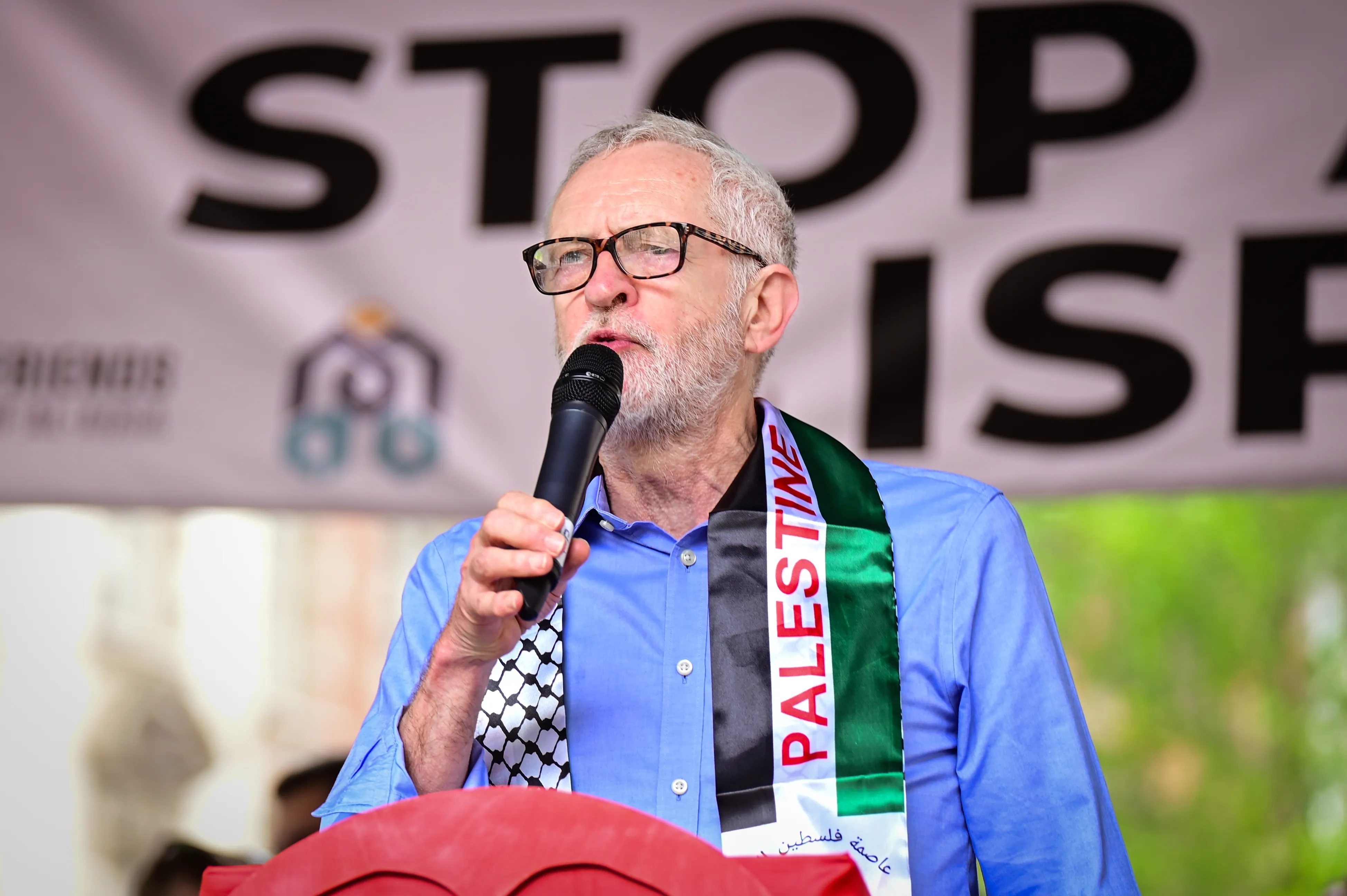
On 24 July 2025, Jeremy Corbyn and Zarah Sultana announced the formation of a new left-wing political party, building upon the election of five independent MPs – including Corbyn – in the 2024 general election. Sultana had left the Labour Party at the start of the month; the new party was announced a year and a day after she lost the Labour whip for voting to end the two-child benefit cap.
By the end of August, more than 800,000 had reportedly expressed interest. YouGov found that 18% of people would consider voting for a new left-wing party led by Corbyn, albeit with many open to supporting parties like the Greens as well. And, perhaps more importantly, there was clearly enthusiasm among grassroots activists, with local WhatsApp groups and meetings, and a dizzying array of internal caucuses and factions.
However, in its first months, Your Party – a temporary name confirmed as permanent in November – was dragged down by tedious infighting and bureaucratic heel-dragging. Two independent MPs (Adnan Hussain and Iqbal Mohamed) dropped out before the inaugural conference. By the time of the local elections in May 2026, it was clear that the Green Party were the main left-wing opposition to Keir Starmer’s Labour.
The recent appointment of Andy Burnham as Prime Minister poses another challenge, with modest gestures toward an “end of neoliberalism” further narrowing the space for the Left. At the same time, disagreement with the Your Party leadership became more acute with the formation of the Socialist Federation – not strictly a “split”, as has been reported, but certainly not a sign of party harmony. In April, the entire leadership of Your Party in Scotland resigned.
So how did it come to this? Is “the Left” doomed by eternal infighting? What does it take for theoretical commitments to “solidarity” to tip over into actually working together?
Sign-ups and memberships
There was early disappointment when the hundreds of thousands of expressions of support did not translate into membership: over 20,000 signing up with the false-start membership launch by Sultana on 18 September, rising to about 50,000 by the start of November. In truth, though, there was always going to be a big gap between people willing to press a button and those wanting to sign-up with money and personal information.
The numbers roughly corresponded to the “1-9-90” rule described by sociologist Paolo Gerbaudo in The Digital Party – an approach to political organising which Your Party has largely embraced. According to this rule, 90% of an online community are likely to be “passive users” or consumers of information produced by others. 10% are “active participants”, but only about 1% are “really active and dedicated”. Compare that to Your Party: 800,000 (free) online expressions of interest; 50,000 signing up as members; about 8-10,000 voting in the conference itself.
Similarly, turnout in the Central Executive Committee (CEC) elections in February was 25,347 or 61.8%; by comparison, just 13% of eligible members voted in the 2024 elections to Labour’s National Executive Committee. In the Green Party leadership election in 2025, turnout was 37.6% (or 24,265 people). Though membership numbers dipped below initial expectations, the number of people participating more substantially in Your Party activity was, if anything, a little higher than the norm.
This is partly because Your Party had been heralded as “the first explicitly socialist party in Britain since the 1940s”. In 1945, at its peak, the Communist Party of Great Britain (CPGB) had about 60,000 members. After decades of pulling in different directions, there were hopes that “the Left” could come together in a single organisation. 50,000 members was already more than Momentum at its height, and ten times more than the Respect Party ever managed.
Your Party’s precursor in the 1990s
As historian Alfie Steer noted in an edited collection which Evan Smith and I published last year, when miners’ leader Arthur Scargill was trying to rally the Socialist Labour Party (SLP) in the 1990s, he still only “dubiously” claimed a membership of 8,000. That is a testament to the growth in party memberships (and party formations) across the board, too – 8,000 would apparently have made them the fourth largest party in 1997, but there are ten or more parties bigger than that, today. Your Party now has seven parties ahead of them.
Your Party has been afflicted by some of the problems which plagued the SLP. Founded in 1996, Scargill’s party was precipitated by Tony Blair’s much-mythologised decision to revise the Labour constitution; Starmer notoriously described his own reforms as “Clause IV on steroids”. Though the differences between their biographies are obvious, Scargill and Corbyn both combined loyalties to “Old Labour” with a deep interest in emergent social movements, and were ardent supporters of internal party democracy.
Both the SLP and Your Party offered hopes of “left re-composition”. However, the SLP failed to convince Labour activists still waiting to see what Blair would do in government. There was interest from Militant – itself having broken with Labour in 1991 – and sections of the “New Left”, but there was also disagreement with Scargill’s apparent designs for a “Labour Mark II”. Most of the party’s policies were Labour Left staples, offering “state-led reformism via an electoral mandate”; an amendment to commit to abolishing immigration controls was voted down.
The SLP’s constitution echoed Labour’s, including representation for affiliated trade unions, constituency parties and (a nod to the internal struggles of the 1980s) the women’s, black and youth sections. But there was also a ban on factions, which “dashed hopes for a party of re-composition on the European model and flew in the face of Scargill’s previous record.” At the second congress in December 1997, the black section was abolished – reversing even that minor step away from traditional Labourism.
Steer explains:
“Far-left critics reasonably speculated that Scargill’s authoritarian control over the party, his hostility to working with other groups and the relatively conventional policy platform were to make it more appealing to cautious trade union leaders. Again it appeared that Scargill envisioned the base of the SLP being not far-left activists but conventional trade unionists and former Labour Party members. This revealed a profound difference in outlook between the SLP’s leadership, and much of its membership.”
Digital factionalism in Your Party
Your Party’s constitution differs more substantially from Labour, drawing on forms of digital democracy previously trumpeted within Momentum – a far cry from the SLP, “the only significant party without a website” in the 1997 general election. Rather than the several thousand sortitioned members that attended in-person, decisions at Your Party’s founding conference were made through online voting, by members who could (but did not have to) follow the conference from home.
At the same time, the leadership dragged out the process of forming branches, likely worried by unofficial branches already being founded, often by members of the Socialist Workers Party (SWP). During the February CEC elections, others on the far left complained that Jeremy Corbyn’s faction – “The Many” – were engaged in “an attack on branches”. Such disagreements are common within “digital parties”, as Gerbaudo explains:
“[These conflicts] fundamentally have to do with different visions of internal democracy. The delegate system, favoured often by older and more politicised participants, lays emphasis on the primacy of the local group and representational democracy. […] [I]n present social conditions in which people are more reluctant or too busy to attend physical meetings than they were in the industrial era, local groups can become the Trojan Horse through which old sectarian groups infiltrate political organisations”.
There were other moves to clamp down on the far left. The conference in December was mired in disputes over the expulsion of members of the SWP, which led Sultana to boycott the first day. It was eventually agreed that dual membership be permitted, but only with a list of organisations to be created by the CEC. “The Many” won a majority in the CEC elections and, on 12 April, the CEC voted to ban dual membership for a non-exhaustive list of organisations, including the SWP.
Then, at the start of July, three members of the CEC were suspended for allegedly attending the Socialist Federation conference. In response, other CEC members – including “independents” and those elected on Zarah Sultana’s “Grassroots Left” slate – called for a vote of no-confidence in the chair and secretary. They fell short of the supermajority required.
As with Scargill, it may seem surprising that Corbyn’s faction was so quick to turn to disciplinary measures, given his background supporting democracy within Labour. And despite the ban on dual membership, Corbyn regularly appears at the SWP’s annual Marxism Festival, doing so again this year. However, there is precedent in the faction fighting which gripped Momentum, with Jon Lansman’s leadership – closer to Corbyn – warring with Trotskyist critics, and disagreements over “digital” or “delegate” democracy again prominent.
But this should not be reduced to a division between younger, digital activists and an analogue far left. Part of the challenge for Your Party’s leadership is that their critics are more digitally-networked than ever before, factionally organising via WhatsApp, Discord, Signal and so on. While the Socialist Federation has foregrounded branches in its new constitution, its inaugural conference took place online.
Ironically, Your Party’s slowness in creating official branches – announced only at the start of June – may have made more time available for critics to organise digitally, and to grow in frustration at their clear distance from the top of the party. Gerbaudo continues:
“Taking away decision-making power from local groups, such a system runs the risk of making them feel superfluous, thus demoralising the most committed militants, with the ultimate result of depriving the party of those experiences activists that are fundamental to its success. […] Thus, it is essential that online decision-making is accompanied by face-to-face activities at the local level, to facilitate a number of important tasks, such as debating political questions, and developing bonds of personal solidarity and collective identity that are fundamental to the life of political groups.”
Left re-composition, class composition
Of course, as the SLP example shows, factionalism is not just a problem for the “digital party”, and some criticisms overegg the significance of different structures. From the beginning, as with other “left re-composition” projects before it, Your Party has suffered from substantial disagreements over what the party is actually for.
That extends to whether “left re-composition” should even be emphasised. Last September, for example, Jacobin founder Bhaskar Sunkara complained that “the Left is ever increasingly focused on itself rather than on the class it aims to mobilize and lead.” At times, Your Party leaders have spoken more forcefully in the language of class, promising (as Sultana did at The World Transformed last year) to put the working class “back at the heart of politics”.
Yet the party, like Corbynism before it, is also entangled with “popular leftism”: political scientist Jonathan Dean’s term for a set of “politicised cultural processes” which have increased the visibility of left-wing actors and “mov[ed] left-wing practices and ideas out of the margins and into the mainstream of political and cultural life.” That includes talking openly about and organising on the basis of class, but also a panoply of (arguably) distinct practices and ideas which, for critics like Sunkara, “leaves us mired in culture war coalitions we hope to avoid.”
How far this is a problem – and whether it is meaningful to distinguish a party of “the working class” from a party of “the Left” – is a matter of dispute. Adnan Hussain complained of “a strain of thought on the left that sees socially conservative views as a pathology to be corrected”, after facing criticism for transphobia. But whereas Hussain wanted to “engage authentically with working-class social conservatism”, many on the Left understand trans liberation as a part of working-class politics. This is as much a disagreement about “class composition” as it is about “left re-composition”.
And this overlaps with fundamental questions about Your Party’s purpose. According to Novara Media, some independent MPs were always unsettled about a “class based party” building “socialism from below”, rather than a “broad church” for those unhappy with the Labour Party. And among those explicitly committed to socialism, there remain the differences found in the SLP: “state-led reformism via an electoral mandate”, or a revolutionary break with capitalism.
What next for “the Left”?
The former projects will have been more adversely affected by the Green surge, and now by Burnham’s leadership of the Labour Party, already pulling members of the Socialist Campaign Group into the government for the first time. Further defections from the Labour Party are clearly unlikely. Sultana, still generally representative of Your Party’s left wing, has been more strident in criticising Burnham, just as she previously expressed only “critical support” for the Greens in the Gorton and Denton by-election.
There remain strong reasons for those further to the left of Labour to complain about Green policy on militarism, for example, or Burnham’s limited movement on trans rights, the immigration and asylum bill and recognising the genocide in Gaza, or his announcement of new North Sea drilling. It is easier to imagine Your Party distinguishing itself through a more radical, more expansive working-class politics which can organise across these issues.
That will come at a cost: Sultana’s position in the Gorton and Denton by-election was controversial, potentially alienating to a “popular leftism” anxious about Reform and exasperated by left-wing bickering. It will prove challenging to form a “mass” party without immediate electoral prospects to serve as an anchor. Nevertheless, the great surprise that comes from studying the Left in the twentieth century is not its fractiousness or proclivity for farce, but the power and potential of solidarity: across vast distances in geography or experience, despite differences in ideology or temperament, when common causes can be found.
That might look something like a “British DSA” – replicating the success of the Democratic Socialists of America, a multi-tendency organisation unconfined to a single electoral path. But it could also start on a smaller, more local scale, adopting models from the past and expanding on those which exist already: labour halls, trades councils, non-sectarian publishing projects, “resistance” kitchens, and more.
Your Party has probably lost its chance to be “the” party of the Left. For the time being, it – and any successors – will exist in a constellation of left-wing electoral projects. However, the wave of enthusiasm which greeted the Your Party announcement, just over a year ago, shows the demand for something transcending the left-wing sects, single-issue campaigns and purely electoral parties. Your Party might not be the answer, but “the Left” will continue to pose the question.
Daniel Frost is a contemporary political and cultural historian. He is an expert in the relationships between politics, space and place in the suburbs and inner-cities and his doctoral research focused on left-wing activism in twentieth-century Croydon. He is the co-editor of In Solidarity, Under Suspicion: The British Far Left from 1956.