Queen Mary research informs national approach to AI in dental education
Researchers at Queen Mary University of London have led a major review commissioned by the General Dental Council (GDC), examining how artificial intelligence (AI) is transforming dental education and what is needed to ensure its safe and responsible use.
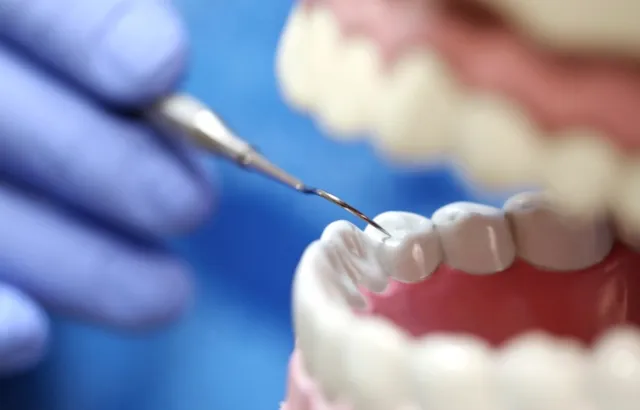
Close-up view of dentist hands at work
The report, Understanding the Role of AI in Dental Education: A Rapid Evidence Assessment for Regulatory Insight, was produced independently by researchers at Queen Mary’s Institute of Dentistry to inform the GDC’s approach to regulating dental education and training.
Led by Professor Manu Raj Mathur along with Prof. Huda Yusuf, Dr. Ali Golkari and Dr. Cassandra Lewis, the research team examined evidence from 75 studies alongside interviews with regulators, education experts and recent dental graduates.
The review found that AI is already being used or piloted across dental education, from student admissions and classroom learning to clinical simulation, assessment and professional development.
AI offers opportunities to personalise learning, provide rapid feedback and enable students to practise clinical procedures in simulated environments. However, the researchers also identified significant risks, including inaccurate AI-generated information, over-reliance on technology, threats to academic integrity and concerns about patient data protection.
Crucially, the report argues that the introduction of AI into dental education must be considered a patient safety issue, rather than simply an opportunity for technological innovation.
It recommends clearer governance of AI use in teaching and assessment, improved digital literacy among students and educators, stronger data protection safeguards and continued evaluation of AI’s impact on clinical skills and patient safety.
Professor Manu Raj Mathur, who led the research at Queen Mary’s Institute of Dentistry, said:
“Artificial intelligence has enormous potential to support dental education, but its adoption must be guided by evidence and a clear understanding of the risks. Our review highlights the importance of ensuring that future dental professionals develop the clinical judgement, critical thinking and ethical awareness needed to use these technologies safely. Ultimately, patient safety must remain at the centre of how AI is introduced into dental education.”
The report will provide evidence to inform the GDC’s consideration of AI within its regulatory frameworks, including its Standards for Education and Safe Practitioner framework.
The research team also included Dr. Shehnaz Khan and Ms. Sarah Kayali.
The work highlights Queen Mary’s contribution to national policy and professional standards through research in dental public health, education and evidence synthesis.
Read the full report: Understanding the Role of AI in Dental Education
To find out more about Queen Mary's research, sign up for Queen Mary University of London's newsletter.
Related items

 News story:
Cells massage their nucleus to repair DNA, revealing a possible cancer vulnerability
28 October 2026
 News story:
From AI to space medicine: William Harvey Day showcases research and innovation
27 October 2026