
Let's Meet ... Surjit Uppal, Head of the Technology Enhanced Learning Team (TELT)
We caught up with our Head of Technology Enhanced Learning (TEL), Surjit Uppal, to find out more about her journey into digital learning, what's changing within the TEL team, the role of AI in higher education, and some of the projects she's particularly excited about.
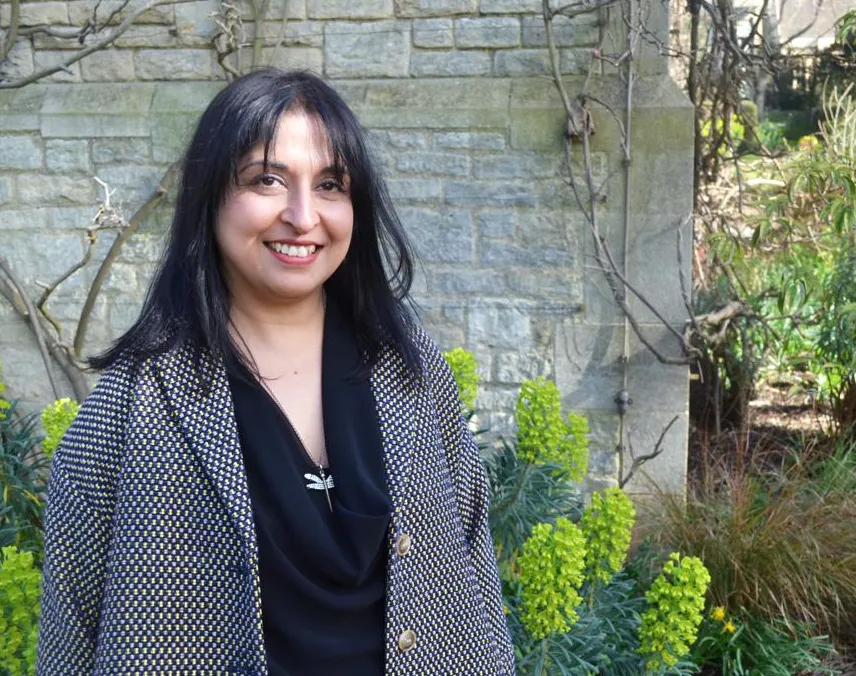
Photo of Surjit in a garden
The start of a new academic year always brings fresh opportunities and for the Technology Enhanced Learning Team (TELT) those opportunities are being shaped by a newly restructured team and an ambitious vision for digital learning at QMUL. We sat down with Surjit Uppal, Head of TELT at QMUL to learn more.
What brought you into the world of digital learning and higher education?
After studying Computing and beginning her career in teaching, Surjit became increasingly interested in how technology could enhance the learning experience for students and support academic colleagues in new and exciting ways.
What has stayed with her throughout her career is a passion for innovation and a belief that technology should always serve a purpose.
What are some of the experiences that have shaped your approach to leadership?
When asked what has most influenced her leadership style, Surjit emphasised the importance of collaboration and empowering others.
"Leadership isn't about having all the answers. It's about helping people understand the vision, trusting them, supporting them to succeed, and creating opportunities for them to grow and develop. Everybody plays a part."
That focus on empowering others is something that comes up repeatedly in conversation. It was clear that developing people and building confidence within teams is something she values highly.
What do you enjoy most about working in the TEL team and at QMUL?
For her, one of the most rewarding aspects of working at QMUL is the opportunity to make a meaningful impact across the entire institution. Working in a central team brings the chance to collaborate with colleagues and students from across the university, helping to shape teaching, learning and assessment in a way that benefits the wider community. She particularly enjoys the conversations, whether that's with the TELT team itself, academics, students, or colleagues across the institution.
She also loves the variety.
"No two days are ever the same. One day you're talking strategy, the next you're solving a practical problem, supporting colleagues or exploring a new idea. That's what makes it so interesting."
A New Chapter for TELT
A lot has changed recently within the TEL team. Can you tell us a bit about the new team and what excites you most about its future?
The recent team restructure marks an important new chapter for TELT.
The new structure brings together training, support and innovation around specific products and services, giving Learning Technologists greater ownership of the systems they support.
Surjit describes this as moving towards a "product ownership" approach.
Rather than responsibilities being split across different areas, Learning Technologists will have more opportunity to create stronger connections between support, development and stakeholder engagement. Thus, understanding user needs, exploring new developments, and identifying ways to improve the experience for staff and students.
The goal is simple: stronger connections between the people who use our systems and the people who support and develop them.
As the team settles into its new shape, what's most important to you?
While discussing the team's future direction, Surjit was keen to highlight the importance of focusing on initiatives that make a real difference to colleagues and students.
One example was the ongoing work around QMplus templates. The templates provide staff and student with a consistent, accessible and effective starting point for their digital learning spaces, helping to reduce the burden of course design while promoting good practice across the university.
She also reflected on the success of the Exams Support Working Group, which brought colleagues together to share knowledge, solve problems collaboratively and support one another during some of the busiest, high-stake periods of the academic year.
These groups created opportunities for peer support and partnership, something she believes is essential as the university continues to evolve its digital learning provision.
"Some of the most valuable work happens when people come together around a shared challenge. There's so much expertise across the university, and creating opportunities to learn from each other benefits everyone."
Both projects demonstrate the kind of collaborative, service-focused approach she hopes to build on as the team moves forward.
So, what does success look like for TELT over the next year?
Her ambition is for the team to be recognised not just as a support service, but as trusted partners in shaping the future of digital education at QMUL.
One key ambition is for the team to become leaders of change, working closely with colleagues across QMUL to help shape the future of digital education and support institutional priorities such as NSS and TEF.
She is particularly excited about:
- Expanding opportunities to hear and respond to the student voice.
- Further development of services and resources that help colleagues deliver outstanding learning experiences.
- Exploring the opportunities presented by AI within teaching and learning systems.
- Future developments around assessment and feedback in an AI-enabled world.
It wouldn't be a conversation about digital learning without discussing AI.
Surjit describes AI as one of the most exciting and challenging developments currently facing higher education.
"The pace of change is incredible. By the time you've got your head around one development, something new has appeared.
It almost feels like we're trying to catch up and understand what AI is doing, but by the time you learn something, it's already moved forward."
While AI presents challenges, she also sees enormous potential.
The key question, she believes, is not simply how universities use AI today, but how they prepare students for a future where AI will be embedded in many aspects of work and everyday life.
Alongside the opportunities, there are important considerations around ethics, human expertise and ensuring people remain at the heart of decision-making.
Thank you for your time and insights, Surjit. Now for some quick-fire questions...
Quick Fire Round
Tea or coffee? Tea
Early bird or night owl? Early bird
Teams chat or email? Teams chat
Favourite app? WhatsApp
One piece of technology you couldn't live without? Phone
Favourite place to visit? The Cotswolds
Current TV recommendation? The Traitors
A skill you'd love to instantly master? Baking!
One Final Thought...
To finish, we asked what message she would like to leave colleagues with as we embark on the new academic year.
"Stay curious, be innovative and don't be afraid to take risks."
Interview by Alysa Bramble for the TELT Newsletter.

 News story:
