
Dr Thomas Asbridge, Reader in Medieval History
Dr Asbridge is a historian and Reader in Medieval History in the School of Society and Environment. Following the launch of his new book – The Black Death: A Global History – Thomas shares his insights exploring the human experience of the Black Death, his plans for a major grant exploring the wills of Londoners during this period, and why he is fond of the Memorial Book of the minor Florentine merchant Pepo degli Albizzi.
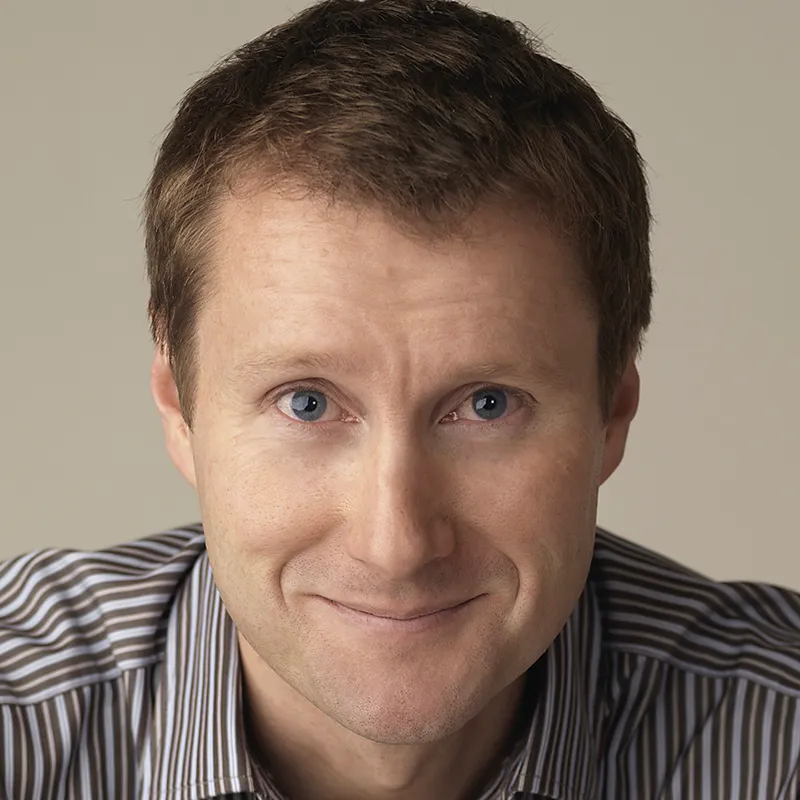
Can you tell us a little bit about yourself and how long you’ve worked at Queen Mary?
I have been lecturing at Queen Mary since 1999 and spent a lot of my career focusing on the history the crusades, knighthood and chivalry. However, ten years ago I started to become interested in the medieval plague pandemic known as the Black Death and shifted my research focus to the fourteenth century.
Can you tell us about your current work on the plague?
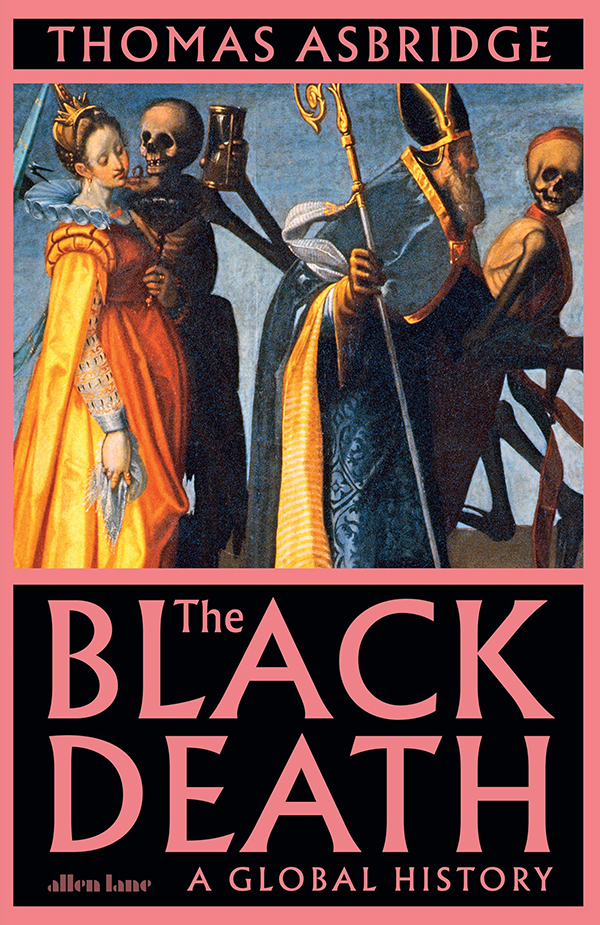
Earlier this year I published The Black Death: A Global History (Allen Lane: London, 2026), a work which compares the course and consequences of the of the plague pandemic in Europe with that in the wider medieval world - including the Muslim-ruled regions of north Africa and the Near and Middle East. The book also explores the human experience of the Black Death, considering what it was like to live and die during this world-altering catastrophe.
Your book takes a more global perspective on the pandemic. Why was it important to move beyond a Europe-centred narrative?
In the past historians have tended to focus on specific regions of the medieval world when studying the Black Death, extrapolating a supposedly universal model of its impact from this limited sample.
I wanted to discover how the effect of, and response to, the pandemic varied across space and time. This is particularly important because Muslim attitudes toward plague seem to have differed substantially from those of Christians, for while the latter were taught by the Church that the advent of the disease was a punishment from God, orthodox Islamic theology maintained that plague was a divinely wrought gift for believers that guaranteed a place in heaven to any Muslim who succumbed to its predations.
You mention exploring the human experience of the Black Death. Was there anything that surprised you? Did you uncover any stories or experiences that particularly stayed with you while writing the book?
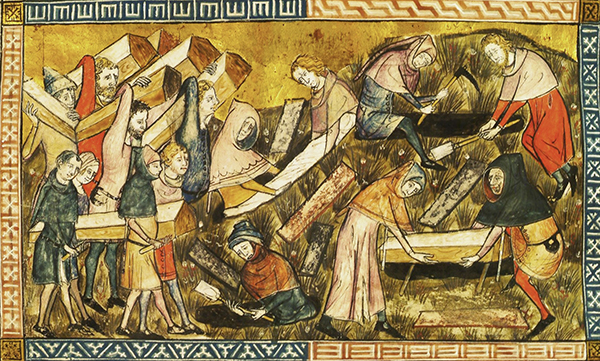
Depiction of the burial of Black Death victims from a manuscript of Gilles li Muisis’ chronicle: CC BY 4.0 KIK-IRPA, Brussels [Antiquitates Flandriae (Tractus Quartus) fol. 24 v]
I was consistently amazed by the seemingly unbreakable resilience demonstrated by many of the individuals who faced the Black Death between 1347 and 1353. Their ability to endure the unimaginable horror of the pandemic - which saw around 50% of the population die in affected areas, leading to a total loss of some 100 million lives - and then rebuild the shattered medieval world, should stand as an inspiration to us all in the 21st century.
Scores of stories that I uncovered have stayed with me, but I will mention just two, one famous, the other largely forgotten: that of Ibn Khaldun, a Muslim teenager who was orphaned when the plague struck his north African home in Tunis in 1348, but went on to become perhaps the most revered historian of the Middle Ages, developing a new theory about the cyclical rise and fall of civilisation that incorporated pandemics as a major agent of change; and that of Alice Rampolye, a peasant from the small Suffolk village of Walsham le Willows, who lost her three brothers and five other members of her extended family to plague in the summer of 1349, but who inherited five acres of land as a result and survived to live a relatively prosperous life for decades to come.
Should we be worried about what's happening now?
I think the fact that a lab worker in Siberia may have died from pneumonic plague on 2 October after being exposed to the plague bacteria Yersinia pestis is concerning, but should not necessarily be a cause for widespread alarm. There are many questions about this incident that as yet remain unanswered, but we can take some comfort from the fact that plague is currently treatable with antibiotics and remember that, while pneumonic plague is exceptionally deadly if untreated, it does not spread as easily as other respiratory infections, such as Covid.
What do you want to work on next?
I am currently preparing a major grant application to fund a project called Black Death London. This will use the wills drawn up by hundreds of ordinary Londoners in 1348-9 to track the progress of the disease through the city and reveal how the plague pandemic transformed daily life in England’s capital.
What new insights do you hope your project Black Death London might uncover about life in medieval London? What do the wills of ordinary Londoners reveal that official records cannot?
London’s Black Death wills, dating from late 1348 to the end of 1349 allow us to reconstruct the plague pandemic’s societal, cultural, economic and emotional impact at a granular level, zooming in to consider individual households and family groupings.
In all, the close study of these documents should allow us to piece together the experiences of around 2,000 ordinary Londoners, charting the fate of those who died, those who survived and even those ultimately thrived in the wake of this unprecedented cataclysm.
What is the most unusual or memorable historical source you've come across?
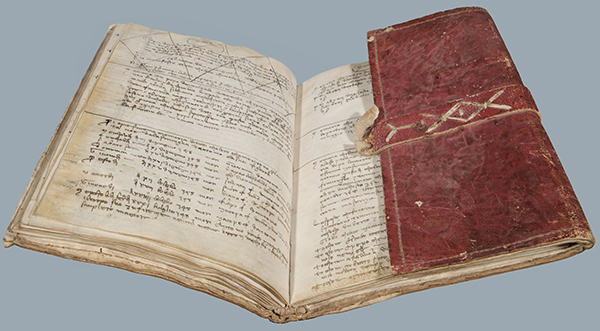
Pepo degli Albizzi’s Memorial Book: Newberry Library [VAULT oversize case 27]
I am particularly fond of the so-called Memorial Book of the minor Florentine merchant Pepo degli Albizzi, which is today owned by the Newberry Library in Chicago. The leather-bound volume served as the equivalent of a personal ledger and diary, and is an exceptionally rare artefact from the time of the Black Death. The book affords us glimpses of Pepo’s daily life, but it also provides a stark record of the dreadful harvest reaped by the plague, for on the lower half of its seventieth page, Pepo wrote down a precise list of the ten family members lost during the scouring summer of 1348. I have yet to hold this precious volume in my hands, but I hope to make a pilgrimage to the Newberry one day so that I might do so.
More information:
- Visit Dr Tom Asbridge’s profile page for more information about his work and research
- The Black Death: A Global History is out now
- Watch the HistoryExtra Podcast: as part of a three-part series on the deadly disease, Tom traces the origins and spread of the Black Death