Queen Mary brings expertise in climate policy and culture to COP31
Dr Fernando Barrio, Reader in Sustainable Business Law and Policy at Queen Mary Business School, and Thiago Jesus, Co-Director and Lead for Indigenous Exchange & Climate Action at People's Palace Projects (PPP), contributed to international climate discussions at COP31 in Antalya, Türkiye, advancing collaboration on climate technology, culture-based climate solutions, and partnerships with organisations in Africa and Brazil.
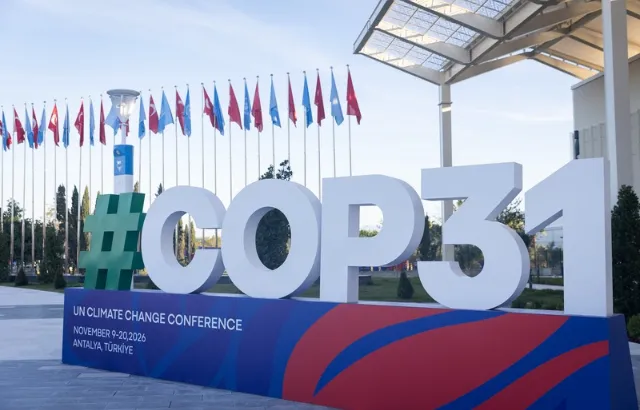
The United Nations Climate Change Conference (COP31), held from 9 to 20 November 2026, brought together world leaders, policymakers, researchers and civil society representatives to advance global efforts to tackle climate change.
Dr Fernando Barrio, Queen Mary's Designated Focal Point to the United Nations Framework Convention on Climate Change (UNFCCC), participated in discussions with representatives of the African Union, Ethiopian climate negotiators and Nigerian civil society organisations to explore research partnerships, capacity building and practical climate action ahead of COP32 in Ethiopia.
His activities included the launch of the Artificial Intelligence Climate Institute and discussions on strengthening carbon markets in Africa. He also helped develop plans for AI for Climate Action training activities ahead of COP32, aimed at strengthening local capacity to apply emerging technologies to climate policy.
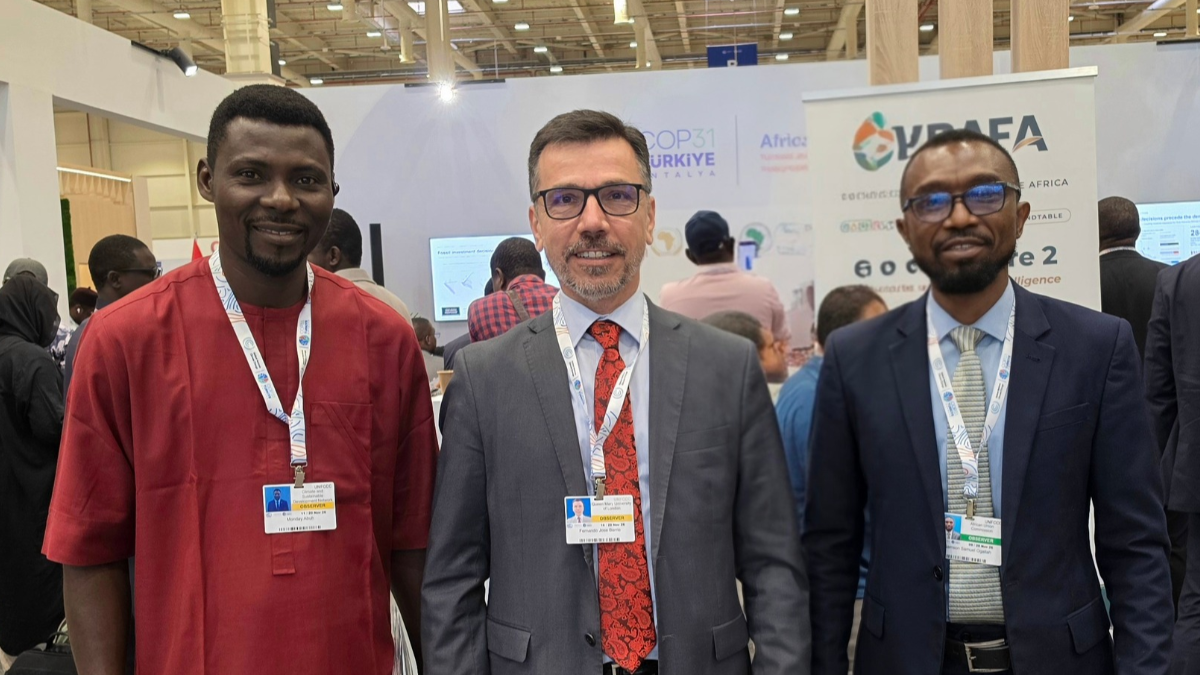
Reflecting on the conference, Dr Barrio highlighted:
“COP31 exposed a failure of political leadership to build consensus around the transition away from fossil fuels. While important progress was made on adaptation and technology cooperation, these achievements cannot replace the political decisions needed to reduce global emissions. The challenge now is to turn existing commitments into meaningful action, supported by international collaboration, credible policies and stronger institutional capacity.”
Thiago Jesus contributed to high-level discussions on the role of culture in addressing climate change, including the Fourth High-Level Ministerial Dialogue on Culture-Based Climate Action, convened by Brazil and the United Arab Emirates. He also moderated a discussion panel with Kumi Naidoo, President of the Fossil Fuel Non-Proliferation Treaty Initiative, on improving access to climate finance for culture-based solutions and participated in a session at the Brazilian Pavilion exploring the role of narratives in advancing climate action. His contributions highlighted the importance of integrating culture into international climate policy and securing greater recognition and financial support for culture-based approaches to tackling climate change.
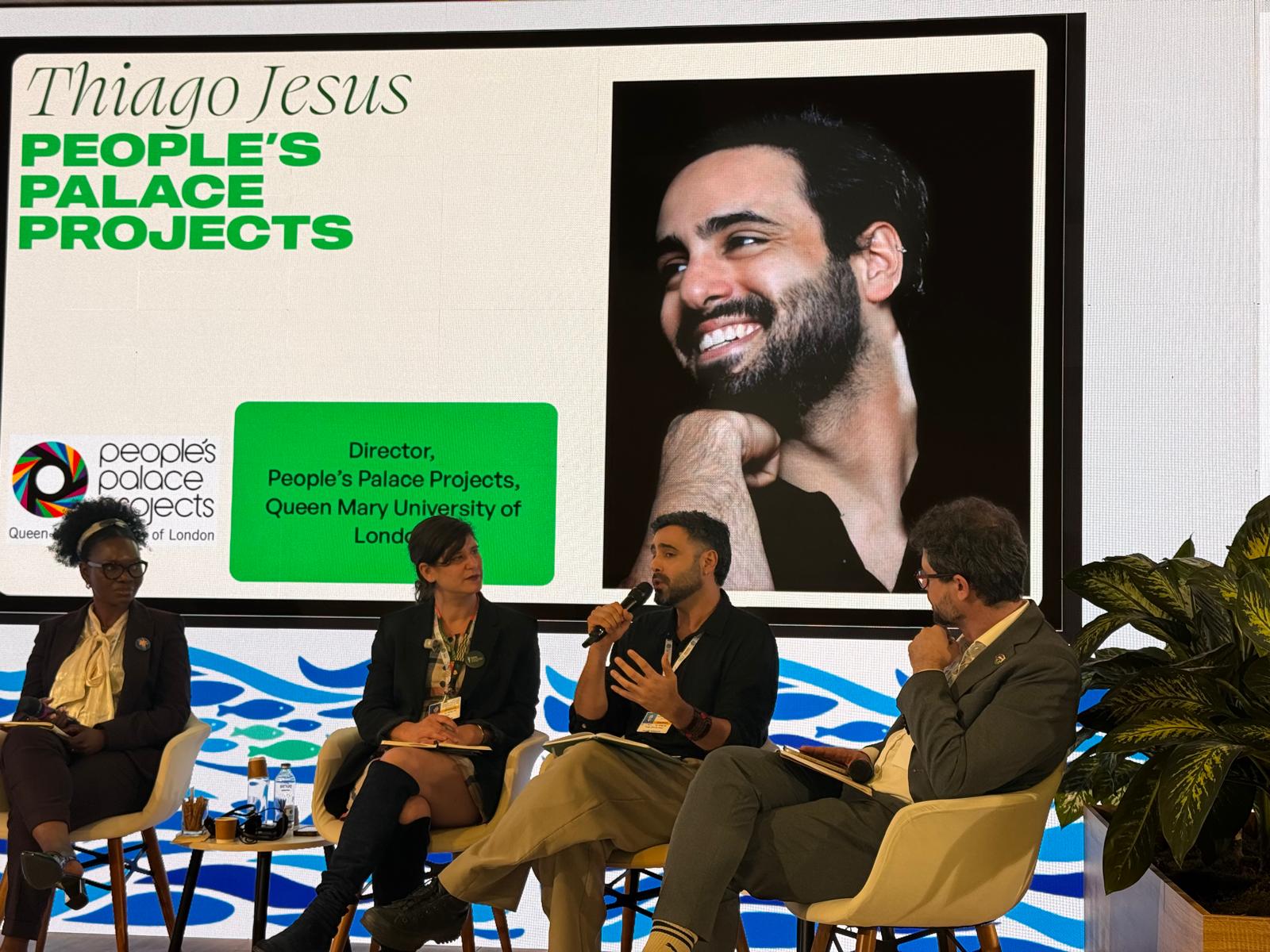
Thiago said:
“The outcomes of COP31 are deeply disappointing. For the past six COPs, PPP have advocated for the integration of culture into international climate governance, because we deeply believe that addressing climate change demands cultural transformation. At this COP, PPP reaffirmed its role as Knowledge Partner of the Group of Friends for Culture-Based Climate Action, a ministerial coalition bringing together 56 ministries of culture committed to integrating culture into national climate policies and planning. At a time when international cooperation is increasingly fragile, culture is more important than ever for rebuilding trust, for solidarity, and for sustaining the collective optimism that climate change demands."
Queen Mary's participation at COP31 built on the University's longstanding engagement with international climate discussions, having taken part in the annual UN Climate Change Conferences since COP26 in Glasgow, Scotland, in 2021. Through its continued involvement, Queen Mary has brought academic expertise and research perspectives to global conversations on climate action, sustainability and international collaboration.
Related items
 News story:
Queen Mary launches pioneering engineering education partnership in Thailand
28 October 2026