Flake glass dental varnish inspired by Forth Bridge headed to clinics
Invented at Queen Mary University of London, Varnish VLC mimics enamel to provide rapid and durable protection for sensitive teeth.
- Queen Mary University of London has agreed a license deal with PSP Dental to produce and sell Varnish VLC, a novel flake glass dental varnish. Varnish VLC is expected to be available to dentists in January 2027.
- A clinical trial in children and adults found Varnish VLC provides rapid and durable protection for sensitive teeth, with superior pain relief in adults compared to Clinpro White Varnish, a market-leader.
- The invention was inspired by the flake glass coatings civil engineers use to protect bridges and deep-sea oil pipelines from corrosion.
Queen Mary University of London and PSP Dental have agreed a license deal for Varnish VLC, a novel flake glass dental varnish.
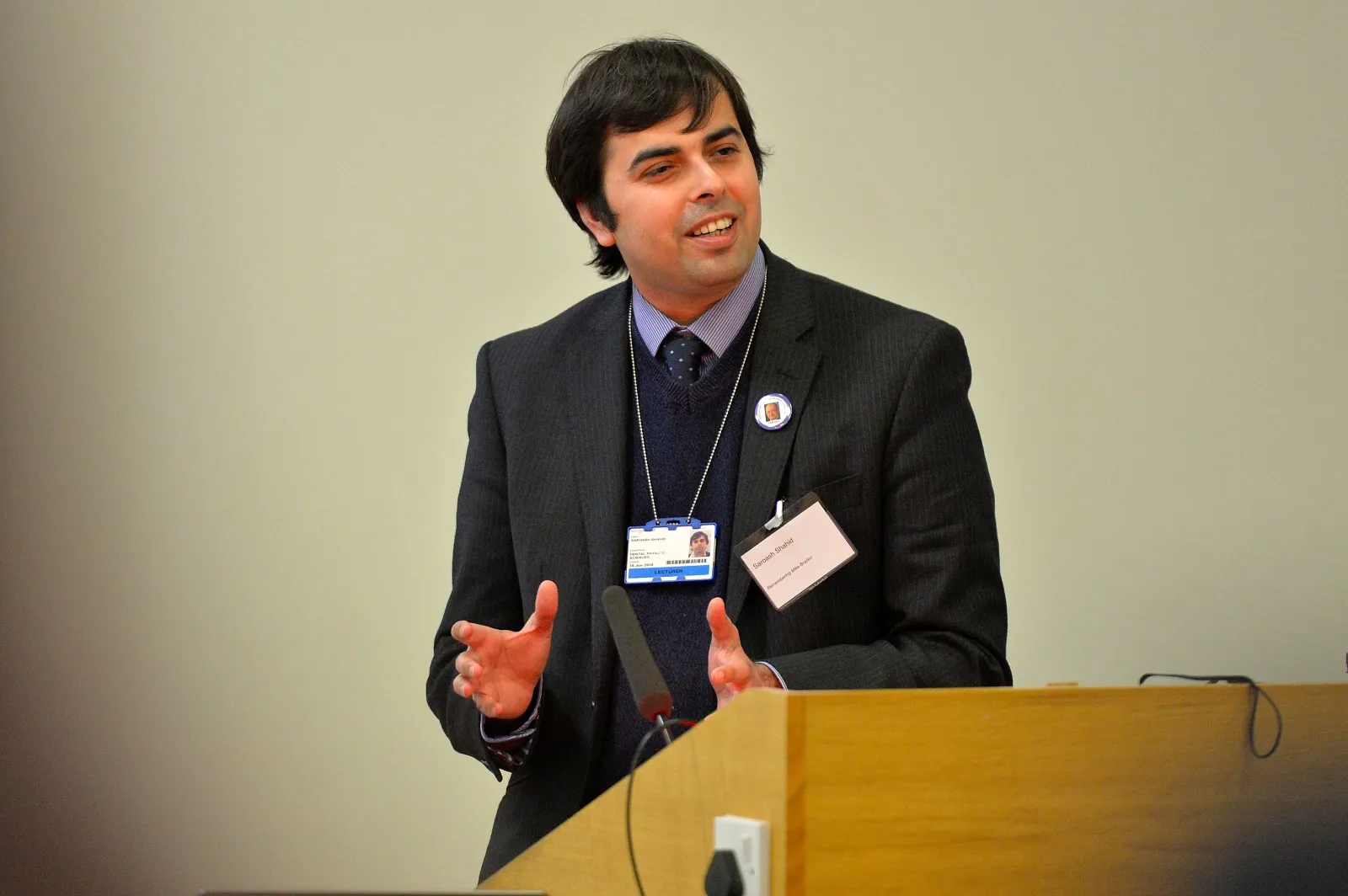
Invented by Dr Saroash Shahid, Reader In Dental Biomaterials at Queen Mary University of London, Varnish VLC is inspired by the flake glass coatings civil engineers use to protect bridges and deep-sea oil pipelines from corrosion.
Explaining the inspiration in a 2025 interview with Dentistry, Dr Shahid said:
“Protection from wear and protection from acid penetration are the two key components you want when protecting a tooth from caries progression. That’s when we started looking around and came across flake glass, which is used in deep-sea oil pipelines to protect against wear and corrosion.”
“We also came across a BBC article about the Forth Bridge. It explained how they had struggled to paint it for so many years and that the paint just doesn’t work. Then they used flake glass in a paint or epoxy coating, and that’s now expected to last 25 years. That was remarkable. Since then, it’s still holding up on the Forth Bridge.”
“That’s when we began exploring what flake glass was and started working on incorporating flake glass into dental applications.”
Varnish VLC’s unique selling point is its longevity in protecting against acid and wear. Early lab tests showed it lasts longer than any existing commercial products currently used to protect teeth, and a later clinical trial found Varnish VLC provides rapid and durable protection for sensitive teeth, with superior pain relief in adults compared to Clinpro White Varnish, a market-leader. Dr Shahid presented the findings of the clinical trial at the 73rd ORCA Congress in Zagreb.
PSP Dental will manufacture and sell Varnish VLC to dentists, with the product expected to be available for clinical use in January 2027.
Avtar Photay, a director at PSP Dental said:
“As a manufacturer, we quickly recognised that flake glass technology delivers the dental sweet spot, a simple clinical procedure, minimal chair time, immediate pain relief and long-lasting patient benefit.”
Turning a civil engineering technique into a dental product demanded numerous optimisations. Epoxy would take too long to set, so the technique had to be adapted for a light cured resin formulation. Aligning the flake glass to mimic the highly organised structure of enamel was key to success.
Dr Shahid explains:
“When we paint the coating to the tooth surface, the flakes must stack smoothly on top of each other. The key, critical feature of Varnish VLC is that these are self-aligning flakes. As you apply them to the tooth, they stick and align parallel to the surface. They stack on top of each other like a deck of cards, making it difficult for acid or any moisture to diffuse through.”
Tooth decay affects a third of children and almost half of adults in Britain. Treating caries early on could save the NHS £50m a year – yet existing treatments, such as fluoride varnishes and the resin infiltration technique, fail to provide an effective solution.
Varnish VLC is a preventative treatment which dentists could use with anyone, but it is primarily designed for patients with sensitive teeth. Varnish VLC will be especially useful for dentists treating children with Molar Incisor Hypomineralisation, a developmental condition which causes soft teeth prone to decay.
Varnish VLC is the latest innovation from Queen Mary’s world-renowned Institute of Dentistry. The institute is the best in London (Complete University Guide 2026) and twelfth globally (QS 2026). Other notable innovations include the award-winning BioMin toothpaste from Professor Robert Hill, and the soon-to-be launched Nattura from Dr Florence Mai, and a layered double hydroxide for slow release of fluoride invented by Prof Mangala Patel.

 News story: