
New research project investigates Electoral Integrity in Africa
The Africa Elections Study (AES) is a pioneering research programme that will bring new insights and understanding into electoral integrity in Africa through evidence-based research, policy engagement and public outreach initiatives.
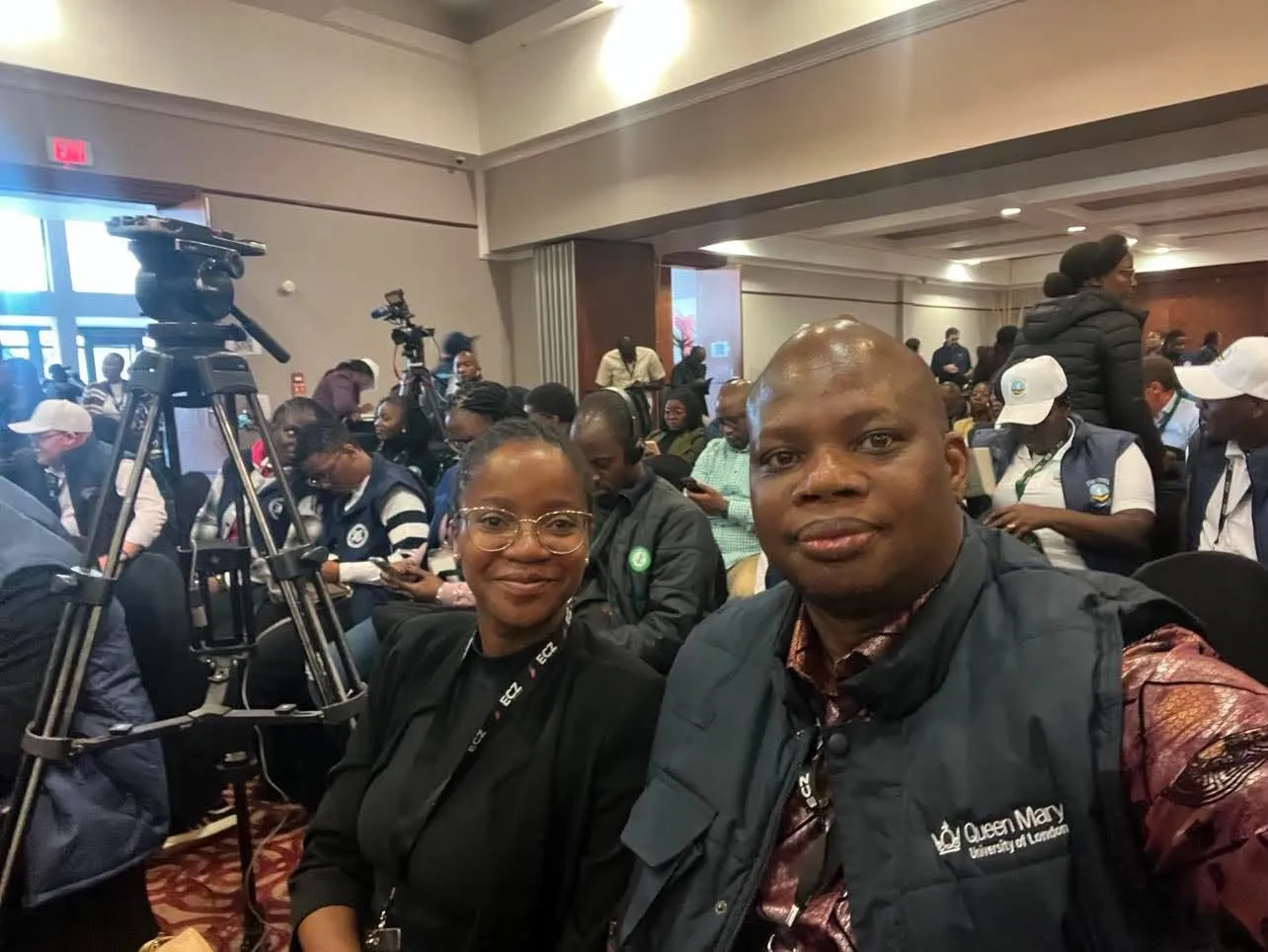
Ib and Anna attending the release of preliminary statements by Africa Observer missions at the 2026 Zambia General Elections
The Africa Elections Study (AES) is now engaging with the public and international academic community through a website and Linkedin page to raise the profile of its groundbreaking research into electoral integrity in African states.
AES aims to report on, research and investigate electoral practices, processes and mechanisms across the continent.
Principal Investigator Innocent ‘Ib’ Batsani-Ncube said: “The aim of the AES’ current flagship project, Regional Organisations and Electoral Integrity Peer Review Mechanisms (EIPRMs), is to explore and explain the peer review mechanisms that regional organisations in Africa have developed to support their member states in holding credible elections.”
“We have already conducted on-the-ground research at elections in Ghana, Malawi South Africa, and recently in Zambia where the AES' co-leads were accredited by the Electoral Commission of Zambia to observe the 2026 General Elections. In the medium-term we are looking to producing research outputs that we will leverage to engage policy actors and election practitioners on the continent".
AES was originally launched in 2024 with seed funding from Queen Mary University and its EIPRMs project was awarded a Leverhulme Research Grant in 2025.
The AES core team is led by Dr Innocent Batsani-Ncube, and Dr Anna Kapambwe Mwaba, Dr Maureen Lifongo and Bella Nininahazwe. The project draws on its network of practitioners who work in election support roles in regional organisations, electoral management bodies, election monitoring civil society groups and academics based in Africa.
The AES has a bold ambition to evolve into a major centre for the study of African elections through nurturing the future generation of African electoral experts through PhD studentships and fellowships and establishing sustainable relations with policy and practitioner communities on the continent.
Ib said: “We envisage that the AES will make a contribution to gathering evidence that will strengthen African democratic institutions and enhance the quality of public discourse on electoral processes for Africa.”