Linguistic Atoms: the neurobiology of form and meaning | May 20 & 21st
20 May 2013 - 21 May 2013
Time: 2:30 - 5:30pm
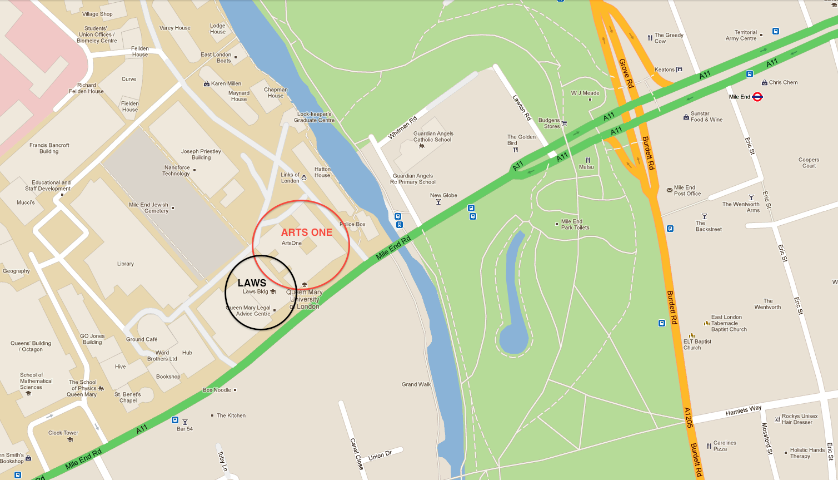
Venue: ArtsOne Lecture Theatre, Ground Floor, Mile End Campus
Monday May 20th: Core Combinatory Operations of Language | 2:30pm - 5:30pm | ArtsOne Lecture Theatre, Ground Floor
Distinguished Visiting Scholar Lecture by Liina Pylkkänen, NYU
Core Combinatory Operations of Language: Cross-modal Generality and Steps Towards Mechanisms
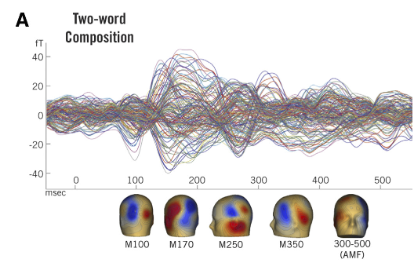
Regarding the combinatory system of language, two of the most elementary, yet hard to study, questions are (i) what is the internal architecture of composition - is it monolithic or computationally subdivided - and (ii) what is the scope of linguistic combinatory operations, i.e., to what extent do they also operate outside of language? For the past decade or so, research in my laboratory has used magnetoencephalography (MEG) to uncover the brain bases of linguistic composition with an approach strongly rooted in linguistic theory. In this talk I describe our basic findings and the extent to which they at present speak to (i) and (ii). In sum, our findings indicate a general combinatory mechanism in the ventromedial prefrontal cortex that also functions outside of language and a computationally more specific one in the left anterior temporal lobe whose function appears limited to modification environments (i.e., composes black cat but not eats meat). I will show that both of these regions operate in both comprehension and production. Overall, our work suggests that the answer to the question 'is linguistic composition monolithic or computationally subdivided?' is neither a straightforward 'yes' or 'no,' but rather, the computational specificity of combinatory brain mechanisms varies by region. Future work will need to engage in systematic hypothesis testing regarding the specific contributions of each component of this network.
Followed by Panel Discussion chaired by Paul Elbourne, QMUL
Panelists:
Hagit Borer, QMUL
Daniel Harbour, QMUL
Matthew Husband, Oxford
Andrea Santi, UCL
Tuesday May 21st: Words and Rules Revisited | 2:30pm - 5:30pm | Laws 2.10
Distinguished Visiting Scholar Lecture by Alec Marantz, NYU
Words and Rules Revisited.
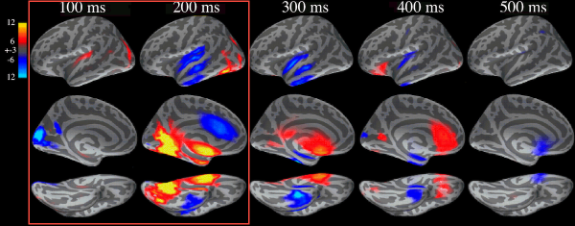
Pinker's Words and Rules framework had a somewhat deleterious effect on work connecting linguistic theory with experimental psycho- and neurolinguistics since it made an unwarranted connection between the atoms of linguistic analysis and memory and frequency effects, on the one hand, and the combination of items and the absence of memory and frequency effects on the other. Once we acknowledge and begin to explore frequency effects along the syntagmatic (between atom) dimension of language, we find a more exciting fit between linguistics and cognitive neuroscience and can begin to address the question Pinker raises of whether knowledge and processing of linguistic atoms involves different mechanisms (along the "paradigmatic" dimension of language) than knowledge and processing of relations between atoms (along the syntagmatic dimension). Recent work from our MEG lab sheds light on these issues.
Followed by Panel Discussion chaired by Linnaea Stockall, QMUL
Panelists:
David Adger, QMUL
Nina Kazanina, Bristol
Doug Saddy, Reading