
Ghost Platform: Filmmaking, Logistics Labour, & Supply-Chain Activism
When: Thursday, December 3, 2026 - Friday, November 13, 2026, 7:00 PM - 8:30 PM
Where: BLOC Cinema
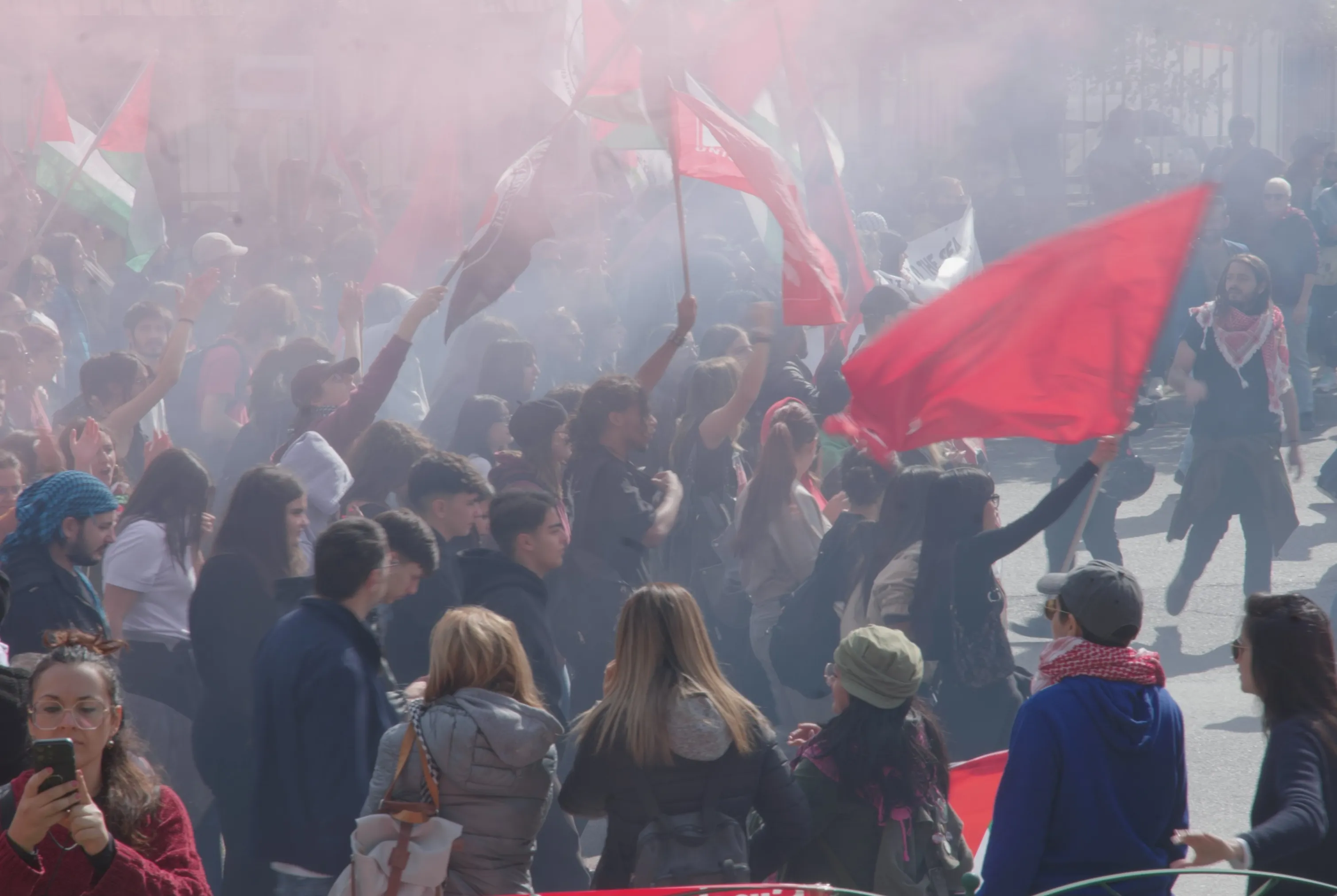
Join us for a film screening and conversation with filmmaker Benj Gerdes exploring worker organising, transnational solidarity, and the invisibilisation of human labour in the logistics and data sectors.
On 3 December, Gerdes will present excerpts from an ongoing film project examining how workers across borders challenge the global infrastructures of technology, logistics, and militarisation. From Amazon warehouse workers organising for better conditions to port workers disrupting arms shipments in response to the genocide in Gaza, the films trace emerging forms of collective resistance and solidarity across interconnected sites of labour and struggle.
The screening and discussion at Queen Mary University of London will accompany “We Are a Preview of What Can Happen" a multi-channel video exhibition (30 November – 4 December) in BLOC Gallery of Gerdes’s recent work as part of the project Ghost Platform. There will be another screening of Gerdes's films on 2 December at Haringey Community Cinema.
About Ghost Platform
Ghost Platform convened workers, organizers, artists and researchers and to investigate the invisibilization of human labour in contemporary cargo logistics and data infrastructure. Using custom software for secure collaboration, the group generated videos and related materials in response to the rising inequality, political repression, and ecological impact enabled by these systems. Bringing artists and worker-organizers together, the project has sought to depict existing realities that contradict the stories told by Amazon, Google, Microsoft, etc. But it also goes beyond this, looking at groups in Italy, across Europe and beyond developing ways to resist exploitation, act in solidarity across borders, for example by disrupting arms shipments in response to the genocide in Gaza as well as numerous other military conflicts.
The project work between 2023-2025 witnessed unprecedented shifts as a post pandemic commercial freight logistics met questions around Russia’s invasion of Ukraine, Europe’s turn to a war economy, and resistance to Israel’s perpetration of genocide in Gaza. In Italy and elsewhere, dockworkers and grassroots logistics unions have been at the forefront of blockades and refusals to load or unload military cargo. They have also faced direct and severe repression because of this. It is the same ships and same data centers and same undersea internet cables conveying goods and information, whether it be holiday gifts for loved ones, the latest AI slop, or fighter jet and bomb parts headed for further human devastation. As we seek to organize for more just and equitable futures, logistics struggles provide a set of important models and questions for broader public debate.
Ghost Platform originated as an artistic research project, conceived and led by the artist Benjamin Gerdes (US/SE) as a way to connect sites across supply chains, building on his prior work filming in solidarity with militant dockworkers in Sweden. The network between 2022 and 2025 grew to include collaborations with members and organizers from the labor unions: SI Cobas (Italy), Amazon Workers International & OZZ Inicjatywa Pracownicza (Poland), Confederación Sindical de Comisiones Obreras (CCOO) (Spain), Unión General de Trabajadores (UGT) (Spain), Svenska Hamnarbetarförbundet (Sweden), SAC Syndikalisterna (Sweden), Villa Medusa social centre (Italy), Unione Sindicale di Base (USB) (Italy), Collettivo Autonomo Lavoratori Portuali (CALP) (Italy). This was made possible through the work of specific artists and researchers: Bahaleen Collective (Aya Besio and Noura Salem) (Jordan), Benjamin Gerdes (Sweden) Christopher Byrnes (Spain), Daniel López (Spain), Elia Wehaiba El Khazen (Germany/Lebanon), Felicia Fahlin (Sweden), Gabriella Cioce (Italy), Magda Malinowska (Poland), Michele Amaglio (Italy), Pedro Exposito (Spain), Peppe D’Alesio (Italy), Robert Ochshorn (USA/Belgium) Karin Krifors (Sweden), Hege Høyer Leivestad (Sweden/Norway), Rati Kupatadze (Sweden).
Benjamin Gerdes is an artist, writer, and organiser working in video, film, and related public formats, individually as well as collaboratively. He is interested in intersections of radical politics, knowledge production, and popular imagination. His work focuses on the affective and social consequences of economic and state regimes, investigating methods for art and cultural projects to contribute to social change. Gerdes’s projects emerge via multiple articulations from long-term research processes conducted in dialogue with activists, trade unionists, architects, urbanists, geographers, and archival researchers. Originally from the United States, he is surprised to have been based in Sweden for the past 7 years.