Learning in the wild: My Savannah Ecology and Conservation experience
From vegetation and bird surveys to tracking wildlife across the South African savannah, this module offered a hands-on opportunity to put classroom learning into practice. Read about one student’s experience of developing new skills, exploring Savannah ecology and getting up close to some incredible wildlife.
/filters:format(webp)/prod01/channel_120/school-of-biological-and-behavioural-sciences/media/sbbs/images/Learning-in-the-wild-(1).jpg)
As a student on the Savannah Ecology and conservation module in South Africa it was an experience unlike any other. I developed so much knowledge and skills in the ten days spent studying, being in such a hands-on environment meant the knowledge we were being taught was instantly put into real-time practice. My identification, observational and critical thinking skills were consistently being pushed further and in terms of academic development, this module has been one of the most prominent.
Throughout out ten days we performed vegetation surveys, broadening our skills on identifying unknown species and creating microhabitat maps of areas of study. One morning in Wits Rural Facility we got up and did a bird survey with Prof. Andrew Leitch, from the top of the hill in terminalia woodland to the lower riparian zones and analysed the change in data. We set up camera traps and audiomoths across both sites, where we later analysed the data and saw multitudes of wildlife and heard the early morning bird chorus. We met and went out with local scientists, who gave us invaluable knowledge and expertise on the different areas of study and current long-term experiments on different parts of the land like burn plots and exclusion zones. We surveyed the Savannah with armed rangers, giving us a unique and first-hand insight to the complexities of Savannah ecology and lived experiences.
.jpg)
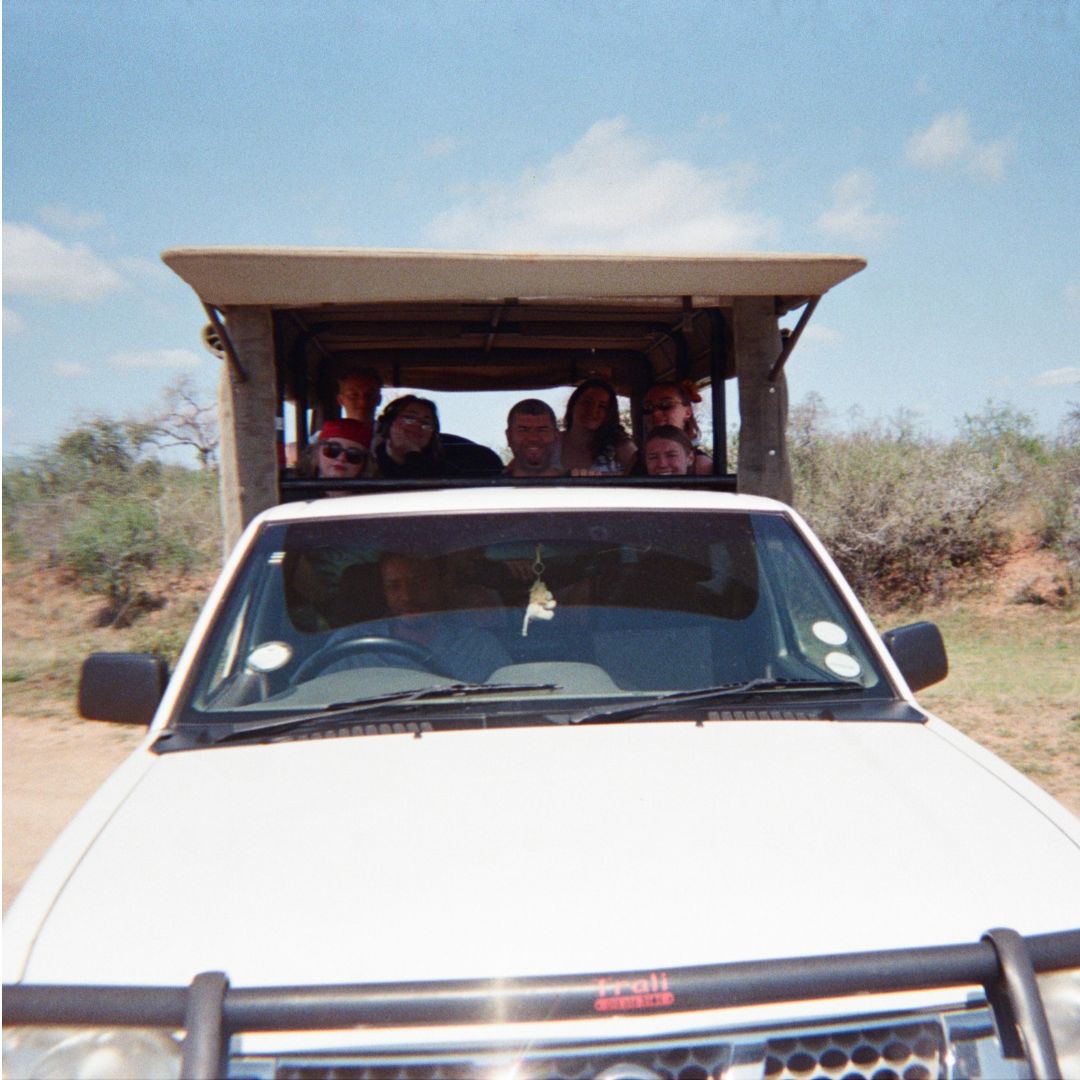
In the multiple game drives, we saw all kinds of wildlife. After the morning game drive, we saw interactions between lions and hyenas, hippos’ heads bobbing out of water and hundreds of monkeys just sat in the road (and very cute baby monkeys!), equally unbothered by us as we were amazed by them. The sunset drive we saw two different leopards with their cubs, beautiful kudu grazing and mongoose, including the white-tailed mongoose, a rare and solitary species. During the night drives we saw hippos grazing outside of the waterholes where they tended to rest in, with their young waddling beside them, as well as the bundle of young hyenas, bounding with each other in the road and coming up to our truck, curious to get in.
During the day, the elephants with their young strolled the parks, which can only be described as mesmerising when watching these beautiful giants move and realising they are in front of you and not just on a David Attenborough documentary on TV. The giraffes in crowds browsing on trees, the male warthogs wrestling over groups, and watching young male impala practice fighting for when they are big enough to take over their own herd. We saw beautiful iridescent and colourful birds such as the Glossy Starling or Lilac-breasted roller and found stick insects in the grass and huge dung beetles at our camp
.jpg)
I grew closer with people that I didn’t know before the module and felt inspired for my final year of studying, for the academic and personal growth it was incredibly worthwhile (as well as all the baby animals!).
- Olivia Cecchini
BSc Biology
Biological Science Degrees